
TL;DR: What Is Substack and Why Should You Use It?
Substack is a platform that lets you publish newsletters, grow an email list, and monetize your expertise—all in one place. Unlike traditional email tools, Substack has a built-in discovery engine. That means your content can get recommended to new readers who care about your topic, helping you grow organically without ads or SEO.
It’s not a replacement for advanced email software as it lacks detailed segmentation, automation, and analytics. But it’s a powerful starting point for audience building, especially if you’re a course creator or coach. Use Substack to grow your audience, then move your most engaged readers to your own list when you need more control.
How Much Does It Cost?
– Substack is free to use as long as you don’t charge your subscribers.
– You only pay a 10% fee on what you earn through paid subscriptions.
– There’s no monthly fee or upfront cost.
How to Get Started
– Sign up at substack.com
– Customize your profile and newsletter
– Choose your topics and interests
– Publish your first post
– Share your signup link on social media, your site, or anywhere your audience is
How to Make Money With Substack
– Offer paid newsletter subscriptions
– Sell online courses, ebooks, templates, or digital products
– Promote coaching and consulting services
– Recommend affiliate tools and earn commissions
– Launch paid communities or mastermind groups
– Build traffic and route it to external products or sales pages
Substack Growth Tips
– Write consistently, even if it’s once every two weeks
– Share personal stories, lessons, and honest opinions
– Use reader comments as inspiration for future posts
– Link to your offers and landing pages naturally
– Take advantage of Substack’s SEO strength for free traffic
– Engage with the Substack creator community to get discovered
– Use Substack Chat or Notes to build deeper reader connections
Start slow. Be real. Keep showing up. That’s how Substack helps you build a loyal audience—and turn your knowledge into income.
Start using Substack Now
Have you heard of Nicolas Cole? He runs multiple successful online communities, two six-figure online course programs that routinely sell out, and a hugely popular paid newsletter.
He does it all using Substack.
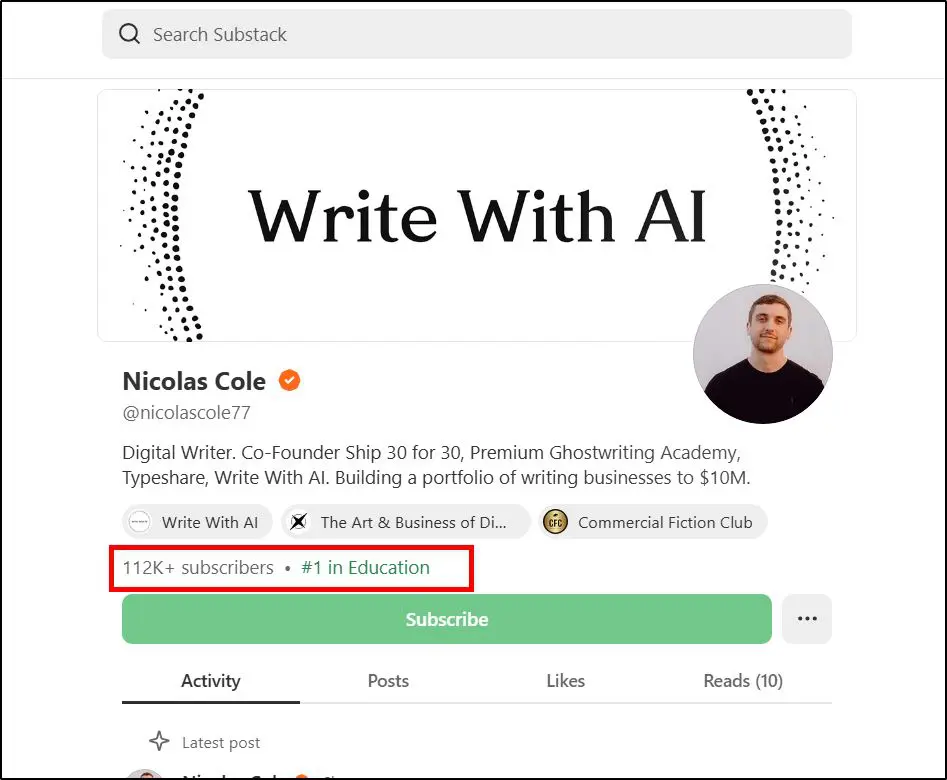
Nicolas isn’t the only one who’s killing it on Substack.
Hundreds (if not thousands) of creators are using Substack to fuel their online courses, coaching offers, paid communities, and digital product businesses.
But what exactly is Substack, how does it work, and why should you take it seriously as an edupreneur?
I’ll explain all this, and more, in this detailed article.
Substack doesn’t replace email marketing software. Here’s our list of the top email platforms
What Is Substack and How It Works
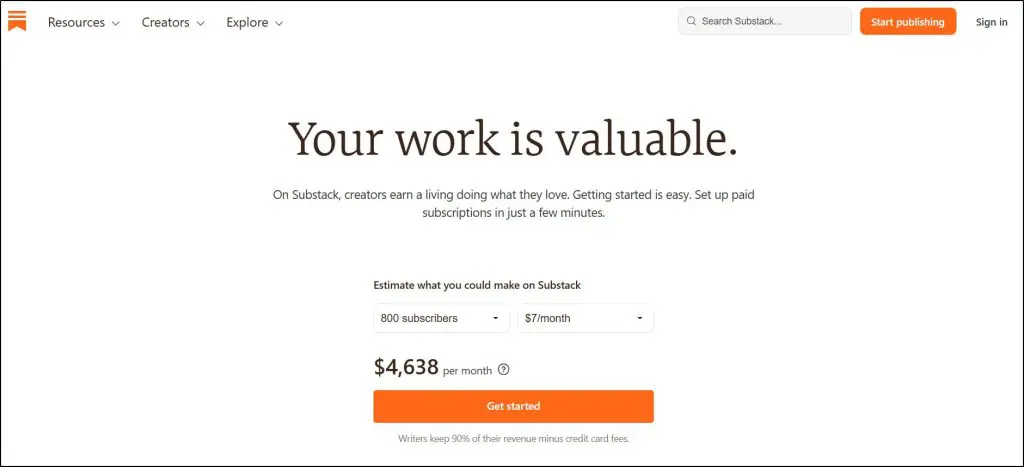
Substack is a platform where you can publish email newsletters, grow an audience, and get paid for your writing, teaching, or creative work. It’s built for people who want to communicate directly with readers, without relying on algorithms or social media hacks.
When someone subscribes to your Substack, they get your content in their inbox. But unlike regular emails, your Substack newsletters are accessible on your profile as well.
So, even if a subscriber doesn’t open your email newsletter, they can read your posts via Substack app or your by visiting your profile.
This makes it a hybrid between emails and blog posts.
You can choose to make it free, paid, or offer a mix of both.
Some creators use it to share personal essays, others for industry insights, tutorials, podcast episodes, or even video courses.
Substack was founded in 2017 by Chris Best, Jairaj Sethi, and Hamish McKenzie. Their goal was simple: give writers and creators a way to earn money directly from their audience, without middlemen, ads, or algorithmic manipulation.
They were inspired by paid newsletters like Stratechery and wanted to make that model accessible to everyone.
Since then, Substack has become much more than a newsletter tool. Writers, podcasters, educators, and consultants are using it to:
- Replace their blogs
- Launch premium communities
- Sell audio and video content
- Host interactive chats and livestreams
- And build real businesses powered by their own audience
By 2025, over 5 million people had paid for subscriptions on Substack and shifted the way creators make a living.
So how does Substack work?
Here’s a simple breakdown:
Step 1: Create a publication: Sign up and name your newsletter. You get a custom website + email list from day one.
Step 2: Write and publish: Use the built-in editor to write posts, schedule them, or send instantly. You can add images, embeds, videos, or even podcast episodes.
Step 3: Build your audience: People can subscribe to your content with one click, no tech setup needed. Substack helps you grow through recommendations and the Discover feed.
Step 4: Offer paid subscriptions (optional): You decide your pricing. Most creators start free and later add paid tiers for exclusive content, community access, or behind-the-scenes insights.
Step 5: Engage with your readers: Use comments, chat, private threads, and email replies to build real conversations—not just vanity metrics.
Step 6: Own everything: Your content, your email list, your revenue. You can export it all anytime.
Substack gives creators a place where connection matters more than content volume—and where quality actually pays off.
How Substack Categories and Rankings Work (And Why They Matter for Creators)
Substack is essentially a newsletter discovery engine. And understanding how it organizes and promotes creators is key to growing your audience faster.
Substack Organizes Newsletters by Category
When you start your Substack, you choose your primary topics like:
- Education
- Business
- Technology
- Parenting
- Creativity
- Health
- Writing
- Politics
- Spirituality
- Science
These categories help Substack connect you with the right readers. It recommends your newsletter to people already reading similar content, both through emails and its internal browse sections.
Think of each category as a mini-platform of its own. If you’re writing about education, you’re primarily competing with other education writers, not the entire Substack ecosystem.
You Can Rank in Multiple Categories
You’re not limited to one category. You can tag your newsletter and individual posts with multiple relevant topics. So if your writing touches on both creativity and marketing, you can be discovered in both.
But Substack still chooses a primary category to determine your position in the directory and rankings.
How Substack Ranks Creators Within a Category
Substack doesn’t publish its exact algorithm, but based on what creators and platform behavior reveal, here’s what affects your ranking:
| Factor | Why It Matters |
|---|---|
| 🧑🤝🧑 Subscribers (especially paid) | Larger, paying audiences signal trust and value |
| 🚀 Growth velocity | Newsletters growing quickly get visibility boosts |
| 💌 Open and engagement rates | High open/click rates suggest active, loyal readers |
| 🤝 Recommendations from others | Being recommended by other writers increases trust and exposure |
| 📅 Consistent publishing | Regular posts show you’re active and serious |
| 🔁 Low churn | If readers stay subscribed, it boosts your credibility |
What Happens When You Hit the Top 10?
Breaking into the top 10 of your category changes everything:
- You show up on Substack’s public rankings (on desktop and mobile)
- You get recommended more frequently to new readers
- It opens doors for partnerships, collaborations, and paid opportunities
- Your growth becomes increasingly organic, even if you don’t promote every post
What Makes You Rise (or Fall)?
You’ll rise in the rankings if you:
- Stay consistent and write with purpose
- Deliver real insight, not filler
- Build and retain an audience (especially paid)
- Get recommended by others
- Engage your community
You’ll fall if you stop posting, lose relevance in your niche, or have high unsubscribe/spam rates.
Focus on Owning Your Niche
You don’t need 100,000 subscribers across the internet. You just need to become known and respected within your category. Whether you’re writing about parenting strategies, productivity, coaching, curriculum design, or public speaking, Substack helps you own that niche.
And once you do, everything else like subscriptions, sales, and partnerships, gets easier.
Substack vs. Your Own Email List: What’s the Difference?
You might wonder, “Why not just start my own email list on Mailchimp or ConvertKit?”
That’s a fair question and one many creators ask.
Here’s the key difference:
When you start your own email list, you have to bring in every subscriber yourself. You need to build a website, set up lead magnets, figure out landing pages, connect email forms, and constantly promote your content just to get people on your list.
With Substack, the discovery engine works for you.
It has millions of readers browsing the platform every month. When you publish, Substack can:
- Recommend your newsletter to readers with similar interests
- Feature your posts when someone subscribes to a related creator
- Suggest your publication in the Substack app and website
- Send promotional emails to engaged readers, helping them discover your work
So instead of shouting into the void, you’re entering a thriving ecosystem—where readers are already primed to subscribe, engage, and even pay.
Substack handles the tech, the email delivery, the SEO, and even some of the growth. You just focus on publishing great content.
That’s why creators say Substack feels less like a tool and more like a partner in their growth.
But here’s what I say.
Start both a Substack and your own email list.
Let Substack be the growth engine. It brings in new readers organically while you focus on writing.
And as your audience grows, you can gradually move your most loyal and serious subscribers over to a dedicated email list, giving you even greater control, segmentation, and flexibility for premium offers, course launches, or client work.
The two don’t compete; they complement each other.
And it’s one of the smartest ways to future-proof your creator business.
Why Should Edupreneurs Care About Substack?
If you want to sell courses, coaching, digital products, or books, you need an audience that trusts you, values your insights, and actually wants to hear from you.
That kind of audience becomes the foundation for your business.
But building that kind of relationship doesn’t happen on crowded platforms where you’re competing with trends and algorithms.
Substack is built differently.
It’s designed to help you grow the kind of audience your business depends on. An audience you can teach, serve, and eventually sell to, without needing complex tech or paid ads.
Here’s why you should take Substack seriously as an edupreneur.
Use an online course platform to host, create, and sell your courses
Reason #1: It feels like the early internet days
Several coaches I know who use Substack say it reminds them of the early internet, and I completely agree. No algorithm games, no pressure to perform, just real conversations with people who care. I’ve seen first-time writers finally publish because they feel safe here. Readers actually respond to emails. It’s intimate, calm, and creative in a way that most platforms just aren’t anymore. That alone makes it worth trying.
Reason #2: Substack gets over 4 million monthly visitors
Let me show you the latest Ahrefs traffic estimates for Substack.
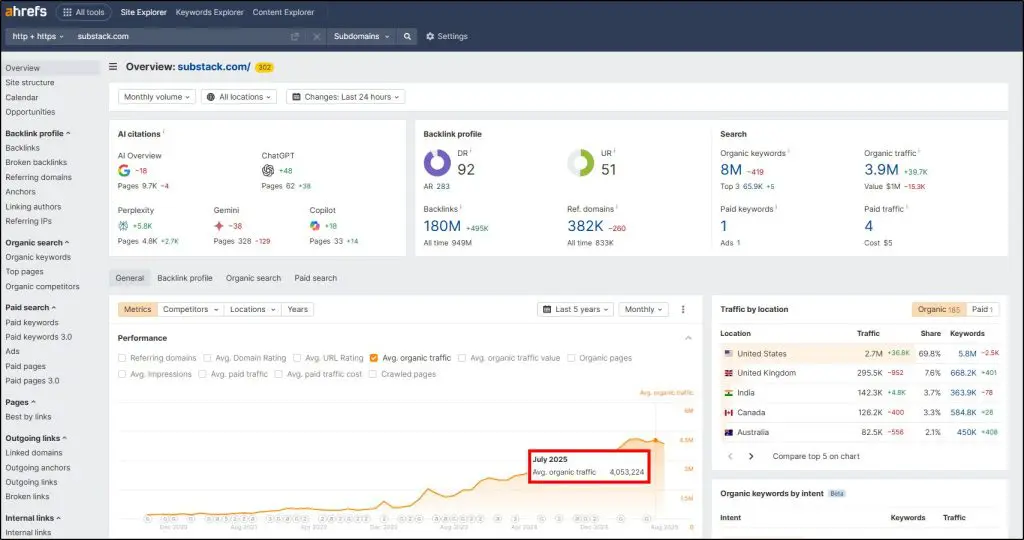
In July 2025 alone, Substack had over 4 million visitors. At the time of writing, it ranks in the top 3 Google results for more than 100,000 keywords.
And here’s the key: these visitors aren’t looking for quick hacks or AI fluff. They’re reading real work—insightful writing, expert opinions, and personal stories. This is a highly motivated audience that values craft and depth.
Reason #3: Substack’s discovery engine works overtime
Not all of Substack’s 4 million monthly visitors are your ideal readers. But even a small slice of them can change everything.
Substack’s has a discovery engine that recommends your newsletter to the right people, based on their reading habits and interests.
Your work appears while they browse others, and even lands in personalized email suggestions.
This brings in organic subscribers without you running ads, writing SEO content, or doing endless promotion.
With a standalone email list, you’d be on your own to attract readers. On Substack, the platform helps bring them to you.
Reason #4: No tech headaches
Substack strips away all the complexities of growing an email list. You don’t need landing pages, lead magnets, email sequences, or third-party tools to get started. You don’t even need a website.
Just write your post, hit publish, and it goes straight to your subscribers’ inboxes.
Everything from email delivery to payment processing is already built in. It’s one of the few platforms where you can launch and grow without hiring a developer, fiddling with plugins, or learning new tools.
Reason #5: It doesn’t cost anything to start
Most email platforms charge you monthly, even if you’re just starting out. Substack is free until you decide to charge for your work. No domain, no software, no landing page tools needed. You can start growing your list and sending emails without spending a dollar.
Reason #6: It comes with built-in monetization features
Once you’ve earned trust and built an audience, turning on paid subscriptions is just a click away. Substack handles everything, from payment processing to access control. You can offer paid newsletters, special content, or simply link out to your courses, consulting offers, or digital products. No extra setup required.
Reason #7: You can become a niche leader
Substack has hundreds of thousands of loyal readers across every niche, from parenting to productivity, health to history. If your writing consistently delivers insight, it won’t take long to stand out. That visibility often leads to partnerships, podcast invites, collaborations, and it makes launching premium courses or consulting offers much easier.
Substack Newsletter Examples | 3 Successful Creators Using The Platform
You can find numerous examples of successful Substcak creators in every niche. Just use it’s Discover section to find newsletters from different regions around the world.
But here are three examples to show you how great content can help you build a loyal following on this platform.
Example #1: Dan Koe
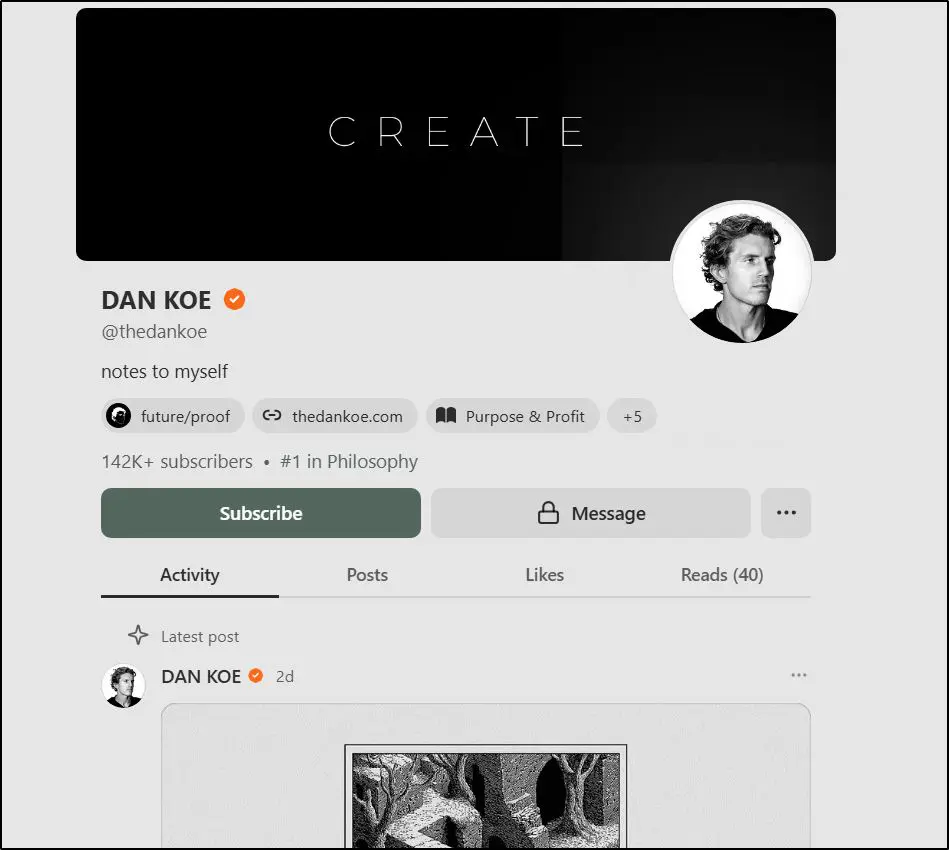
Dan Koe is a well-known creator with multiple successful courses and digital products. He’s currently ranked #1 in Substack’s Philosophy category and has over 142,000 subscribers. His content is a great example of what happens when you speak your mind without holding back. Even when his takes are contrarian or challenge conventional wisdom, they help him build a distinct voice, and that’s what draws a loyal audience on Substack.
Example #2: Ruben Hassid
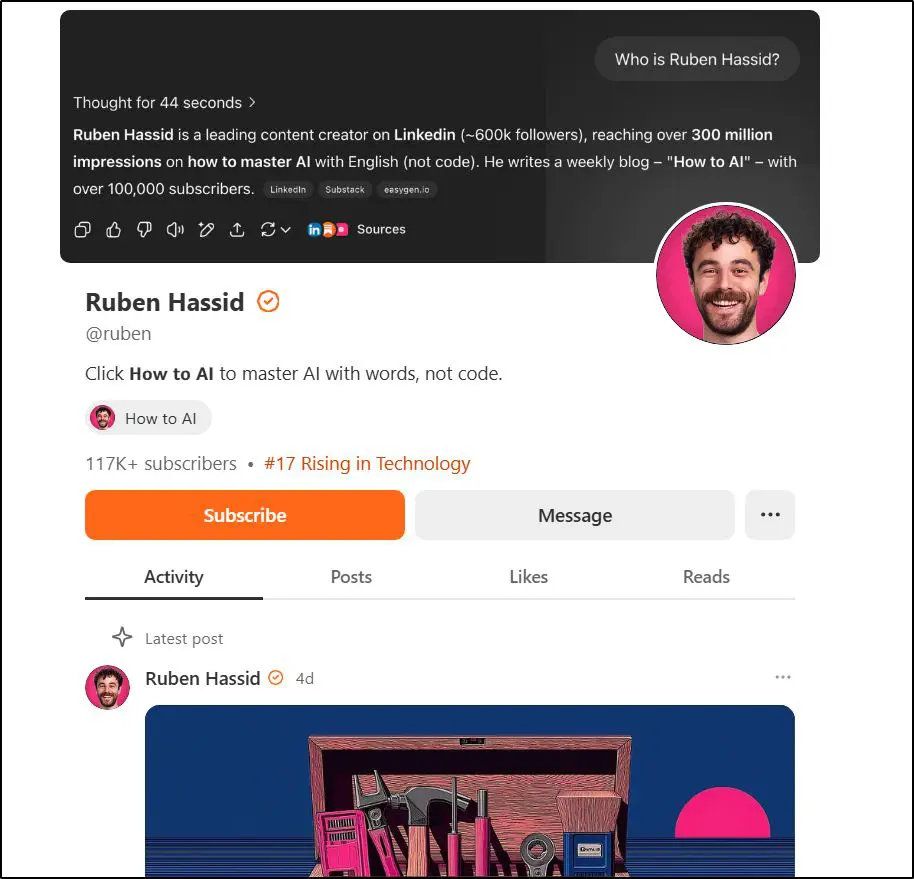
Ruben Hassid is one of the fastest-growing AI-focused creators on Substack. He shares bite-sized insights, prompts, and real-world examples on how to use AI tools like ChatGPT and Midjourney to boost productivity and creativity. What makes his content stand out is how actionable and visually clean it is, no fluff, no filler.
With over 100,000 subscribers, Ruben shows that if you deliver consistent, practical value in a focused niche, Substack can grow your audience fast.
Example #3: Luiza Jarovsky

Luiza Jarovsky is a leading voice in the data privacy space. Her Substack newsletter, The Privacy Whisperer, breaks down global privacy regulations, dark patterns, AI ethics, and real-world tech policy updates in a way that’s easy to follow, even for non-lawyers.
She’s built a loyal, high-quality audience of over 60,000 readers by consistently publishing well-researched content with sharp commentary. Luiza proves that even complex, niche topics can thrive on Substack if you show up with clarity and conviction.
How Do Creators Make Money On Substack
Over the years, I’ve worked with clients who’ve used Substack to monetize their expertise in different ways. Some leaned into paid newsletters, others used it to build trust and sell courses or coaching.
There’s no one-size-fits-all approach, but based on what I’ve seen work, here are some of the most effective ways to make money on Substack as an edupreneur or digital product creator.
1. Paid Subscriptions
Paid newsletter subscriptions are Substack’s core monetization model. You write a free newsletter to attract readers, then offer a paid version with extra value like premium lessons, templates, deep dives, or live calls.
You choose the price (typically $5–$10/month or $50–$100/year). Substack takes a 10% fee, and Stripe takes a small transaction fee. You keep the rest. Payouts go directly to your bank through Stripe, and you start earning the moment someone subscribes.
As of March 2025, Substack has over 5 million paid subscriptions across the platform. If even 300 of those belong to you at $10/month, that’s $3,000/month in direct recurring revenue.
I’ve seen coaches and consultants build paid lists this size just by showing up consistently and giving their audience something genuinely useful.
2. Online Courses And Digital Downloads
This is where Substack becomes a game-changer for edupreneurs.
Substack helps you build trust by teaching publicly through your free and paid posts. Once that trust is in place, selling courses and digital downloads becomes easy.
I’ve worked with creators who’ve used Substack to launch eBooks, Notion templates, mini-courses, and full cohort programs. You can route traffic straight from a Substack post to your checkout page on Gumroad, Podia, or even Stripe.
For delivering full online courses, I recommend platforms like Thinkific or Kajabi to host and deliver the content, while keeping Substack as the front-end engine that drives interest and signups.
Because your audience already sees you as a teacher or expert, conversions are often stronger than traditional cold traffic. Substack builds the relationship. You deliver the transformation through your product.
3. Coaching And Consultancy
Interacting with your audience on Substack gives you incredible insight into their problems, questions, and needs. As a coach or consultant, this direct feedback is priceless as it helps you tailor your advice, frameworks, and sessions based on what your audience actually cares about.
Many successful Substack edupreneurs offer 1:1 or group coaching, strategic consulting, or live sessions.
Once you build an audience that already trusts your voice, it’s natural to offer coaching and consulting services, especially to professionals, organizations, and high-ticket clients who see you as an expert.
4. Affiliate Marketing
Once your audience trusts you, they trust your recommendations too. That’s why affiliate marketing works so well on Substack. You can earn commissions by recommending tools, platforms, or products your readers find useful.
Let’s say you’re a project management consultant writing weekly insights. You can become an affiliate for platforms like Trello, Monday, or ClickUp. If you’re a digital marketer, you might promote tools like GetResponse, ActiveCampaign, or SEMrush.
And if you’re short on product ideas? Join Amazon’s affiliate program and recommend relevant books, gear, or tools tied to your content.
5. Premium Communities or Add-ons
One of the most powerful ways to monetize a Substack audience is by creating a premium community around your content. While Substack already gives you community features like comments and Chat, many creators take it a step further by launching exclusive groups on platforms like Circle and Mighty Networks.
These paid communities offer members direct access to your expertise, whether that’s weekly office hours, live Q&A sessions, or behind-the-scenes content.
It’s not just about content anymore. It’s about connection. And in an AI-driven world where anyone can churn out content, personal access and real conversation are what people pay for.
Substack Pricing (2026) | How Much Does It Cost
Publishing on Substack is completely free. You can start your newsletter, send unlimited posts, and grow your list without paying anything upfront.
You only pay when you turn on paid subscriptions.
At that point:
- Substack takes a 10% platform fee
- Stripe takes a standard 2.9% + $0.30 per transaction
Here’s what that looks like:
| Plan | Subscriber Pays | You Earn (Approx.) |
| $5/month | $5.00 | ~$4.05 |
| $50/year | $50.00 | ~$40.55 |
That means you keep about 80–85% of what each subscriber pays.
If you grow significantly, that 10% fee might feel heavy, especially compared to flat-fee platforms. But until then, it’s a fair tradeoff for the discovery, delivery, and simplicity you get.
How To Start A Substack | 5 Steps To Your First Newsletter
Step 1: Create Your Free Account
Visit substack.com and sign up with your email address. You’ll be asked to name your publication, don’t stress about getting it perfect. You can always change it later. Once you’re in, Substack creates a simple homepage where all your posts live, like yourname.substack.com.
Step 2: Choose Your Topics & Interests
As part of onboarding, Substack will ask you to select topics you’re interested in and plan to write about, things like education, business, tech, creativity, parenting, writing, etc. Substack uses this info to recommend your newsletter to the right readers through its discovery engine. Getting this part right can help you attract organic subscribers faster, even if you’re just starting out.
Step 3: Set Up Your Bio and About Page
Your profile is the first thing people see. Upload a friendly photo, write a short bio, and fill in your “About” section. Let people know who you are, what your newsletter is about, and what kind of content they’ll get. Think of it as your digital storefront. A clear and inviting profile builds instant trust and helps readers feel confident hitting that subscribe button.
Step 4: Publish Your First Post
Click the “New Post” button and just start writing. Your first post doesn’t have to be groundbreaking. It can be a welcome message, your backstory, or a quick lesson from your work. You can add images, links, and even audio. Once you’re done, hit publish, and your post will be live on your Substack page and emailed to any subscribers you’ve already gathered. Just get something out!
Step 5: Share It
Once your first post is published, Substack gives you a shareable link. Post it on your social media, send it to your email contacts, or share it in relevant online groups. Substack also lets you invite your personal network directly through email. Don’t overthink your first promotion — the goal is to let people know you’ve started. Momentum builds as more people read and share your work.
Step 6: Stay Consistent
Pick a schedule you can stick to, for example, weekly, biweekly, or monthly. Consistency is more important than frequency when you’re starting out. Your readers begin to expect your voice in their inbox, and Substack’s discovery algorithm rewards consistent writers. Don’t worry if you don’t see fast growth. Keep publishing, keep learning, and your audience will come. Over time, this habit can become the foundation of your business.
Substack Growth Tips | How To Attract Subscribers, Make Money & Grow Your Business
Substack has millions of readers actively looking for meaningful content and fresh voices. But with so many writers publishing every day, it’s not always easy to stand out, especially in the beginning.
The good news? Most people give up too soon.
If you stay consistent, listen to your audience, and follow a few proven strategies, you’ll naturally rise above the noise.
Here are the most effective ways I’ve seen creators grow their following, build real relationships, and turn their newsletters into thriving businesses.
Tip #1: Enjoy Creative Freedom and Speak From the Heart
Substack gives you the kind of creative freedom most platforms don’t. You don’t need to write like a journalist, optimize for SEO, or format everything like a marketing email. In fact, the more real you are, the more readers connect.
The most successful writers treat each post like a conversation and make it personal, thoughtful, and direct. Share what you care about with people who want to hear from you. That’s what builds connection and trust over time.
The kind of content that really resonates includes:
- Personal stories
- Firsthand experiences or lessons learned
- Experiments you’ve run
- Unique findings or behind-the-scenes data
- A controversial take or strong opinion
- Questioning conventional wisdom
So skip the buzzwords. Speak from experience. Say what you actually believe.
Tip #2: Publish Consistently
Whether you write once a week, twice a month, or every ten days, what matters most is that you keep showing up. Substack’s discovery engine works better when it has more of your content to recommend.
And readers notice, too.
When you’re consistent, they start anticipating your next post. It builds trust and makes your work feel like a real part of their lives. It also signals that you’re serious, not just dabbling. That’s key if you eventually want them to pay for deeper content or coaching. Show up reliably, and the momentum will follow.
Tip #3: Take Advantage of Substack’s SEO Power
Substack has serious domain authority. Its content is indexed quickly and often ranks high on Google, even for competitive keywords. That makes it one of the easiest shortcuts to organic traffic, without needing your own blog or technical SEO setup.
To explain this better, I dived into Ahrefs data for Substack and found something really fascinating.
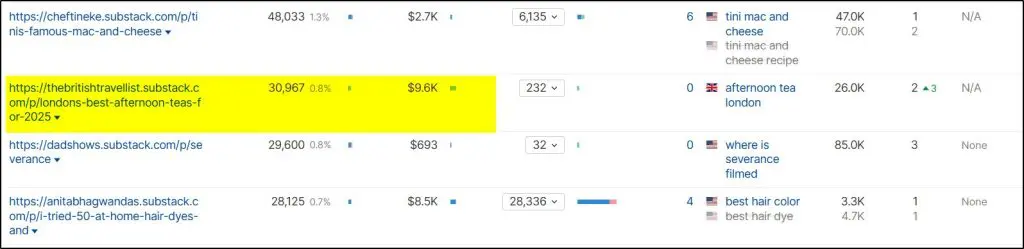
A Substack post titled London’s Best Afternoon Teas for 2025 ranks #2 on Google for a highly competitive keyword and brings in over 30,000 monthly visitors, according to Ahrefs.
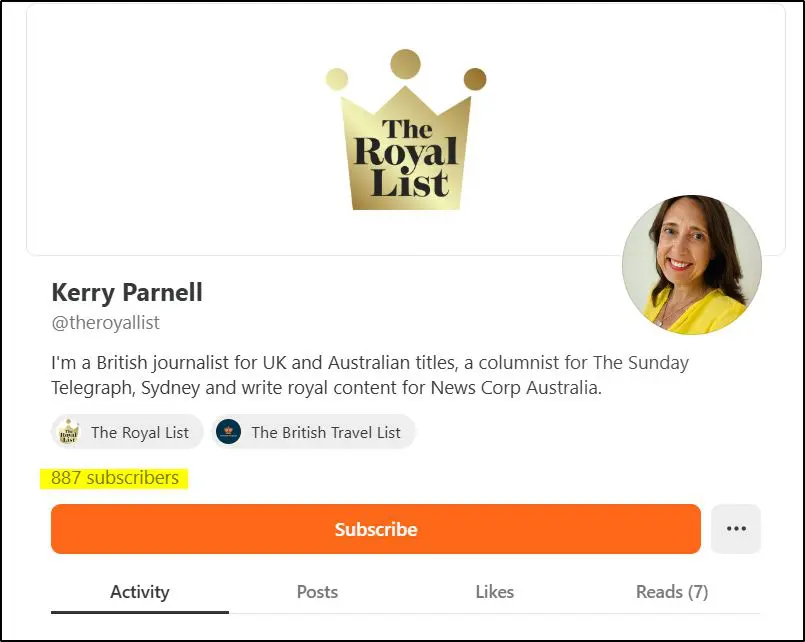
And the creator behind it? She has fewer than 900 subscribers.
If you want your business to rank for terms in your niche, just write about those topics on Substack. Share your insights, add value, and include links to your products, landing pages, or main site.
Over time, these posts can become evergreen traffic drivers, working for you even while you sleep.
Tip #4: Add Smart Links to Your Blog, Products, or Services
Every Substack post is a chance to grow your business, not just your subscriber count. So include relevant links—whether it’s to your main website, blog, landing pages, or digital products.
For example, if you’re writing about a common problem your course solves, link directly to the course page at the end. If you’re sharing a free guide on your site, invite readers to grab it. These simple calls-to-action turn your newsletter into a growth engine, without needing complicated funnels.
Make it easy for your readers to take the next step with you.
Tip #5: Listen To Audience, Answer Their Questions
Substack is highly engaging and conversational. People will comment under your articles asking questions, sharing their perspectives, personal stories, and their own take on what you’ve written. This interaction is incredibly valuable not just for community-building, but for guiding your content strategy.
Respond to their questions. Engage with their ideas.
If you notice recurring themes or common struggles in the comments, consider writing dedicated posts that address them in depth.
Over time, this shows your readers that you’re paying attention, that you care about what they say, and that you’re genuinely invested in helping them.
It’s one of the simplest and most powerful ways to earn trust and turn casual readers into loyal followers and eventually, customers.
Tip #6: Get recommended by other creators
Substack lets creators recommend other newsletters. When someone subscribes to their publication, they’re shown a list of recommended newsletters.
Yours could be one of them.
This is one of the easiest ways to grow your list organically, especially if you’re just starting out.
So, how do you get recommended?
Build relationships. Partner with creators who write in similar or complementary niches. Engage with their content, mention them in your posts, or simply reach out and ask.
If your content is valuable and consistent, many are happy to recommend you, especially if you return the favor.
This kind of mutual support is built into how Substack works. It’s not spammy. It’s encouraged.
Tip #7: Get Readers to Share With Substack’s Referral Program
Substack has a built-in subscriber referral system that rewards people for sharing your newsletter with their friends.
You can set your own reward tiers like exclusive content, a free 1:1 call, discounts, or even a complimentary paid subscription. The more readers someone refers, the more rewards they unlock. Substack handles everything automatically, from tracking referrals to sending reward emails.

You just customize what to offer.
To activate it, go to your Substack Settings > Growth Features > and turn on the referral program. If you’re consistent and offer meaningful rewards, this feature alone can help you build your list on autopilot.
Substack Pros & Cons
There’s a lot to like about Substack. But it also has a few drawbacks. Let’s quickly summarize them before we move to the conclusion.
| Pros | Details |
| ✅ Free to start | There’s no upfront cost—Substack only charges a fee when you enable paid subscriptions. That means you can build an email list and grow an audience without spending a single dollar. |
| ✅ Built-in audience discovery | Substack recommends your newsletter to readers based on their interests. This helps you get discovered organically, even if you’re starting from scratch. |
| ✅ Direct inbox delivery | Your posts go straight to readers’ inboxes, not buried in an algorithm-driven feed. That means your content gets seen, not scrolled past. |
| ✅ Simple interface | No plugins, funnels, or design tools—just write and publish. It’s ideal for creators who want to focus on ideas and writing instead of tech setup. |
| ✅ SEO benefits | Substack newsletters are public by default and can rank well in Google. This gives you free, ongoing traffic if you write about topics people search for. |
| ✅ Monetization built-in | You can turn on paid subscriptions, promote affiliate offers, or link out to your courses and services. Monetization is baked into the platform with zero setup. |
| ✅ Community-friendly | Comment sections and the Substack Chat feature allow readers to engage with you and each other. This creates a more interactive and loyal audience over time. |
| ✅ Export anytime | You own your email list and can export it at any time. You’re never locked in, and that makes it safer to build a business on the platform. |
| Cons | Details |
| ❌ Limited customization | You can’t create branded landing pages or fully control how your newsletter looks. This might be frustrating if you’re used to more visual control. |
| ❌ No tagging or segmentation | Substack doesn’t let you group subscribers by interest or behavior. This limits your ability to run advanced campaigns or personalize offers. |
| ❌ No automation tools | There’s no way to set up autoresponders, onboarding sequences, or sales funnels. If you’re coming from ConvertKit or ActiveCampaign, this feels like a step back. |
| ❌ Limited analytics | You get basic stats like open rates and subscriber counts, but not much beyond that. This can make it harder to measure what’s working. |
| ❌ No built-in A/B testing | You can’t test headlines, content variations, or send times natively. This makes it hard to optimize for conversions over time. |
| ❌ Less control over design | The design of both your emails and your Substack site is minimal and standard. If you’re big on branding, this might feel restrictive. |
| ❌ You don’t own the platform | Even though you own your list, Substack can change its rules, algorithms, or policies. That’s always a risk with third-party platforms. |
| ❌ No native course hosting | Substack isn’t built to deliver lessons or manage students. You’ll need to host your course elsewhere (like Thinkific or Kajabi) and link out from your emails. |
Is Substack Worth Using For Newsletters And Audience Building?
If you’re a course creator, coach, or consultant trying to build an audience, earn trust, and sell your expertise, Substack is absolutely worth it.
It takes away the tech overwhelm, the ad spend, and the social media pressure. It gives you direct access to readers who choose to hear from you and keeps things simple so you can focus on sharing your voice.
It may not replace your email marketing system entirely, especially if you need automation, tagging, or custom branding. But as a discovery tool, community builder, and even a monetization channel, it’s hard to beat.
Start small. Write honestly. Stay consistent. And let your audience grow around what you believe in.
Substack might just become the most valuable part of your online course and coaching business.
Frequently Asked Questions (FAQs)
1. Can I move my existing email list to Substack?
Yes, you can import your existing email subscribers into Substack through a CSV file. Just make sure they’ve opted into communication from you, as Substack follows strict email consent practices.
2. Do I need a website or domain to start on Substack?
No, Substack gives you a hosted newsletter and website at a subdomain (e.g., yourname.substack.com). But you can also connect your custom domain for better branding.
3. Can I send automated email sequences or drip campaigns through Substack?
Not at the moment. Substack focuses on simple email publishing. For advanced automation like welcome sequences or behavioral triggers, you’ll need to integrate with other email tools.
4. What’s the difference between Substack’s posts and notes?
Posts are long-form newsletter entries that go to your email list. Notes are shorter, social-style updates (similar to tweets) that help increase visibility and engagement within the Substack network.
5. Does Substack have analytics?
Yes, but they’re basic. You’ll see data like open rates, total subscribers, paid subscriber count, and traffic sources—but not deep audience segmentation or automation analytics like traditional email platforms.
6. Can I use Substack if I already have a blog or podcast?
Absolutely. Many creators use Substack as a distribution and community-building layer. You can link to blog posts, embed podcast episodes, and even host your podcast feed directly on Substack.
7. What happens if I want to leave Substack?
You own your list. You can export all subscribers (free and paid) at any time and move to another platform. Substack doesn’t restrict or lock you in.
8. Can I publish anonymously or under a pen name?
Yes, many writers use pen names or don’t show their full identity. Substack doesn’t require verification unless you’re setting up paid subscriptions and connecting a Stripe account.
9. Can I restrict content to only paid subscribers?
Yes, you can choose which posts are public, subscriber-only (free), or paid-only. This gives you flexibility in how you offer value and when to introduce monetization.
10. What’s the best way to grow my Substack audience outside the platform?
Leverage your existing channels—social media, YouTube, podcasts, guest posts, or collaborations—to bring people in. You can also create lead magnets or freebies and link to your Substack sign-up.
Table of Contents