
TL;DR: YouTube typically pays $2,500–$5,000 for 1 million views on regular long-form videos. But in high-paying niches like finance or tech, creators can earn up to $15,000–$40,000. Lower-RPM niches like gaming or memes may only bring in $1,000–$4,000.
For YouTube Shorts, ad revenue drops significantly, usually around $50–$200 per 1 million views.
Remember, your YouTube Ad revenue depends on your niche RPM, audience location, content type, engagement rate, and a bunch of other factors we’ll discuss in detail in this guide.
Important Terms:
CPM (Cost per mile) = What advertisers pay per 1,000 ad impressions (before splits)
RPM (Revenue per mile) = What creators earn per 1,000 views (after YouTube’s cut).
YouTube keeps 45% of ad revenue on long-form videos. On Shorts, it keeps 55%. That gap between CPM and RPM is why your YouTube Studio dashboard can look confusing at first — the two numbers tell you very different things.
Want to boost your YouTube earnings? Use TubeBuddy to get hidden insights and create content that resonates with your audience.
Guess how much Mr. Beast, the world’s highest-paid YouTuber, made in 2025. A staggering $85 million!
But Mr. Beast operates on an entirely different level, with over 430 million subscribers and tens of millions of views per video.
What about regular YouTubers? How much does YouTube pay them for 1 million views?
There’s no single, straightforward answer to this question.
YouTube pays creators varying amounts based on several factors, from audience location to niche and engagement metrics.
But I know you’re looking for a ballpark figure, right?
So, in this detailed article, I’ll not only provide you with an estimated revenue range for 1 million YouTube views but also dive into the mechanics of YouTube’s advertising program and how it calculates a creator’s earnings.
Use our Free YouTube Income Calculator to get an accurate revenue range for your content.
How Much Does YouTube Pay for 1 Million Views? Quick Answer
YouTube pays roughly $2,500 to $5,000 for 1 million views on a long-form video — at an average RPM of $2 to $6.
That range shifts dramatically by niche. Finance channels often earn $20,000 to $40,000 for the same view count because advertisers in that space pay premium CPMs. Gaming and entertainment channels earn $1,000 to $4,000. YouTube Shorts pay a fraction of either.
Here is what YouTube income per million views looks like across the main content categories, based on RPM ranges aggregated from Social Blade data and publicly disclosed creator earnings:
| Niche | RPM Range | CPM Range | Per 1M Views | Per 100K Views |
|---|---|---|---|---|
| Personal Finance | $20-$40 | $35-$70 | $20,000-$40,000 | $2,000-$4,000 |
| Business/Entrepreneur | $15-$30 | $25-$55 | $15,000-$30,000 | $1,500-$3,000 |
| Technology/Gadgets | $10-$25 | $18-$45 | $10,000-$25,000 | $1,000-$2,500 |
| Education | $8-$15 | $14-$28 | $8,000-$15,000 | $800-$1,500 |
| Travel | $5-$10 | $9-$18 | $5,000-$10,000 | $500-$1,000 |
| Lifestyle/Vlogs | $3-$6 | $5-$11 | $3,000-$6,000 | $300-$600 |
| Gaming | $1-$4 | $2-$7 | $1,000-$4,000 | $100-$400 |
| Meme/Entertainment | $0.50-$2 | $1-$4 | $500-$2,000 | $50-$200 |
| YouTube Shorts (all) | $0.05-$0.20 | $0.05-$0.20 | $50-$200 | $5-$20 |
RPM is what you actually receive after YouTube’s cut. CPM is what advertisers pay before that split. Both numbers fluctuate based on audience geography, the time of year, and how much ad competition exists in your specific niche.
How Much Does YouTube Pay Per View?
At average RPM ($2 to $6), YouTube pays roughly $0.002 to $0.006 per individual view. In plain terms: less than a cent per person who watches a monetised long-form video.
That sounds small until you see what it adds up to — and until you see how a high-RPM niche changes the math entirely.
| Views | $2 RPM (Low) | $4 RPM (Avg) | $10 RPM (Mid-High) | $25 RPM (Finance) |
|---|---|---|---|---|
| 100,000 | $200 | $400 | $1,000 | $2,500 |
| 500,000 | $1,000 | $2,000 | $5,000 | $12,500 |
| 1,000,000 | $2,000 | $4,000 | $10,000 | $25,000 |
| 10,000,000 | $20,000 | $40,000 | $100,000 | $250,000 |
| 100,000,000 | $200,000 | $400,000 | $1,000,000 | $2,500,000 |
A finance channel at $25 RPM earns as much from 1 million views as a gaming channel earns from 10 to 12 million views. That math is why niche selection affects your YouTube income more than your view count does.
How Much Does YouTube Pay for 100K Views?
At average RPM, YouTube pays $200 to $600 for 100,000 long-form views.
In a high-paying niche, the same 100K views earns much more. A personal finance video targeting a US audience can bring in $2,000 to $4,000 for 100K views. A gaming video with the same view count might earn $100 to $400.
This is the threshold where most creators start tracking channel RPM seriously. Once a video hits 100K views, you have enough data in YouTube Studio to understand what your content type actually earns — not just what the niche averages suggest.
Understanding the YouTube Partner Program | Advertising For Creators
The YouTube Partner Program (YPP) is the most popular way for creators to earn money directly from YouTube.
According to Statista, YouTube generated over $40 billion in ad revenue in 2025—its highest ever.
Through the Partner Program, YouTube pays creators a portion of its advertising revenue by showing ads during their content.
While creators have numerous monetization methods to explore, from affiliate marketing to sponsored content, the YPP focuses solely on ad revenue. (I’ve covered them all in detail in my YouTube monetization guide.)
As of 2026, the standard YPP requirements are:
- 1,000 subscribers
- 4,000 valid public watch hours in the past 12 months — or 10 million Shorts views in 90 days
- An active AdSense account linked to your channel
- Compliance with YouTube’s monetisation and community policies
Once you join, YouTube places ads on your videos and shares revenue. The split is 55% to you, 45% to YouTube for long-form content. For Shorts it reverses — 45% to you, 55% to YouTube.
How much ad revenue your videos generate depends entirely on what advertisers bid for your audience. YouTube does not set a fixed pay rate per view. Two channels with identical view counts in different niches can earn very different amounts, and that gap is driven by advertiser demand, not anything YouTube itself controls.
Let me explain.
Read: How to create and sell online courses to your YouTube audience
5 Factors That Determine YouTube Pay Per Million Views
The key to how much cash you pull in from YouTube depends on your CPM (Cost Per Thousand Impressions).
It’s a metric that tells you how much advertisers are willing to pay for 1,000 ad views or impressions on your content.
In simpler terms, if a video’s CPM is $5, it means advertisers pay $5 for every 1,000 times their ad shows up on that video.
The higher your CPM, the more money you earn from those ad views.
The CPM rate is different across regions and fluctuates based on a number of other factors.
Let’s look at them one by one.
1. Niche and Content Type
Your niche is the single biggest driver of how much YouTube pays per view. Advertisers pay premium CPMs to reach audiences with high purchasing intent or professional buying power.
Finance channels attract banks, investment platforms, and fintech companies competing hard for financially active viewers. That competition drives CPMs to $35 to $70. A video on budgeting apps or investing reaches people actively making financial decisions — advertisers pay a premium to be in front of that audience.
Gaming and entertainment channels reach a larger but less targeted audience. Advertisers pay less per impression because the intent signal is weaker. A gaming channel earns $2 RPM. A finance channel earns $25 RPM. Not because YouTube values them differently — because the advertisers do.
2. Audience Location
Where your viewers live directly affects CPM. US, UK, Canadian, and Australian audiences generate the highest CPMs — typically $8 to $15 per 1,000 ad impressions. South Asian, Latin American, and African audiences average $1 to $3 CPM.
A channel with 1 million views from a US audience earns significantly more than one with 1 million views split across lower-CPM markets. This is why many creators specifically target US search queries and US seasonal events even when they have global audiences. The traffic quality difference is real money.
You can check your audience geography breakdown in YouTube Studio under Analytics. If your top countries are lower-CPM markets, that explains a below-average RPM even when your niche looks premium on paper.
3. Video Length and Mid-Roll Ads
Videos over 8 minutes qualify for mid-roll ads — ads that run during the video rather than only at the start. More ad placements mean more revenue per view, assuming viewers keep watching.
A 15-minute video can include a pre-roll, two or three mid-rolls, and a post-roll. A 5-minute video only gets a pre-roll. That difference alone can effectively double your RPM at the same CPM.
This is why so many creators target 10 to 15 minute runtimes. It is a deliberate ad placement decision. The caveat: overloading a video with mid-rolls frustrates viewers, kills watch time, and costs you more in algorithm suppression than the extra ad slot earns. Two or three well-placed mid-rolls at natural content breaks is the standard approach.
4. Watch Time and Engagement
For a skippable ad to generate revenue, a viewer must either watch 30 seconds of it or watch it to completion if it is shorter. Skipped ads early in playback contribute very little. Higher average view duration means more completed ad views per session, which directly raises effective RPM.
YouTube also uses engagement signals — watch time, comments, shares, click-through rate — to decide how widely to push your content. Higher distribution brings more views, more ad impressions, and compounding revenue growth. Engagement affects earnings both directly through ad completions and indirectly through algorithm reach.
5. Seasonality
Q4 — October through December — is the highest-CPM period of the year by a wide margin. Advertisers pour budget into Black Friday, Cyber Monday, and holiday campaigns. According to Statista, YouTube generated over $11 billion in ad revenue in Q4 2025 alone, and that pattern repeats every year.
January is the worst month. Advertiser budgets reset, CPMs drop sharply, and most creators see their lowest RPM numbers of the year even when their views stay steady. Summer months are softer too.
If you have content you can hold or a product tie-in to plan around, Q4 is when timing your release pays off in measurable dollars.
Read: The best online course platform for YouTube creators
How Much Does YouTube Shorts Pay for 1 Million Views?
YouTube Shorts pay $50 to $200 for 1 million views. That is 20 to 100 times less than long-form video earns for the same view count.
The gap exists because Shorts use a completely different monetisation model. Here is how the two compare:
| Feature | Long-Form Videos | YouTube Shorts |
|---|---|---|
| Revenue model | Direct ads on your video | Pooled fund shared across all Shorts creators |
| Creator cut | 55% of your video’s ad revenue | 45% of your share of the Shorts ad pool |
| RPM range | $2-$6 avg; $20-$40 in finance niches | $0.05-$0.20 across all niches |
| Earnings per 1M views | $2,000-$6,000 typical avg | $50-$200 |
| Ad placement | Pre-roll, mid-roll, post-roll | Between Shorts in the viewer’s feed |
| Music royalty impact | Minimal unless licensed audio | Can reduce earnings by 40-60% |
| Best use | Maximising revenue per view | Channel growth and subscriber acquisition |
Why Shorts Pay So Much Less: 3 Reasons
Different revenue model. Long-form ads run directly on your video. You get 55% of what those ads generate. Shorts work through a pooled system: YouTube collects all Shorts feed ad revenue platform-wide, then distributes shares to creators based on their proportion of total Shorts views in that period. Your cut is 45% of your slice of that pool — not 55% of direct ad revenue.
Lower RPM by design. Shorts viewers swipe through content fast. Engaged, completed ad views — the type advertisers pay most for — are rare in a swipe feed. That lower per-impression value flows directly through to creator earnings.
Music royalty deductions. If your Short uses copyrighted music, a share of your already-reduced earnings goes to rights holders. Creators relying on trending audio often find their Shorts pay cut by 40 to 60 percent versus Shorts using original or royalty-free sound.
The right way to think about Shorts: they are a growth and discovery tool, not a revenue vehicle. Use them to reach new audiences and build subscribers, then direct that attention to long-form content where ad revenue is meaningful.
Use our free YouTube Earnings Calculator to compare estimated long-form and Shorts income side by side for your specific niche.
How Much Famous YouTubers Make from Advertising: 3 Real-Life Examples
Let’s quickly analyze some real-life examples of famous YouTubers in different niches to see how much they earn for a million views.
Here are three channels that illustrate very different earning profiles at 1 million views:
| Creator | Niche | Est. RPM | Per 1M Views | What Drives It |
|---|---|---|---|---|
| MKBHD | Tech reviews | $10-$25 | $10K-$25K | High-income buyers, long video runtime |
| Joshua Mayo | Personal finance | $20-$40 | $20K-$40K | Fintech/bank advertiser competition |
| Kara and Nate | Travel | $5-$10 | $5K-$10K | Mid-CPM: higher income viewers, less ad focus |
1. Marques Brownlee (MKBHD) – Tech Review Channel

- Niche: Technology (high-paying)
- RPM Range: $10–$25
- Estimated 1 Million Views Earnings: $10,000–$25,000
Marques Brownlee is one of YouTube’s most prominent tech creators, known for his detailed reviews of gadgets, smartphones, and electric cars.
His audience primarily consists of high-income, tech-savvy professionals, a demographic that is extremely appealing to advertisers in industries like consumer electronics and software.
For instance, when Marques reviews a flagship smartphone, it often attracts premium advertisers like Apple, Samsung, and other tech giants.
The CPM for these ads is significantly higher due to the competitive nature of the tech niche. Additionally, his videos often feature unboxing and detailed usage, which keeps viewers engaged for longer durations, maximizing ad impressions.
2. Joshua Mayo – Finance Channel

- Niche: Personal Finance (very high-paying)
- RPM: $20–$40
- 1 Million Views Earnings: $20,000–$40,000
Joshua Mayo’s channel focuses on financial education, including topics like budgeting, investing, and passive income.
Personal finance attracts some of the highest-paying advertisers, such as banks, investment platforms, and fintech companies, all vying for the attention of financially literate viewers.
For example, Joshua’s video on “Best Budgeting Apps” got over 1 million views and included ads from fintech companies offering budgeting tools and investment services.
These advertisers are willing to pay premium rates because his audience consists of individuals actively looking for financial solutions.
3. Kara and Nate – Travel Channel
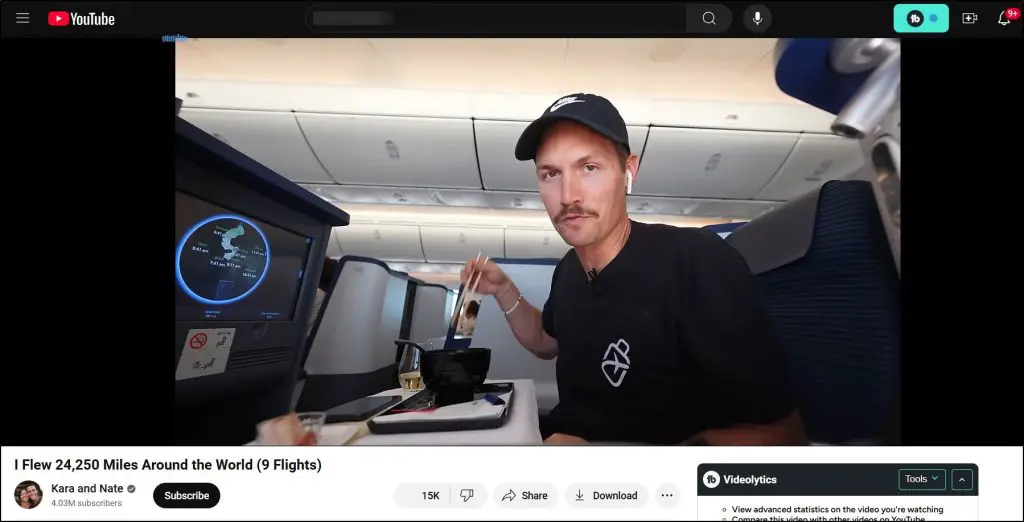
- Niche: Travel (mid-range-paying)
- RPM: $5–$10
- 1 Million Views Earnings: $5,000–$10,000
Kara and Nate document their travel adventures, offering travel tips and insights. Their content appeals to a wide audience, including budget travelers and adventure seekers.
Travel channels tend to have mid-range RPMs, with CPMs fluctuating based on the audience’s geographic location.
For instance, their videos focusing on destinations in Europe or North America attract higher CPMs due to the purchasing power of these audiences.
Additionally, they collaborate with brands like Airbnb and travel agencies, further boosting their earnings. Seasonal content, such as videos on holiday destinations, often sees higher engagement and CPM rates during peak travel seasons.
How Much Does YouTube Pay for 10 Million Views?
At average RPM ($2 to $6), YouTube pays $20,000 to $60,000 for 10 million long-form views.
In high-CPM niches, the numbers shift dramatically. A finance channel at $25 RPM earns $250,000 for 10 million views. A tech channel at $15 RPM earns $150,000. A gaming channel at $2 RPM earns $20,000.
MrBeast routinely hits 50 to 100 million views per video within days of posting. Even at a conservative $3 RPM — reflecting his broad entertainment audience — that works out to $150,000 to $300,000 per video from ad revenue alone, before merchandise, sponsorships, or his product businesses. His total income from YouTube ads is substantial but actually represents a smaller share of what he earns than most people assume.
For most independent creators, 10 million views on a single video is a significant milestone. At mid-range RPM it is real income. At finance-level RPM it can be genuinely life-changing.
4 Strategies to Earn More Per Million YouTube Views
How much YouTube pays you depends largely on your target audience, location, and other factors we’ve discussed in this article.
However, there are certain ways to optimize your advertising revenue and increase your earnings from YouTube ads.
Let’s quickly discuss them.
1. Create Content in High-RPM Niches
The most direct lever available. A channel covering personal finance, SaaS tools, business strategy, or professional development will consistently out-earn channels with identical view counts in lower-paying categories. If your content naturally spans multiple topics, check YouTube Studio to see which videos deliver your best RPM. Lean into those and weight your content calendar accordingly.
2. Target US and UK Audiences
Content that attracts viewers from high-CPM markets raises your effective CPM without changing how often you publish. Target US search queries, US seasonal events like tax season or Black Friday, and topics with concentrated US advertiser spend. You can create content that serves both a global and a US audience if you structure it right — the CPM difference makes it worth the effort.
3. Optimize Video Length for Mid-Roll Ads
Aim for 10 to 15 minutes to unlock mid-roll ad placements. Put mid-rolls at natural breaks — before a reveal, between a problem and its solution, at the end of a section. Avoid placing them mid-sentence or during a tense moment. A jarring mid-roll causes early dropouts, and the watch time loss from that costs more than the ad impression earns.
4. Improve Hook Strength and Watch Retention
A video with 500,000 views and 65% average view duration generates more ad revenue than a video with 1 million views and 25% duration, because completed views drive completed ads. Your first 30 seconds determine whether most viewers stay. Spend at least as much time refining your opening as you spend on the rest of the video. A strong hook is a revenue decision, not just a creative one.
4 Common Myths About YouTube Pay Per Million Views
Before finishing this article, I want to bust a few myths about YouTube’s advertising revenue.
Why? Because understanding them will help you create the right kind of content and maximize your earnings.
Myth 1: YouTube Pay Rates Are the Same Regardless of Niche
They are not, and the gap is large. A finance creator and a gaming creator with identical view counts can earn 10 to 20 times different amounts. YouTube pay per view comes from advertiser bids, not a fixed YouTube rate. Niche is the single biggest variable.
Myth 2: More Views Always Means More YouTube Income
Views only convert to income if ads run and viewers engage with them. Viewers using ad blockers, non-monetised regions, and policy-violating content all reduce your monetised view count below total views. The metric that matters is monetised views per session, not raw total views. A creator with 500,000 monetised views in a premium niche regularly out-earns one with 2 million total views in a low-CPM category.
Myth 3: Going Viral Pays Well
Often the opposite is true. Viral videos typically reach a broad, global audience that includes many viewers from low-CPM markets. One creator publicly shared that a video hitting 10 million views in entertainment earned around $800. A targeted finance tutorial from the same channel with 500,000 views from a US audience earned over $3,000. View quality matters more than view scale.
Myth 4: Subscribers Determine Your YouTube Pay
Subscribers help new videos find an audience faster, but they do not directly determine ad revenue. Your pay comes from ad impressions on your videos. A channel with 50,000 engaged subscribers in a high-RPM niche regularly out-earns one with 2 million subscribers posting low-CPM content.
So How Much Will You Earn From 1 Million YouTube Views?
How much YouTube pays for 1 million views is not one number. It is a range driven by everything covered here: niche, audience geography, video length, ad placement, and seasonality.
The creators earning $40,000 per million views are not lucky. They are in high-CPM niches, creating content that targets high-income audiences in premium ad markets, and publishing consistently enough to stay in the algorithm. Getting niche, geography, and retention right simultaneously is what separates a $2 RPM channel from a $20 RPM channel.
Whatever your RPM, treat ad revenue as one income stream among several. Channel memberships, sponsorships, affiliate marketing, and digital products all add compounding value on top of the audience you build.
Frequently Asked Questions
How much does YouTube pay for 1 million views?
YouTube pays $2,500 to $5,000 for 1 million views on a long-form video at average RPM. Finance and business channels earn $15,000 to $40,000 for the same view count. Gaming and entertainment channels typically earn $1,000 to $4,000. YouTube Shorts pay $50 to $200 per million views because of a different revenue model with lower RPMs.
How much does YouTube pay per view?
At average RPM of $2 to $6, YouTube pays roughly $0.002 to $0.006 per individual view on long-form content. In finance niches the per-view rate reaches $0.02 to $0.04. Shorts pay far less — typically $0.00005 to $0.0002 per view.
How much does YouTube pay for 100K views?
YouTube pays $200 to $600 for 100,000 long-form views at average RPM. In a high-paying niche like personal finance, 100K targeted views earns $2,000 to $4,000. Gaming content at the same view count earns $100 to $400. Check YouTube Studio for your own channel RPM — that gives a more accurate estimate than generic niche averages.
How much does YouTube pay for 10 million views?
At average RPM, 10 million long-form views earns $20,000 to $60,000. In premium niches the figure climbs sharply: a finance channel at $25 RPM earns $250,000 for 10 million views. A gaming channel at $2 RPM earns $20,000 for the same count.
How much does YouTube Shorts pay for 1 million views?
YouTube Shorts pay $50 to $200 per million views. Shorts use a pooled revenue model where 45% of the Shorts feed ad fund distributes across eligible creators by view share. Combined with lower per-impression ad rates and music royalty deductions, Shorts are a weak income vehicle compared to long-form content. Use them for growth, not revenue.
How many views do you need to make money on YouTube?
You need 1,000 subscribers and 4,000 watch hours in the past 12 months (or 10 million Shorts views in 90 days) to join the YouTube Partner Program. After joining YPP, every monetised view generates some revenue. Meaningful income — enough to notice — typically requires at least 100,000 monetised views per month consistently, which in most niches means regular publishing to an engaged audience of at least 5,000 to 10,000 subscribers.
Which YouTube niches earn the most money per million views?
Personal finance, business, and technology are the top-earning niches. Finance channels earn $20,000 to $40,000 per million views. Tech channels earn $10,000 to $25,000. Education and real estate sit in the $8,000 to $15,000 range. Gaming and entertainment channels earn $1,000 to $4,000. The differences come from advertiser CPM rates in each category, not from YouTube favouring any niche.
Which countries have the highest YouTube CPM rates?
The US, UK, Canada, and Australia generate the highest CPMs — typically $8 to $15 per 1,000 ad impressions. South Asian and Latin American audiences average $1 to $3 CPM. A channel with 1 million US-based views can earn 5 to 10 times more than one with the same count from a developing-market audience. You can see your CPM by country in YouTube Studio under Revenue analytics.
When is the best time of year to earn from YouTube?
Q4 — October through December — generates the highest CPMs of the year. Holiday advertiser spending around Black Friday and Cyber Monday pushes CPMs significantly above annual averages. January is consistently the worst month as advertiser budgets reset. If you plan a content launch or promotion, timing it for Q4 pays off in measurable extra income.
Does YouTube pay for views without ads?
Not significantly. YouTube ad revenue comes from ads, not views themselves. YouTube Premium viewers do generate a small creator share from subscription revenue based on watch time, but this is typically much lower than ad revenue per view. Views from non-monetised regions, policy-violating videos, and ad-blocked sessions contribute minimal or no revenue.
Can a viral video make you rich on YouTube?
Not automatically. Viral videos often reach a global audience that includes many low-CPM viewers. A meme video hitting 10 million views might earn $800. A targeted finance tutorial with 500,000 US views might earn $3,000 from the same channel. View quality — niche alignment and audience location — determines YouTube pay more than raw scale. Viral moments help channels grow, but that growth only converts to income if the new audience matches what advertisers pay for.
Table of Contents
Related Posts
Skool vs Thinkific (2026): My Comparison & Verdict After Using Both
How Many Views Is Viral? 2026 Benchmarks by Platform
Skool vs Whop (2026): I’ve Used Both (Comparison & Verdict)