
TL;DR: How to Market an Online Course
The short version: Course marketing works as a system with three stages. You earn attention before launch, turn that attention into email subscribers and then convert subscribers with proof, pricing and a clear offer.
Before launch: Lead with your own experience, build authority on one platform, presell to beta testers, start a free community and create a lead magnet.
Ongoing traffic: Optimize for Google and AI search, publish blog posts, post short videos, use podcasts and run free live workshops.
Partners and paid: Launch an affiliate program, set up retargeting and run Meta ads to your lead magnet.
Conversion: Write an email launch sequence, offer early-bird pricing and payment plans, share student results, add bonuses and keep showing up after enrollment closes.
My advice: Pick two traffic channels you can sustain for a year, build your email list from day one and let your course platform handle the checkout, coupons and affiliates.
Most online courses fail to sell for one plain reason. The creator builds the course first and starts marketing it on launch day, when nobody knows the course exists.
I’ve sold courses for years under Leading Learning and Tagoras. Learning Revolution itself grew through content, search traffic and an email list, and Celisa and I have built an audience for the Leading Learning Podcast over 450+ episodes.
The lesson that holds across all of it is that marketing starts long before the sales page goes live.
AI has raised the bar too. In a survey we cover in our elearning statistics, 57.3% of creators said they use AI daily, so AI-written posts and ads are everywhere. The marketing that stands out now shows real experience and real results.
In this guide, I’ll walk through 18 ways to market an online course, grouped by the stage where each one does the most work. For each one, I’ll cover what it is, how to do it and which tools help.
How Online Course Marketing Works
Course marketing works best as a system. Each stage feeds the next, and skipping one usually breaks the rest. Here’s how the 18 strategies in this guide fit together.
| Stage | Your goal | Strategies | What to measure |
|---|---|---|---|
| 1. Before launch | Prove demand and earn trust | #1 to #5 | Presale signups, community members, email subscribers |
| 2. Ongoing traffic | Get found by the right people | #6 to #10 | Search and AI visibility, video views, workshop signups |
| 3. Partners and paid | Reach people you can’t reach alone | #11 to #13 | Affiliate sales, cost per subscriber, cost per sale |
| 4. Conversion | Turn subscribers into students | #14 to #18 | Email click rate, sales page conversion, refund rate |
Before you market anything, validate your online course idea. My 3M Model checks market demand, your means to deliver and your own motivation. If the idea fails that test, no amount of marketing will save it.
Which Strategies Should You Start With?
You don’t need all 18 at once. Start with the ones that match your situation, then add more as your audience grows.
| Your situation | Start with | Why |
|---|---|---|
| No audience yet | #1, #2, #5 and #14 | You need trust and an email list before anything else will convert |
| Small audience, no budget | #3, #4, #7 and #10 | Presales and workshops turn a small audience into early revenue and testimonials |
| Strong expertise, weak online presence | #6, #7 and #9 | Search, blog posts and podcast guesting turn expertise into visibility |
| Existing audience, flat sales | #14, #15, #16 and #17 | The traffic is there, so the offer and follow-up need work |
| Budget for ads | #5, #12 and #13 | Ads work best when they lead to a lead magnet and retarget warm visitors |
Marketing Stage 1: Market Before You Launch
The work you do before launch decides how your launch goes. These five strategies build trust and an audience while you’re still creating the course.
1. Lead With Your Own Experience
AI tools like ChatGPT and Gemini can explain almost any framework in seconds. What they can’t offer is your experience, such as the projects you’ve run, the clients you’ve helped and the mistakes you’ve made along the way. That’s what people pay a course creator for, so put it at the center of your marketing.
For example, if you teach content strategy, share a screenshot of the analytics from a campaign that took off and explain what you changed to get there. If you teach freelancing, tell the story of a project that went wrong and what you do differently now. If you teach fitness, show your own progress and the routine behind it.
How to do it:
- List your proof points: Write down 10 results, client stories or lessons from your own work that relate to your course topic.
- Turn each one into content: Each proof point can become a post, a short video, an email or a section of your sales page.
- Show the process along with the result: A before-and-after screenshot works better with the three steps that got you from one to the other.
- Put your face on it: Add a short personal video to your sales page and record clips of yourself teaching.
I’ve written more about why this matters in my guide to authority assets and my tips on ways to humanize AI content.
2. Build Authority on One Social Platform
People buy courses from creators they trust, and social media is where many of them first meet you. Pick one platform where your audience already spends time and post useful content there consistently. For most B2B and professional topics, that’s LinkedIn or X. For creative and consumer topics, it’s often Instagram or TikTok.
Justin Welsh, a solo creator who sells courses on building a one-person business, grew his audience by posting practical, consistent advice on X and LinkedIn.

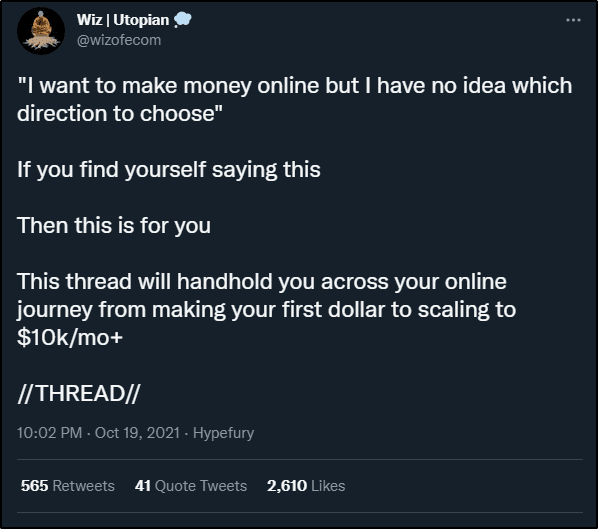
Wiz, who sells memberships to his exclusive content site, used long X threads the same way, sharing detailed lessons from his own e-commerce work.
How to do it:
- Choose one platform: Spreading yourself across five platforms usually means doing all five badly.
- Post three to five times a week: Mix quick tips, longer breakdowns and stories from your own work.
- Reply to others: Thoughtful replies on bigger accounts in your niche often bring more followers than your own posts.
- Send people to your lead magnet: Put a link to your free resource in your profile and mention it in your best posts.
Check out the free tools we’ve built for course sellers, coaches and edupreneurs
3. Presell Your Course to a Small Group of Beta Testers
Preselling means selling your course at a discount before it’s finished, usually to a small group who agree to give feedback as you build it. It’s the strongest test of demand there is, because people vote with their money.
Jenna Soard, a course launch coach, regularly recruits beta testers for new programs by email.

How to do it:
- Write a one-page outline: List the modules, the outcome and the format, such as weekly live sessions over six weeks.
- Offer a founding price: Give beta testers a clear discount in exchange for feedback and a testimonial if the course helps them.
- Set a minimum: Decide in advance how many buyers you need to go ahead, and promise a full refund if you don’t reach it.
- Teach it live first: Run the first version live, record it and turn the recordings into the self-paced course.
- Collect testimonials as you go: Ask for feedback after each module while results are fresh.
Preselling gives you four things at once. You get money in the bank before you build, feedback that improves the course, testimonials for your launch and a group of early fans who often become the core of your community. Running the first version as a cohort-based course makes all four easier.
4. Build a Free Online Community Around Your Course Topic
A free community gives future students a place to meet you, learn your teaching style and see what you know before you ask them to buy. It also shows you what your audience struggles with, which tells you what to teach and how to market it.
Here’s how the main options compare.
| Platform | Best for | Watch out for | Starting price (billed annually) |
|---|---|---|---|
| Skool | Simple communities with courses and gamification | Limited design and branding options | $7.50/mo |
| Circle | Polished, branded communities with events and courses | Costs more as you add features | $89/mo |
| Mighty Networks | Communities with their own branded mobile app | Top features sit on higher plans | $79/mo |
| Facebook Groups | Getting started fast where people already are | You don’t own the audience, and the feed is noisy | Free |
| Discord | Younger or tech-savvy audiences | Can feel chaotic for professional topics | Free |
How to do it: Start small and active. Post a question every day, share one quick tip a week and host a short live session once a month. Invite your first 50 members personally, since an empty community puts people off. Our guide to the best online community platforms compares more options.
5. Create a Lead Magnet to Grow Your Email List
Your email list is the one marketing channel you own. Social platforms change their algorithms, and search rankings move, but your list stays yours. That’s why building an email list matters more than any other strategy in this guide.
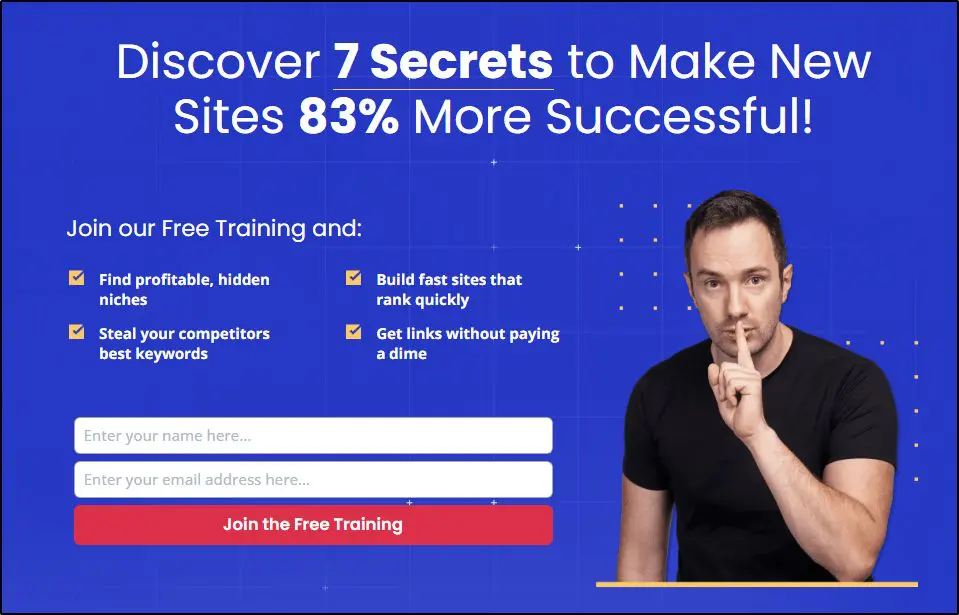
A lead magnet is a free resource people get in exchange for their email address. The best ones solve a small, specific problem connected to your course, so the people who download it are the people who might buy. AuthorityHacker’s free training is a good example, since it gives a real taste of the paid program.
| Lead magnet | Works best for | Effort to create |
|---|---|---|
| Checklist or template | Practical, step-by-step topics | Low |
| Short email course | Topics that need a few lessons to click | Medium |
| Video mini-training | Showing your teaching style | Medium |
| Live or recorded workshop | Higher-priced courses that need trust | Medium to high |
| Quiz or assessment | Topics where people want to know where they stand | Medium |
How to do it: Put the lead magnet on its own landing page, link it from your social profiles and add it to your most-visited blog posts. Connect it to an email tool such as Kit or MailerLite, so new subscribers get a welcome email right away. Our list of the best list-building tools covers the opt-in forms.
Marketing Stage 2: Ongoing Traffic That Keeps Finding You Students
Launches bring a spike of sales. These five strategies bring a steady flow of new people, so each launch starts with a bigger audience than the last.
6. Optimize Your Course Site for Google and AI Search
People still search Google for courses, but many now ask ChatGPT, Perplexity or Google’s AI Overviews too. Search engine optimization (SEO) helps you rank in regular results. Answer engine optimization (AEO) and generative engine optimization (GEO) help AI tools find, trust and recommend your content.
The good news is that the same work helps with all three. Here’s what to focus on.
| What to do | How to do it | Why it helps |
|---|---|---|
| Target buyer keywords on your course page | Use the phrase people search when they want to learn your topic, such as “bookkeeping course for small business owners” | Brings in people ready to buy |
| Answer questions plainly | Add a short, direct answer under each heading and an FAQ section to your sales page | AI tools pull clear answers they can quote |
| Show who you are | Add an author bio with your experience, credentials and links to your profiles | Helps search engines and AI tools trust the source |
| Use tables and lists | Put your syllabus, pricing and what’s included in a clear format | Easy for readers and AI tools to scan |
| Get mentioned elsewhere | Guest on podcasts, write for industry sites and get listed in roundups | AI tools recommend experts that other sources mention |
How to do it: Start with keyword research in a tool like Semrush to find what your audience searches. Then build one strong page per course, and support it with blog posts (strategy #7). My guide to using SEO to sell online courses walks through the full process.
7. Publish Blog Content That Answers Your Audience’s Questions
One course page can rank for a handful of keywords. A blog lets you rank for hundreds, by answering the questions your future students ask long before they’re ready to buy. Each post builds trust and sends readers to your lead magnet.
Jacob McMillen, a copywriter who sells copywriting courses, built much of his business on long, detailed blog posts that rank for competitive copywriting and freelancing searches.

How to do it:
- Find the questions: Search your topic on Google and open the People Also Ask box. Each question you click adds more. Reddit threads, your community and your inbox are just as useful.
- Answer one question per post: Lead with the answer, then explain how, with your own examples.
- Link every post to your lead magnet: Add an opt-in box in the middle and at the end of each post.
- Update your best posts: Refresh your top 10 posts every year so they stay accurate.

See my guide on blogging to market your course business for a full content plan.
8. Share Free Value With Short Videos
Short videos on YouTube Shorts, TikTok, Instagram Reels and LinkedIn let people see how you teach in under a minute. Longer YouTube videos do the same job and keep bringing in viewers for years, because YouTube works like a search engine.
Alex Cattoni, a copywriting course creator, drives much of her audience through practical YouTube tutorials.

Anton Kraly of Dropship Lifestyle uses Facebook video the same way, with short lessons on why new store owners fail.

Kat Norton, known as Miss Excel, grew a six-figure course business by posting quick Excel tips on TikTok, according to Thinkific’s case study.

| Platform | Best for | How long it takes to work |
|---|---|---|
| YouTube (long videos) | Tutorials people search for | Slow, often six to twelve months, but lasts for years |
| YouTube Shorts, TikTok, Reels | Quick tips that reach new people | Fast, but each video fades within days |
| LinkedIn video | Professional and B2B topics | Medium |
| Facebook video | Older audiences and groups | Medium |
How to do it: Record one longer video a week, then cut three to five short clips from it with a tool like Descript. Use VidIQ or TubeBuddy to find the topics people search on YouTube. My guide on how to start a YouTube channel covers the setup.
9. Start a Podcast or Guest on Other Shows
A podcast builds a different kind of trust. Listeners often spend half an hour or more with you in a single episode, which few blog posts or short videos can match. This is the strategy I know best, since Celisa and I have run the Leading Learning Podcast for 450+ episodes.
You have two ways in. Running your own show takes the most effort and builds the deepest trust. Guesting on other people’s shows takes less effort and puts you in front of an audience someone else already built.
| Option | Effort | Best for |
|---|---|---|
| Start your own podcast | High, every week for a year or more | Building long-term authority and relationships with guests |
| Guest on other podcasts | Low, an hour per interview plus outreach | Reaching new audiences fast, especially before a launch |
How to do it: If you start a show, host it on a platform like Buzzsprout and invite guests your students would want to hear from. If you guest, pitch shows whose listeners match your students, and offer one specific topic. Mention your lead magnet at the end of every interview. My guides on how to start a podcast, whether it’s still worth starting one and podcast content marketing go deeper.
10. Run Free Live Workshops
A free live workshop or webinar lets people experience your teaching for an hour before they buy. It works especially well for higher-priced courses, because live time builds trust faster than any recorded content.
How to do it:
- Teach one useful thing: Solve one real problem in the session, so attendees leave with a result.
- Keep the pitch short: Spend the last 10 minutes on your course, and give attendees a deadline-based bonus.
- Send the replay: Most signups won’t attend live, so email the replay within a day.
- Use a tool built for it: WebinarJam and Livestorm handle registration, reminders and replays.
Marketing Stage 3: Partners and Paid Promotion
Once your offer converts, partners and ads help you reach people beyond your own audience. Start these only after your sales page and email sequence work, or you’ll pay to send people to an offer that doesn’t sell.
11. Start an Affiliate Program
An affiliate program pays other people a commission for each sale they send you. The best affiliates for a course are trusted creators in nearby niches, such as podcasters, newsletter writers and consultants whose audiences match your students.
How to do it:
- Use your platform’s built-in tools: Kajabi, Thinkific and other course platforms include affiliate features that track links and commissions. Standalone tools like Rewardful work if your platform doesn’t.
- Recruit by hand: Reach out to 10 creators whose audiences fit, and make it easy with ready-made emails and graphics.
- Pay a commission worth their time: Course commissions need to be high enough to matter to a creator with a real audience.
- Pay after the refund window: Hold commissions until your refund period ends. This also protects you from affiliate fraud.
My guides on what to look for when recruiting affiliates and expert-curated affiliate marketing cover the details. Newsletter cross-promotions on Beehiiv work in a similar way.
12. Set Up Retargeting With the Meta Pixel and Google Tag
Most visitors leave your sales page without buying. Retargeting shows them ads afterward on Facebook, Instagram, YouTube or Google, so your course stays in front of people who already showed interest.
How to do it:
- Install the Meta Pixel and Conversions API: The pixel tracks visitors in the browser. The Conversions API sends purchase data from your checkout to Meta, which fills gaps that browser privacy settings create. Most course platforms support both through integrations.
- Install the Google tag: It lets you retarget visitors on YouTube, Google search and partner sites.
- Run small, specific ads: Show visitors a student testimonial, a short tour of the course or a reminder that enrollment closes soon.
Retargeting ads reach only warm visitors, so they usually cost less per sale than ads aimed at strangers. Start with a small daily budget and raise it once you see sales.
13. Run Meta Ads to Your Lead Magnet
Facebook and Instagram ads let you reach new people by interest, job title or behavior. For courses, the ads that work best usually send people to a free lead magnet or workshop. A free offer is a much easier first step for someone who’s never heard of you.
How to do it: Start with one lead magnet, one audience and two or three ad versions. Track the cost per subscriber, then follow up with your email sequence (strategy #14). Our high-converting Facebook ads guide covers targeting, creative and setup in detail.
Marketing Stage 4: Turning Subscribers Into Students
Everything above brings people to you. These last five strategies decide whether they buy. If your traffic is healthy and sales are flat, start here.
14. Write a Course Launch Email Sequence
Email is where most course sales happen. Your social posts, videos and ads bring people in, and your email sequences build enough trust for them to buy.
You need two sequences. A welcome sequence of three to five emails introduces you, delivers the lead magnet and shares your best free advice. A launch sequence runs over one to two weeks, usually around a free workshop, and ends with the offer and a deadline.

| When | What it does | |
|---|---|---|
| 1. The problem | Day 1 | Names the problem your course solves and shares a quick win |
| 2. The story | Day 2 | Shares how you solved it yourself, with real results |
| 3. The invitation | Day 3 | Invites them to your free workshop |
| 4. The offer | After the workshop | Opens enrollment with the price, bonuses and deadline |
| 5. The proof | Two days later | Shares student results and answers objections |
| 6. The last call | Final day | Reminds them the deadline or bonus ends tonight |
How to do it: Pick an email tool that connects to your course platform. Kit is popular with creators, ActiveCampaign suits more advanced automation and MailerLite keeps costs low. Our roundup of the best email marketing platforms compares them, and my email marketing best practices cover deliverability.
15. Offer Early-Bird Pricing, Payment Plans and a Value Ramp
Pricing is marketing too. The way you structure your offer can move more people from “maybe” to “yes” than another month of content.
- Early-bird pricing: Offer a lower price or an extra bonus for the first few days of enrollment. Use a real deadline, and keep it.
- Payment plans: Split the price into three or four monthly payments. Many creators charge a little more in total for the plan, which covers failed payments.
- A Value Ramp: Offer tiers at different price points, such as self-paced access, access plus group coaching and access plus one-on-one help. My Value Ramp framework explains how to build the ladder.
Don’t price by length. During a session I facilitated at one of our Tagoras virtual conferences, a participant asked how much the session leader had to cut registration fees after shortening his organization’s workshop.
My answer was that he shouldn’t cut the price at all. If you deliver the same value or more in less time, you can charge more. That’s one reason microlearning has become such a strong business model.
CopyHackers, for example, sells its Copy School as an annual pass with a discount or as a monthly pass.

How to do it: Most online course platforms let you set coupons, payment plans and multiple pricing options at checkout. Use our online course pricing calculator to test price points, and read my guide on how to price online courses before you decide.
16. Share Student Success Stories
Nothing sells a course like proof that it works for people like the buyer. Student stories answer the doubt every buyer has, which is whether the course will work for them.
ClickFunnels built a whole YouTube series, Funnel Stories, around interviews with successful users.

Gina Horkey, who teaches people to become virtual assistants, keeps a success stories section on her site with detailed student interviews.

How to do it: Ask every student for feedback at the end of each module, and follow up with the ones who got results. Record short video interviews, and share the specifics, such as what they did, how long it took and what changed. Keep the results real and typical. The FTC has fined course sellers over misleading earnings claims and undisclosed testimonials, which I cover in my article on whether online courses are a scam.
17. Add Bonuses That Make Your Offer Easier to Say Yes To
Bonuses add value without lowering your price. The best bonuses remove a specific obstacle that might stop someone from buying or finishing.
| Bonus | Removes this objection |
|---|---|
| Templates and swipe files | “I don’t have time to build this from scratch” |
| A live Q&A or group call | “What if I get stuck?” |
| Community access | “I won’t stay motivated on my own” |
| A guest expert session | “I need more than one perspective” |
| A quick-start guide | “I don’t know where to begin” |
How to do it: Pick two or three bonuses that match the most common objections you hear. Put a deadline on at least one of them to support your early-bird offer.
18. Keep Showing Up After Enrollment Closes
If you sell through launches with enrollment windows, many interested people won’t buy this time. They can still become buyers next time, so keep marketing between launches.
Share what happens inside the course, such as a student win, a workshop highlight or a lesson you’re adding. Samar Owais, an email strategist, does this well by posting behind-the-scenes updates from her programs.

How to do it: Add a waitlist to your sales page while enrollment is closed, and send waitlist members updates every few weeks. When enrollment opens, they hear first.
Choose a Course Platform With Marketing Built In
Your course platform handles the checkout, so it shapes how easy most of these strategies are. Here’s how five popular platforms compare for marketing.
| Platform | Marketing strengths | Best for | Starting price (billed annually) |
|---|---|---|---|
| Kajabi | Built-in email, funnels, landing pages and affiliates in one place | Creators who want one tool for everything | $143/mo |
| Thinkific | Affiliates, coupons, payment plans and a large app store | Creators who want a strong course builder and integrations | $82/mo |
| Teachable | Simple checkout, coupons, order bumps and affiliates | Beginners who want to start selling quickly | $29/mo |
| LearnWorlds | Site builder, coupons and order bumps on all plans, plus affiliates | Creators who want interactive courses and a full website | $44/mo |
| Podia | Built-in email marketing, digital downloads and webinars | Creators selling several product types on a budget | $42/mo |
In my experience, the platform matters less than consistency with your marketing. Pick the one that fits your budget and the features you’ll use. Our reviews of Kajabi, Thinkific, Teachable, LearnWorlds and Podia go into detail.
A 90-Day Online Course Marketing Plan
Here’s how to put the strategies into a 90-day plan if you’re starting with a small audience.
| Weeks | Focus | Tasks |
|---|---|---|
| 1 to 2 | Validate | Test demand, write a one-page outline and set up your lead magnet and email tool |
| 3 to 6 | Presell | Post three to five times a week, invite people to a beta group and presell to your first students |
| 7 to 10 | Teach and collect proof | Run the beta live, gather testimonials and write your welcome sequence |
| 11 to 12 | Prepare the launch | Build the sales page, set up early-bird pricing and write the launch sequence |
| 13 | Launch | Run a free workshop, open enrollment and send the launch emails |
After the first launch, repeat the cycle with one new traffic channel each quarter, such as blogging, podcast guesting or ads.
My Take on Marketing an Online Course
The creators who wait until launch day to market a course usually end up with a finished course and no buyers. Marketing works best when it starts with the first module and keeps going after enrollment closes.
Overall, I recommend a simple setup. Lead with your own experience, build your email list from day one, pick two traffic channels you can keep up for a year and let your platform handle the checkout, coupons and affiliates. Add partners and ads once your offer converts.
If you’re still at the start, see my guides on how to create an online course and how to sell courses online. Once students enroll, my tips for raising online course completion rates help turn them into the success stories that sell your next launch.
Frequently Asked Questions (FAQs)
Here are short answers to common questions about marketing an online course.
What is the best way to market an online course?
The best way is to build an email list before you launch. Share your experience on one social platform, offer a free lead magnet and presell to a small group of beta testers. Then use an email launch sequence, often around a free workshop, to turn subscribers into students.
How do I market my online course with no audience?
Start by choosing one platform where your students spend time and posting useful advice three to five times a week. Create a lead magnet so followers join your email list. Guest on podcasts, join communities in your niche and presell to a small beta group to get your first students and testimonials.
How can I promote my online course for free?
Free channels include social media posts, blog content optimized for search, YouTube videos, podcast guesting, a free community and an email list. These take longer than ads but keep working. Presales and free live workshops also bring in early sales without any ad spend.
How long does it take to see results from course marketing?
Short-form video and podcast guesting can bring new followers within weeks. SEO, blogging and long YouTube videos often take six to twelve months to build steady traffic. Most creators see their best results after two or three launches, once their email list and testimonials grow.
Do I need ads to sell an online course?
No. Many creators sell courses through email, content and partnerships alone. Ads help you grow faster once your sales page and email sequence convert. Start with retargeting ads to warm visitors and Meta ads to a lead magnet, then scale what works.
Should I use a webinar to sell my online course?
A free live workshop works well for higher-priced courses because it lets people experience your teaching before they buy. Teach one useful thing, keep the pitch short and send the replay. For lower-priced courses, an email sequence and sales page are often enough.
How do AI search tools like ChatGPT find online courses?
AI tools recommend courses and experts that appear clearly and often across the web. Help them by answering questions plainly on your pages, adding an FAQ and author bio, using tables for your syllabus and pricing and getting mentioned on podcasts and industry sites.
What are the biggest course marketing mistakes?
The biggest mistakes are building the course before testing demand, waiting until launch day to start marketing and skipping the email list. Others include spreading across too many platforms, running ads to a sales page that doesn’t convert and making income claims you can’t back up.

Jeff Cobb, Founder of Learning Revolution
Jeff Cobb is an expert in online education and the business of adult lifelong learning. Over the past 20+ years he has built a thriving career based on that expertise – as an entrepreneur, a consultant, an author, and a speaker. Learning Revolution is a place where Jeff curates tips, insights, and resources to help you build a thriving expertise-based business. Learn more about Jeff Cobb here.
Table of Contents
Related Posts
How Dorie Clark Went from 20K to 600K Instagram Followers | Lessons & Frameworks
19 Ways To Find New Content Ideas For Your Blog and Social Media Accounts
Can You Still Make Money Selling Online Courses in the AI-Age? My Honest Response