

You already know that starting a podcast is an excellent way to learn new things, grow your influence, and market your products and services.
But with over 10 million podcasts on Spotify, Apple Podcasts, and YouTube, do you even have a chance as a beginner? How do you stand out and grow a successful podcast from scratch?
There’s certainly a lot of competition. But don’t forget that there are more podcast listeners than ever.
According to a study by Statista in April 2025, 55% of American adults have watched or listened to a podcast in the last month.
So, the demand for good podcast content is on the rise.
In this article, I’ll share proven podcasting tips to help you start a podcast the right way and claim your piece of the pie in this fast-growing industry.
Let’s get started.
Looking for the right platform to host your podcast?
See our review of the 10 Best Podcast Hosting Platforms.
How To Start A Podcast For Free

I wanted to talk about this early on because I know a lot of people want to take the free route when they first start out.
That’s fine – in fact, I recommend it – just be aware that if you decide to continue on after your first several episodes, you are probably going to want to upgrade your production tools and hosting pretty quickly.
So, we’ll be sure to talk about that more later in the article.
Testing the podcasting waters
As far as free goes …
Starting a podcast isn’t quite as easy as recording a video on your phone, but it isn’t much more complicated. You can use your phone or an existing computer mic to capture audio at no extra cost. If you’re really not sure if podcasting is for you, this is the fastest and simplest way to test the water.
Podcast editing
You will need some audio editing software to make your podcast sound good, especially if you’re only using a basic microphone. The good news is that one of the best all-rounds is Audacity, an open-source software that works on Windows, macOS, GNU/Linux, and more. Using Audacity, you can record audio, cut and edit the recording, add effects, remove artifacts, and export to almost any format you can name. Even pros often stick with Audacity over other, more expensive software.
We did our best to provide decent audio and production quality, but our equipment was just our laptops, a Skype account, and a couple of Logitech headsets.
I did all of the editing myself using GarageBand. We eventually graduated to significantly better microphones and later to outsourcing the editing and production.
Podcast interviews
If you plan to conduct interviews, then you’ll need a way to capture remote audio. One of the best ways to do this for free is with Zoom, so long as you keep your interviews under the 40-minute limit for free meetings.
Podcast platforms
Finally, you are going to need a platform for hosting and distributing your audio files. While you can, technically, host audio files on your website, keep in mind that this could slow down your site significantly as people access the content. It’s really better to use a podcast host that is optimized for streaming audio.
And dedicated podcast hosting platforms will make it easy for you to get your podcast into the major directories like Apple Podcasts and Spotify, essential if you want people to actually find your podcast.
Final Words On Starting A Podcast For Free
Keep in mind that “investment” isn’t just about money. One of your most valuable resources is your time, so you will want to weigh how much of your time it is worth putting into a podcast. For example, we moved to a seven-part series format on Leading Learning over the past year, which made it possible for us to dive deep on specific topics. We produced some great content, but frankly, the amount of work involved relative to the return was just too high. We’re now going back to a standard weekly episode format.
Read about our top podcast recording and editing software
How To Start A Successful Podcast: 15 Tips For Beginners
Before you grow a podcast, you must find the right podcast hosting platform that hosts your content in various formats and helps you list it on the leading podcast directories.
We’ve already researched and reviewed the best free and paid podcast hosting platforms to help you make the right choice.
Once you choose a hosting platform and start your podcast, follow these podcasting tips to stand out.
Podcasting Tip #1: Choose A Podcast Niche
The first rule of content creation on any platform is to choose a niche.
Why? Because targeting everyone is not targeting at all. So, if you don’t want to create generic content that no one cares about, choose a niche for your podcast.
What exactly is a podcast niche? It’s a broad topic with a passionate audience. For example, NFTs is an excellent podcast niche with thousands of curious listeners willing to learn more about it. A podcast focused on NFTs can publish dozens of episodes covering the topics from different angles.
Fitness and weight loss is another podcast niche example with millions of passionate listeners who want to improve their bodies.
You can find dozens of niche ideas by exploring any podcast directory. For example, here are the main podcast categories on Spotify.

Similarly, here are the categories on a podcast discovery site.

How do you decide if a podcast niche is worth choosing?
- You’re passionate and knowledgeable about it.
- It’s evergreen and in demand throughout the year
- It has sufficient search demand
- It is expandable and has several sub-niches and topics you can cover as your podcast grows.
- It is profitable, and businesses are already making money from it by selling physical and digital products.
- It targets specific regions or audience segments.
Evaluate different podcast niche ideas on these criteria and choose the one closest to your interests and passions.
Podcasting Tip #2: Define Your Business Goals
Where does podcasting fit in your broader business goals? What do you want to achieve through podcasting? In other words, what’s the end goal?
For example, Shopify has a dedicated podcast featuring successful eCommerce business owners called Shopify Masters.

Similarly, Mailchimp has a dedicated podcast, Call Paul, that discusses the challenges of small businesses.

Both these podcasts motivate listeners to overcome business challenges and achieve their goals. As a result, they drive hundreds of leads and customers for their respective platforms.
Many online course sellers use podcasts to grow their audience, build a relationship with them by sharing free value, and ultimately convert them into customers. But some podcasts mainly focus on increasing their listenership to earn advertising revenue.
What’s your goal? Branding, lead generation, or making money with advertising and affiliate offers? Your answer determines your podcast’s direction, content type, and marketing strategy.
My Experience With The Leading Learning Podcast
Of course, your objectives can evolve over time. When we started Leading Learning, we did it specifically to provide content in advance of a live event we were hosting.
The idea was that the podcast would help showcase the speakers and also provide content that attendees would have as a common point of reference. We didn’t actually intend to turn it into a long-running show at that point.
Around that same time, though, we were beginning to increase our efforts to get sponsors for our events, both online and off, and it soon became clear that the podcast could grow into another area for sponsorship.
Over time, that’s meant that we’ve needed to strike a balance between creating content that is capable of attracting sponsors while also addressing audience needs and helping us to grow our listener base.
Podcasting Tip #3: Understand Your Audience’s Needs
If you want to create podcasts that resonate with your audience, provide them value, and get organic traffic through referrals and word of mouth, you must understand your audience’s main questions, concerns, and problems.
Think from their perspective. Why should they spend an hour listening to your podcast? What’s in it for them?
How do you find your audience’s questions? Here are a few ways.
Google Search
Search your main topic on Google and scroll to the “People also ask” section to find the most commonly searched questions.
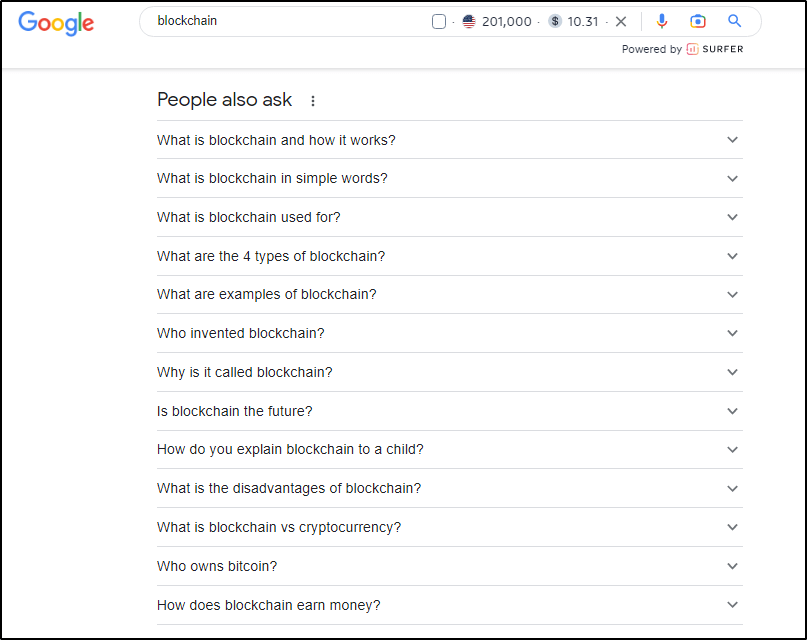
Then scroll to the bottom of the search page to find keywords related to your main topic.

Click on relevant keywords to open their search page and analyze their “People also ask” sections. You can find dozens of questions with this simple technique.
Competitor Analysis
Search for competing podcasts on Apple Podcasts, Spotify, and Google Podcasts to analyze the topics they cover. Similarly, look for popular YouTube podcasts on your topic and note down the main points they cover.
Comment Analysis
You can find raw user feedback in YouTube comments and Amazon book reviews. Explore the most popular videos and books on these platforms to monitor your audience’s questions.
For example, look at the comments on a YouTube video about choosing the right eCommerce platform.

I could immediately see three comments where people asked questions. If I run an eCommerce podcast, I’d note these points to cover in a future episode.
Discussion Forums And Social Networks
Discussion forums and social media threads are literal goldmines for podcasters. You simply need to find the most popular threads on your topic and dive into the discussion to find your audience’s most burning questions.
Quora is an excellent site for such research.
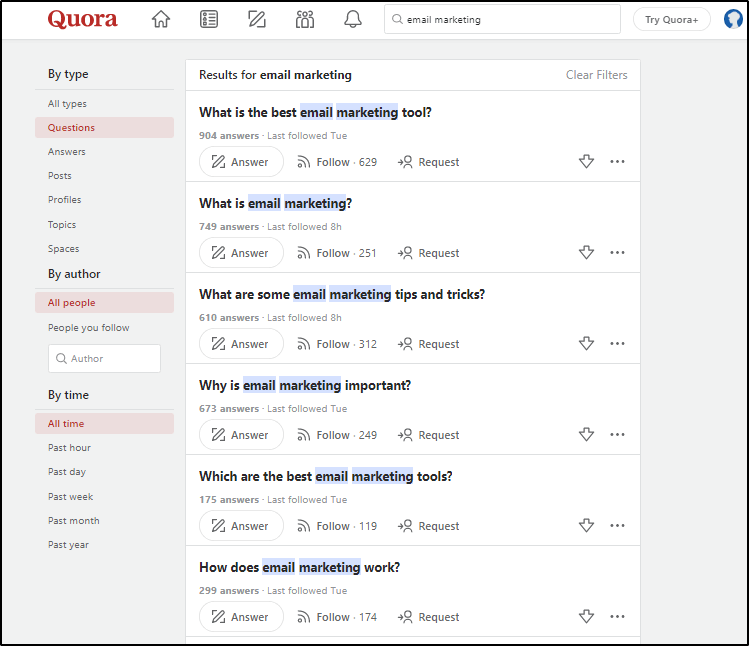
For example, in the screenshot above, Quora showed me the most popular email marketing questions on its platform. Each of these questions is a thread with hundreds of responses full of priceless audience insights.
So, the next time you start a podcast, try these methods to understand what your audience wants to learn so that you can become their go-to knowledge source.
Podcasting Tip #4: Build Your Personal Brand Identity
If you want to stand out in a crowded podcast niche, you must carve your unique identity. Your audience should be able to recognize your podcast by its personality, theme, voice, and style.
Don’t just be another easily replaceable host interviewing successful people. Instead, have your own style and personal brand image.
For example, you might want to be known as an aggressive and straightforward podcast host like the popular BBC talk show HardTalk. Or you could be an empathetic host like Oprah.
Similarly, you can be known as someone who uses lots of stats, data, research, and scientific evidence in your arguments.
You need to be intentional about what you want to be known for because this would dictate your podcast’s content, script, guests, and even its introductory soundtrack.
Podcasting Tip #5: Create A Podcast Format
If you want your audience to eagerly wait for your podcasts, you must create an engaging and consistent podcast structure.
There are two ways to do this.
Firstly, understand the various podcast types you can use.
Interview style podcast: You invite a guest, ask questions, and discuss ideas.
Solo podcasts: You address your viewers directly and share your expertise and knowledge on a topic.
Round table podcasts: Multiple podcast participants have a group discussion on a topic.
Storytelling podcasts: You narrate a story with fictional characters and help your audience understand its moral.
You can stick to one podcast format for all your episodes or mix different formats to make it more interesting. For example, you can have a weekly interview-style podcast and a solo podcast once a month.
In addition, every podcast must follow a structure. For example, you could start with a one-minute introduction to your guest, their achievements, and why the audience should listen to them. Then you could kick off the main discussion and have an audience Q&A at the end.
You can’t arrive at the perfect format from day one, so be flexible, try different formats, and stick to the most effective one.
Podcasting Tip #6: Start With Short Podcasts
“How long should a podcast be?” is among the most common beginner questions.
What’s the answer? There is no correct answer because podcast length shouldn’t be your primary concern.
Instead, you should focus on making every minute of your podcast valuable for your listeners. So your podcast can be two hours long or last just a few minutes.
But to give you some idea, 62% of the podcasts hosted on Buzzsprout have a duration of under 40 minutes.

I believe it’s generally better for beginners to start with short podcasts.
Why? Because building an engaging discussion is a skill you only learn with practice. If you try to copy the top podcasters in your niche doing 2-3 hour-long episodes, you’ll drag the discussion and lose your audience’s interest.
So, start with short 20-30 minute podcasts, and as you discover your style and polish your podcasting skills, increase the length as needed.
Podcasting Tip #7: Use A Script For Assistance
You might not notice it, but even experienced podcasters use scripts to keep their podcasts on track. So, as a beginner, you should always use a podcast script.
However, the extent to which you script your podcast depends on its content type.
For example, if you’re doing an interview podcast, you should ideally have an intro script and then a list of questions for your guest. After that, the rest of the content can be spontaneous.
Here’s an example podcast introduction script:
“Welcome to , I’m your host [your name], and today we have a very special guest with us. He’s known for [achievements] and is an expert in [topic]. Welcome to the show [guest name]. We’ll pick [guest name]’s brains about [topic] and try to understand how you can benefit from [any trend]. I’m super excited, and I’m sure you’ll love this discussion.”
But if you’re doing a solo or storytelling podcast, you must have a detailed script so that you don’t forget important points and keep your audience engaged till the end.
Podcasting Tip #8: Carefully Choose Your Podcast Guests
If you do interview-style podcasts, the quality of your content relies heavily on your guests. Knowledgeable, interesting, and entertaining guests make your podcasts attractive to listeners and help you grow faster.
Here are some factors you must consider when choosing guests for your podcast.
Relevance: They should be relevant to your audience’s interests.
Expertise: They must be experts in their fields or at least have some unique achievements that your audience can learn from.
Influence: Target influential guests with a sizable online audience to attract more listeners to your podcast. But, of course, the top influencers would rarely agree to come to your podcast if you’re just starting. So, the better strategy is to target influencers with a slightly bigger following than you. Then gradually move towards higher-profile guests as your podcast gains popularity.
Reputation: Invite guests with a clean reputation because you don’t want to associate your podcast with someone with a shady background.
Where do you find exciting podcast guests?
Twitter: Many content creators, experts, and influencers create Twitter threads sharing knowledge with their audiences. Keep an eye on the best content creators in your niche and invite the ones who can provide the most value to your listeners.
Competitor Analysis: Dive into your competitors’ podcast archives to find interesting guests for your show.
Success Stories: Look out for success stories in your industry that aren’t covered by other podcasters. For example, if you do eCommerce podcasts, regularly search for Shopify, Etsy, Amazon, and WooCommerce success to find valuable podcast guests.
YouTube: Experts and professionals who regularly create YouTube content in your niche can be excellent podcast guests.
Events: Attending physical and virtual events can help you connect with new and interesting guests for your podcasts.
Podcasting Tip #9: Let Your Guests Speak
“Let them speak” is among the most frequent comments you’ll find under podcasts and interviews on YouTube. People want to listen to your guests, so please let them speak.
As a host, your job is to facilitate the discussion and get as much value from your guests as possible. You can only do that when you give your guests the space to express themselves, think about their responses, and discuss the topic in a relaxed environment.
So, don’t impose yourself on the guest or try to dominate them to appear the most knowledgeable person in the room.
Similarly, don’t let your personal bias take over and turn the discussion into a confrontation. It’s ok to cross-question your guest or follow an aggressive theme if that’s how your show is structured. But don’t allow it to come across as disrespectful or egoistic.
The best hosts keep the spotlight on their guests, take a keen interest in their responses, and make them the hero of their content.
Podcasting Tip #10: Invite Your Popular Guests Again
There’s nothing wrong with inviting popular guests again and again. In fact, sometimes, a follow-up discussion is precisely what your audience wants.
Doing so not only allows you to build on your previous discussion but also attracts more traffic because of the first session’s popularity. It’s also beneficial for your guest because they get more spotlight and free publicity.
But don’t do this more than twice a year unless you have something unique to talk about or have a strong demand from your audience.
Podcasting Tip #11: Collaborate With Established Podcasters
Collaborating with other podcasters who’re slightly ahead of you in terms of audience and influence is an excellent way to grow your podcast and reach new listeners.
Here are some of the ways you can do that.
- Guest appearances: Reach out to other podcasters to pitch yourself as a guest by suggesting interesting discussion ideas. Remember, every podcaster is looking for new and valuable content ideas. So, if you can offer them something that adds value to their show and makes them look good to their audience, they’ll happily invite you.
- Interview swaps: Instead of pitching yourself as a guest, offer an interview swap where you interview a particular podcaster, and they interview you on their channel. This would help both of you reach new audiences and grow your influence.
- Shout-outs: If a guest appearance isn’t possible for now, you can strike a deal to promote each other on your shows through shoutouts or simply ask your listeners to check out each other’s shows.
- Joint episodes: Sit together with another podcaster to interview a guest or discuss ideas in joint episodes published on your respective channels.
Podcasting Tip #12: Create A Dedicated And Optimized Podcast Website
If you want to attract organic traffic to your podcast and turn it into a brand, you must create a dedicated podcast website.
This is critical for two reasons.
- It reduces your reliance on third-party platforms that you don’t own. For example, if a platform removes or deletes your podcast for any reason, you’ll survive because of your own audience.
- You’ll be able to optimize your website for search engines and drive organic traffic. You’ll do that by creating a new page for every new podcast episode and writing a summary of your discussion to help search engines index your content. This is critical because search engines can’t interpret audio files.
Lewis Howes’ website is an excellent example.

Lewis has a popular podcast with thousands of listeners. His website has a dedicated podcast section where he publishes new episodes with a detailed text description that reads like a blog post.
This helps him attract thousands of monthly visitors without relying on any podcast platform.
Podcasting Tip #13: Convert Your Podcast Listeners Into Email Subscribers
Another key benefit of a podcast website is that it allows you to convert your listeners into email subscribers.
Why is that important? Because you don’t own the contact details of your listeners on Apple or Google Podcasts. So, you’re basically living on rented land, and if a platform removes your podcast, you’ll come crashing down to zero without any listeners.
But when you routinely convert your listeners into email subscribers, you can contact them directly, allowing you to promote your podcast, online courses, and digital products.
Let’s return to Lewis Howes’ website because he does an excellent job attracting email subscribers.

This is one of the signup forms that pop up on his website to convert visitors into email subscribers.
What’s in it for the subscribers? He sends them a weekly wrap of his podcasts with a summary of each episode keeping his subscribers updated and allowing them to listen to the episodes that resonate with them the most.
How can you build an email list from your podcast? Here are some ideas.
- Add signup forms on your podcast website.
- Use different lead generation tools like exit intent popups or slider forms to attract subscribers.
- Create a lead magnet for your podcast listeners, place it on a landing page, and share the link in your podcast description. And don’t forget to remind your listeners to sign up during your podcast.
Podcasting Tip #14: Distribute And Repurpose Your Podcast Content
A podcast is a goldmine of knowledge.
So why not take the maximum benefit by repurposing your podcast into multiple content types? This would help you reach a broader audience on different platforms, increase brand awareness, and attract new listeners.
Here are a few ways to do it.
YouTube Podcasts: Millions of people watch podcast videos on YouTube. So, don’t limit your content to audio-only. Instead, record a video version as well to publish on YouTube, Facebook, and other long-form video platforms.
Short Clips: Turn your audio or video podcasts into engaging short clips for YouTube Shorts, TikTok, Facebook Reels, Instagram, and Twitter.
Blog Posts: Take segments of your podcast and turn them into well-written blog posts to attract organic search traffic.
Social Media Posts: Summarize your podcasts using Twitter threads and posts on LinkedIn and Facebook.
Podcasting Tip #15: Create Anticipation For Future Podcasts
Regularly engage your audience on your website and social media platforms by asking them who to invite next or leaving hints about your future guests.
Create polls or leave questions for your audience to generate interest in your upcoming podcast episodes.
Lex Fridman, who runs a popular podcast and a YouTube channel of 2 million+ subscribers, regularly engages his audience before his new podcast episodes.

Engaging your audience and taking their feedback seriously helps you build a strong bond with them and create a loyal community of fans around your podcast. This ultimately translates into more referrals and word-of-mouth marketing.
Affordable Podcasting Equipment For Beginners
Here is basic set of equipment for hosting a high-quality podcast. It’s what we used for the Leading Learning podcast:
- Audio-Technica ATR2100-USB Cardioid Dynamic USB Microphone – Excellent quality at a very reasonable costs. We use two of these. Along with them we use:
- Two foam ball wind screens – to prevent “popping” when saying letters like “p”
- Two suspension booms – to hold the mics in place while we talk
- Ecamm Call Recorder – for recording interviews over Skype. Ecamm is Mac-only. PC users can use CallBurner
- Garage Band – for editing. This is free on Macs. You can also use Audacity, also free, on Mac or PC. Or, if you want to go higher end, Adobe Audition.
- Libsyn – for hosting. Soundcloud and Blubrry are also good choices. Don’t just host the files on your Web site, though. You want a host that can support streaming well and provide you with stats.
The intro and outro music we use for the podcast is called You Are So Money and was licensed from RoyaltyFreeMusic.com for about $50 or so. You may also be able to find something you like in the stock music clips included in programs like Garage Band
Are You Ready To Start Podcasting?
The best time to start a podcast was five years ago. But the next best time is today because the demand for new, engaging podcasts has never been higher.
So, stop thinking and take action.
Start by reading our guide to podcasting and choosing a podcast hosting platform. From there, use the tips I’ve shared in this article to create engaging content and grow your influence.
Let me know if you have any questions.

Jeff Cobb, Founder of Learning Revolution
Jeff Cobb is an expert in online education and the business of adult lifelong learning. Over the past 20+ years he has built a thriving career based on that expertise – as an entrepreneur, a consultant, an author, and a speaker. Learning Revolution is a place where Jeff curates tips, insights, and resources to help you build a thriving expertise-based business. Learn more about Jeff Cobb here.
Table of Contents