

TL;DR: Best Email Marketing Platforms for Creators (2026)
An email marketing platform helps creators and course sellers grow their audience, build relationships, and sell digital products through automated email campaigns.
It’s your 24/7 marketing assistant for capturing leads, sending personalized messages, and turning subscribers into paying customers without constant manual effort.
Here are the best email marketing platforms for creators, coaches, and small businesses in 2026:
1. Kit (formerly ConvertKit) – Best Overall: The most creator-focused platform for selling courses, memberships, and digital products with simple automation and clean workflows that just make sense.
2. ActiveCampaign – Most Advanced Automation: Built for scaling. Runs complex, behavior-based funnels and AI-driven automations across email, SMS, and WhatsApp — ideal for serious marketers.
3. Sender.net – Best Free Plan: A beginner-friendly email tool that gives full automation, segmentation, and SMS marketing completely free for up to 2,500 subscribers.
4. Moosend – Most Affordable: Powerful automation and analytics at just $9/month. Great for small teams who want pro-level tools without enterprise pricing.
5. MailerLite – All-in-One Simplicity: Combines email, landing pages, websites, and AI writing tools in one lightweight platform — perfect for coaches and consultants who want to move fast.
6. Beehiiv: Ideal for newsletter creators, educators, and content-driven businesses that want to grow and monetize through storytelling and paid subscriptions.
7. Brevo (formerly Sendinblue): A full marketing suite with email, SMS, WhatsApp, and CRM. Excellent for small businesses managing leads and clients across multiple channels.
8. GetResponse: A mature platform that offers complete funnels, webinars, and automation — great for coaches and course creators who want everything in one tool.
9. AWeber: Known for rock-solid deliverability and ease of use, with an AI Newsletter Assistant that helps you send consistent, on-brand emails each week.
10. Mailchimp: Best for established creators and ecommerce sellers who want advanced analytics, predictive segmentation, and a rich set of integrations.
11. Constant Contact: Dependable, AI-assisted email platform with strong deliverability and built-in social and SMS posting — a solid all-rounder for small businesses.
If you’re looking for an online course platform with advanced email marketing features, Kajabi and Thinkific are the best options.
You’ve probably seen the study which says email marketing has an ROI of $36 for every dollar spent (so, $1000 spent on email marketing earns you $36000).
But did you know how crucial email marketing is for selling online courses, coaching programs, membership sites, and other forms of digital products?
According to a survey by Teachable, 66% of course sellers who earned between $10K to $20K in the past 12 months considered email as their number one source of customers.
But you can’t build an email marketing strategy without using the right email marketing software, which has the necessary features to help you build, grow, engage, and monetize your email list.
So, in this article, we’ll share some of the best email marketing platforms for online course sellers and other expertise-based businesses.
To make your choice easier, we’ll give you a summary of each tool’s strengths and weaknesses, along with our verdict.
Read: The best online course platforms with email marketing features
Comparison of the Best Email Marketing Services for Course Creators and Small Businesses (2026)
Before we dive deeper, let me give you a quick bird’s eye view of my top choices for the best email marketing tools and software for creators.
| Email Marketing Platform | Best For | Weaknesses | Starting Price / Free Plan |
|---|---|---|---|
| Kit (formerly ConvertKit) | Course creators, coaches, YouTubers, authors, and digital educators | Lacks native AI writing tools, limited analytics, TeachKit not a full LMS | $33/month (Free for up to 10,000 subscribers) |
| ActiveCampaign | Coaches, course sellers, and creators running multiple funnels with advanced automation | Steeper learning curve, more expensive for large lists | $15/month (14-day free trial) |
| Beehiiv | Newsletter creators, educators, media-style brands, and content-driven businesses | Limited marketing automation, weaker CRM features, not built for ecommerce | $43/month (Free for up to 2,500 subscribers + 30-day trial) |
| MailerLite | Coaches, consultants, and small businesses needing landing pages and email in one | Basic reporting, limited testing options, small free plan limit | $10/month (Free for up to 500 subscribers + 14-day premium trial) |
| Moosend | Course sellers, consultants, and small ecommerce brands needing affordable automation | Dated interface, fewer integrations than major players | $9/month (30-day free trial) |
| Brevo (formerly Sendinblue) | Coaches, consultants, small ecommerce brands, and service providers needing all-in-one marketing and CRM | Crowded dashboard, email design less flexible | $8.08/month (Free plan – 300 emails/day) |
| GetResponse | Course creators, coaches, and digital sellers needing funnels and webinars | Dated UI, cluttered tagging system, limited design templates | $19/month (14-day free trial) |
| AWeber | Small businesses and creators wanting simple, reliable automation and deliverability | Basic templates, limited segmentation, dated design library | $12.50/month (Free for up to 500 subscribers or 14-day full-feature trial) |
| Mailchimp | Ecommerce brands, established creators, and small businesses scaling with data-driven marketing | Prices scale quickly, dashboard can feel overwhelming | $13/month (Free for up to 500 contacts) |
| Sender.net | Course creators, coaches, and solopreneurs needing automation on a budget | Basic templates, limited reporting visuals | $6.50/month (Free for up to 2,500 subscribers and 15,000 emails/month) |
| Constant Contact | Coaches, course creators, and small businesses needing dependable email delivery and AI assistance | Costlier higher tiers, limited advanced automation in lower plans | $12/month (14-day free trial) |
The Best Email Marketing Software Platforms for Small Businesses and Creators (2026)
When you’re a creator or small business, your email marketing needs are totally different from big brands or enterprise marketers.
You’re not running massive, cross-department campaigns. Instead, you’re building personal connections, nurturing leads, and selling digital products or services.
You need tools that focus on deliverability, automation, and ease of use instead of corporate-level CRMs.
That’s why we’ve handpicked platforms built specifically for solopreneurs, edupreneurs, creators, and small businesses.
Whether you’re a coach, consultant, or course seller, these email marketing services give you everything you need to grow, engage, and convert your audience in 2026.
Read: The best list building tools to turn traffic into email subscribers
1. Kit (formerly ConvertKit)
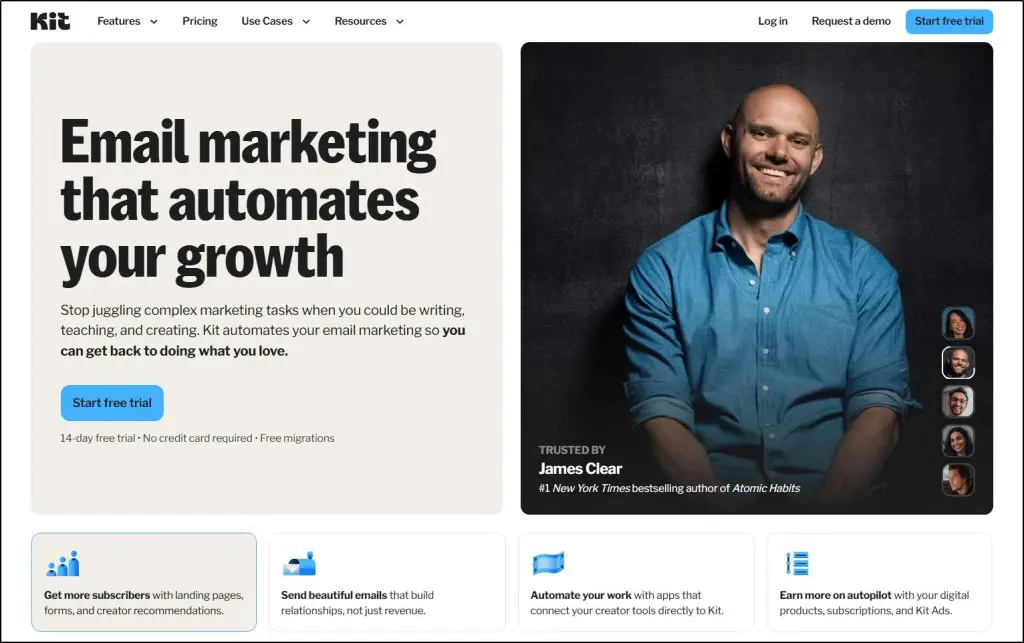
Main strengths: Creator-focused automation, excellent deliverability, built-in product sales, and newsletter monetization.
Starting price: $33/month (Creator plan)
Free plan or trial: Free for up to 10,000 subscribers (includes 1 automation and 1 sequence)
Best for: Course creators, coaches, YouTubers, authors, and digital educators
Kit, formerly known as ConvertKit, is one of the most creator-friendly email marketing platforms around. It’s also my top choice for thes best email marketing service for creators and small businesses.
Kit built for people who earn through their audience, whether that’s selling courses, coaching programs, digital products, or paid newsletters.
It combines powerful email automation with easy landing pages, audience segmentation, and built-in tools to help you sell and monetize directly from your list.
I’ve used Kit for years (back when it was ConvertKit) mainly for building automated sequences and lead-nurturing funnels. It’s still my go-to for creators who want clean, visual workflows that make sense without needing a tech background.
Its free plan is generous, allowing up to 10,000 subscribers, which is rare among professional tools.
Kit’s new updates have added some smart AI-assisted features through integrations like Lex for content suggestions and engagement scoring on Pro plans. The new App Store is also a big step forward, letting you connect tools like Canva, Thinkific, and Circle in just a few clicks.
That said, Kit still lacks native AI email generation and deep analytics you’ll find in enterprise tools. And while TeachKit is a nice touch for mini-courses, it’s not yet a full LMS replacement.
Still, if you’re a beginner creator or a small business looking for user friendly but robust email marketing solution, Kit is a great choice.
2. ActiveCampaign
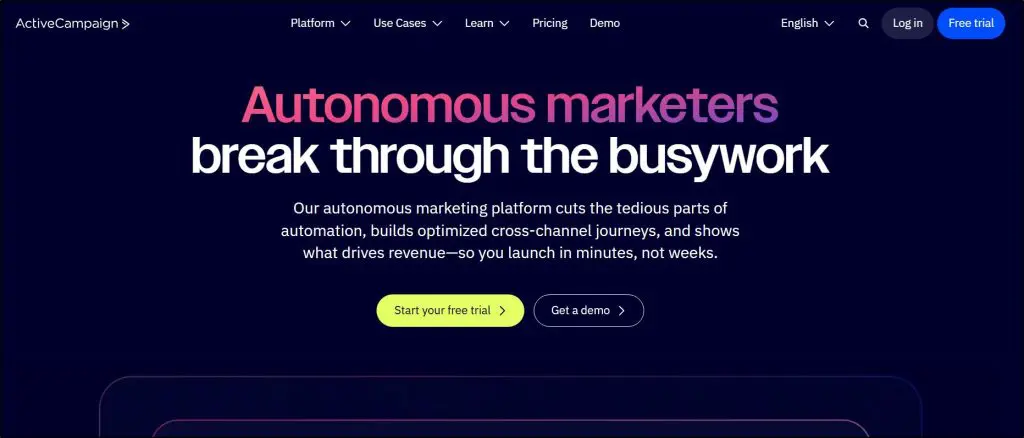
Main strengths: Advanced automation builder, deep segmentation, AI-powered campaign creation, cross-channel marketing (email, SMS, WhatsApp)
Starting price: $15/month (Starter)
Free plan or trial: 14-day free trial
Best for: Coaches, course sellers, and creators who run multiple funnels and want deep personalization across email and messaging channels
ActiveCampaign is the email marketing software I currently use for my businesses.
It’s built for creators and small businesses that have moved beyond the basics of email marketing.
ActiveCampaign is one of the most advanced automation tools you can use without hiring a full-time tech team. I’ve used it to replace multiple tools like one for email, another for SMS, and even parts of my CRM because it combines all of that in one clean workflow.
Its automation builder is where ActiveCampaign really shines.
You can trigger personalized email sequences based on how subscribers behave, like clicking a course sales page, downloading a lead magnet, or finishing a lesson.
The new AI agents make things even faster.
You can describe your funnel, and the AI campaign builder will design a full workflow with emails, conditions, and timing already mapped out.
For creators who sell courses or coaching programs, this level of control is gold. You can run automated onboarding, upsells, and re-engagement sequences that feel personal.
Add WhatsApp or SMS for reminders before webinars or coaching calls, and it turns into a true cross-channel system.
The reporting tools are also exceptional.
You can track exactly which campaigns generate revenue or which segments bring the most engagement.
The platform does have a learning curve, especially for beginners who just want simple newsletters, but once you set up your workflows, it runs your marketing almost on autopilot.
If you’re serious about scaling your online business and want a system that can handle advanced funnels, behavioral triggers, and AI-driven strategy, ActiveCampaign is one of the most powerful tools you can pick.
3. Beehiiv

Main strengths: All-in-one newsletter and website platform, email automations, audience segmentation, monetization options, and built-in ad network
Starting price: $43/month (Scale plan)
Free plan or trial: Free for up to 2,500 subscribers + 30-day trial on paid plans
Best for: Newsletter creators, educators, small media brands, and content-driven businesses
Beehiiv isn’t your typical email marketing tool. It’s more like a creator publishing platform that combines newsletters, websites, and monetization into one system.
Built by former Morning Brew team members, Beehiiv focuses on helping writers, educators, and digital publishers grow an owned audience and turn it into a revenue stream.
Now, it’s important to be clear.
Beehiiv isn’t built for complex marketing automations like ConvertKit or ActiveCampaign. You won’t find advanced CRM triggers, deep behavior tracking, or abandoned cart flows.
Instead, it’s made for content-driven creators who want to grow through storytelling, newsletters, and community engagement, not ecommerce funnels.
So why does Beehiiv deserve a place on this list? Because it delivers almost everything a beginner creator or small business actually needs:
- You can send unlimited newsletters and build beautiful landing pages without code.
- You get automation for welcome sequences, re-engagement campaigns, and segmentation by behavior.
- You can monetize directly with paid subscriptions or join Beehiiv’s ad network to attract sponsors.
- And the Boosts feature helps you cross-promote with other newsletters to grow faster.
Its new Beehiiv AI tools assist with writing, editing, and optimizing subject lines, while 3D analytics offer deeper insight into reader engagement. It’s surprisingly capable for creators who want both growth and monetization in one dashboard.
And unlike Substack, you own your audience. Every subscriber email belongs to you — Beehiiv lets you export your entire list anytime, so you’re never locked in. That’s a big plus for creators who see their email list as a real business asset.
Overall, Beehiiv sits somewhere between ConvertKit and Substack. It’s not a full marketing automation suite, but far more powerful than a basic newsletter tool.
If your focus is publishing, teaching, or building a media-style brand, Beehiiv gives you a modern, creator-first way to do it all under one roof.
4. MailerLite

Main strengths: AI writing assistant, visual automation builder, landing pages and websites, digital product sales
Starting price: $10 per month
Free plan or trial: Free for up to 500 subscribers and 12,000 monthly emails, plus a 14 day premium trial
Best for: Coaches, consultants, course creators, small businesses, paid newsletters, simple funnels
MailerLite is a clean, creator friendly email marketing platform that bundles the essentials of email marketing software with easy website and landing page tools.
You can design campaigns in a drag and drop editor, build signup forms and pop ups, and run email automation that welcomes new subscribers, scores engagement, and sends behavior based follow ups.
It also supports digital product sales and paid newsletter subscriptions, which makes it one of the best free email marketing services to start with before you scale.
I have used MailerLite for list building and welcome sequences, along with simple evergreen funnels for course launches and coaching waitlists.
The visual automation builder and quick segmentation make it easy to tag subscribers by source or interest, then send targeted campaigns that feel personal. Integrations with Stripe, Shopify, WordPress, WooCommerce, Make, Zapier, and Canva cover most creator workflows.
Recent AI upgrades include an AI email generator for subject lines and copy, Smart Sending to optimize send times, dynamic content blocks, multivariate testing, and surveys or quizzes to boost engagement.
What it still lacks are very deep testing options and enterprise level analytics, and the free plan is capped at 500 contacts.
If you need ultra advanced CRM logic, a tool like ActiveCampaign may go further, but for most creators and small businesses MailerLite hits the sweet spot for email marketing tools and landing pages in one place.
5. Moosend

Main strengths: Powerful automation workflows, advanced segmentation and tagging, detailed analytics, affordable pricing
Starting price: $9 per month
Free plan or trial: 30-day free trial (no credit card required)
Best for: Coaches, consultants, course sellers, digital product creators, and small ecommerce brands
I’ve used Moosend for years when helping small business owners and course creators set up email automation and nurture sequences that feel personal but run on autopilot. It’s affordable, feature-rich, and surprisingly powerful for its price.
Moosend’s automation builder is a standout.
You can visually map customer journeys using triggers, conditions, and actions that respond to real-time behavior. For example, when someone signs up, views a product, or clicks a specific link, you can send perfectly-timed emails, move them into a new segment, or tag them automatically.
The prebuilt automation “recipes” like onboarding, re-engagement, or cart recovery save a ton of setup time.
Segmentation in Moosend is also next-level.
You can combine tags, custom fields, demographics, engagement data, and even predictive analytics like weather or location to target your audience more precisely.
I’ve built everything from simple lead nurture flows to multi-step email sequences that convert subscribers into long-term customers.
The built-in AI helps with subject lines, recommendations, and send-time optimization, while reports include heatmaps, real-time tracking, and conversion data that make optimization easy.
My only gripe is that its interface isn’t as sleek as newer tools like Kit or Beehiiv, but in terms of automation power and deliverability, Moosend punches far above its weight.
It’s a workhorse for creators and small businesses who want serious marketing automation without breaking the bank.
6. Brevo (formerly Sendinblue)
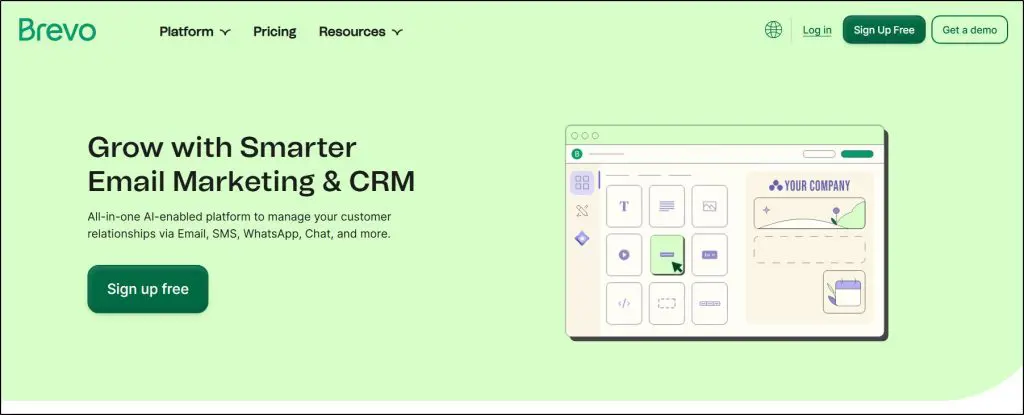
Main strengths: Multichannel campaigns (Email, SMS, WhatsApp), advanced automation builder, built-in CRM, AI-powered segmentation and optimization
Starting price: $8.08 per month
Free plan or trial: Free plan (300 emails/day)
Best for: Coaches, consultants, small businesses, ecommerce stores, and service providers who want marketing and sales automation in one tool
Brevo is another email marketing platform I’ve used for several client projects where the goal wasn’t just to send emails, but to manage the entire customer journey from first signup to repeat purchase.
Brevo goes far beyond a typical email platform.
It’s a complete email marketing and CRM suite that brings together email, SMS, WhatsApp, chat, push notifications, and even loyalty programs in one place.
The real power lies in its automation and segmentation.
Brevo lets you create visual workflows triggered by real-time actions such as when someone signs up, clicks a link, visits a page, or makes a purchase.
You can set up branching conditions, test different paths, and score contacts based on engagement. I’ve built welcome series, abandoned-cart follow-ups, and reactivation sequences that automatically switch channels between email and SMS depending on user behavior.
Its newer Aura AI features are impressive.
The AI can generate content, segment contacts intelligently, and optimize send times for each subscriber. Combined with its CRM tools like drag-and-drop pipeline management, lead scoring, and meeting scheduling, it’s ideal for small teams that need marketing and sales automation under one roof.
You also get transactional email capabilities (like password resets or order confirmations), strong deliverability, and integrations with over 150 apps including Shopify, WordPress, and HubSpot.
If there’s one limitation, it’s that the dashboard can feel crowded for beginners, and the email design flexibility still lags behind simpler tools like MailerLite or Beehiiv.
But for serious creators and small businesses that want to automate their entire sales funnel, not just send newsletters, Brevo is one of the best all-in-one email and CRM platforms available today.
7. GetResponse
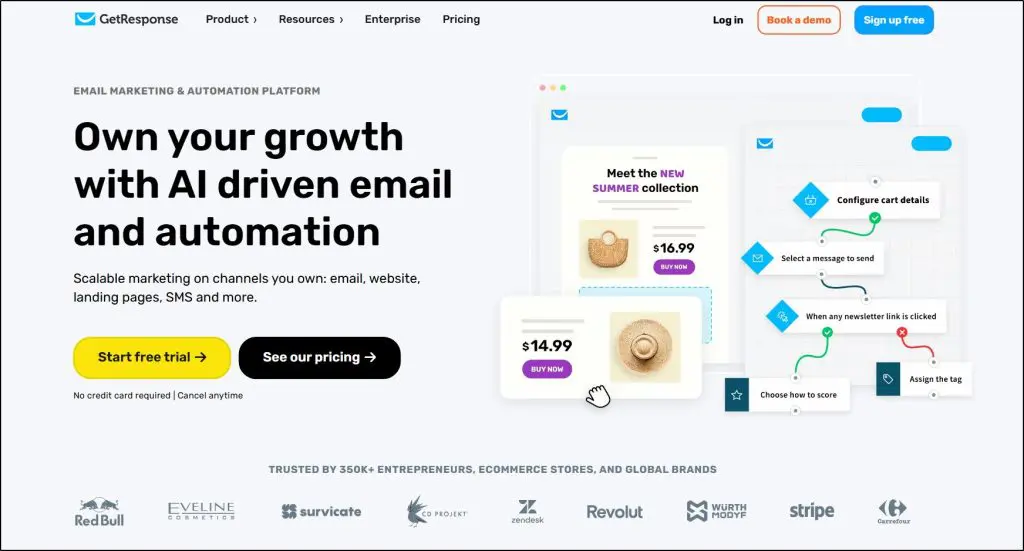
Main strengths: Reliable automation builder, solid segmentation and tagging, built-in funnels and webinars, affordable all-in-one setup
Starting price: $19/month
Free plan or trial: 14-day free trial
Best for: Course creators, coaches, and digital product sellers who want mature automation tools without the cost of enterprise platforms
I’ve used GetResponse with several coaching clients and course sellers who wanted to automate their lead nurturing without juggling multiple apps. It’s one of the oldest names in email marketing, but it has kept up well with modern creator needs.
You can still do all the basics like newsletters, autoresponders, popups, and landing pages. But what sets it apart is how smoothly everything connects.
For example, I’ve built onboarding sequences that welcome new course buyers, follow up on webinar attendees, and re-engage inactive students, all inside the same visual automation builder.
It’s not as sleek as newer tools like Kit or Beehiiv, but it’s more complete. You can score leads, tag behaviors, and set precise triggers without hitting feature walls.
Its built-in webinars and funnels are genuinely useful for selling courses or coaching packages. The newer AI tools help draft emails or structure lessons, though they still need a personal edit.
Where GetResponse falls short is in its design templates and UI polish. Both feel dated compared to Moosend or Beehiiv. The tagging system also feels cluttered if you manage multiple lists.
Still, for creators who’ve outgrown the limits of simple newsletter tools but don’t want the overhead of HubSpot or ActiveCampaign, GetResponse is a dependable middle ground that quietly gets the job done.
8. AWeber
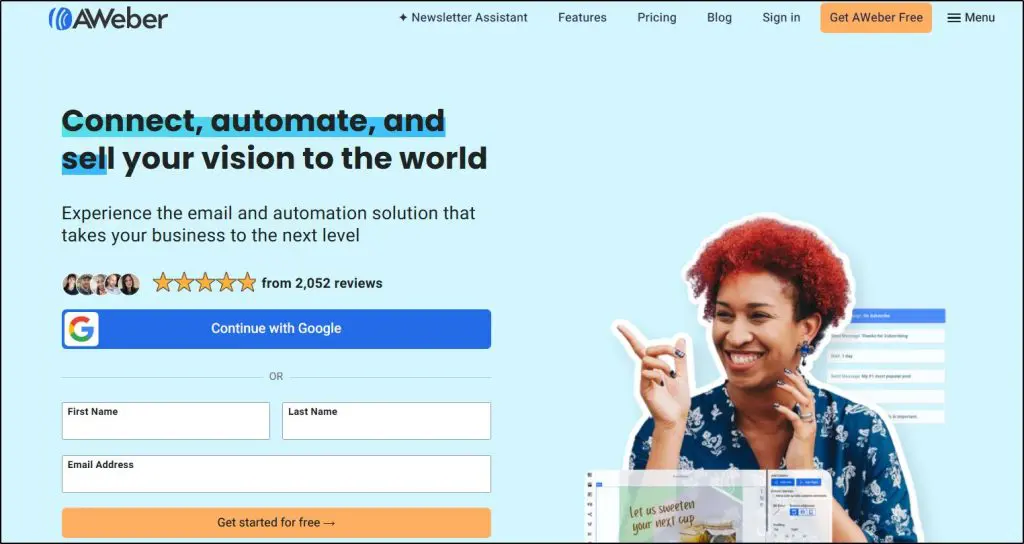
Main strengths: Reliable deliverability, easy automation, AI newsletter assistant, affordable all-in-one plans
Starting price: $12.50/month (Lite)
Free plan or trial: Free for up to 500 subscribers or 14-day full-feature trial
Best for: Small businesses, coaches, and creators who want dependable, AI-assisted email marketing without tech overwhelm
AWeber was one of the first modern email marketing platforms (it’s been around for over 20 years). Like many digital marketers and bloggers of that era, I used it extensively in my early days.
What’s impressive is how it continues to evolve, staying relevant with features like the AI Newsletter Assistant, which writes newsletters in your own tone and sends ready-to-edit drafts each week.
AWeber strikes a great balance between automation, ecommerce, and simplicity. You can easily create welcome sequences, nurture campaigns, or sell digital products and coaching programs directly through email.
Most automations like onboarding or abandoned cart sequences come nearly prebuilt, so setup takes minutes.
What makes AWeber stand out, even today, is its inbox reliability. While tools like Kit, Mailchimp, or Moosend might have fancier interfaces or deeper AI, AWeber’s deliverability rate is still among the best.
Your emails consistently reach subscribers’ inboxes and that reliability translates into real revenue.
But its template designs and analytics are a bit dated, and segmentation isn’t as advanced as newer tools.
But if your priority is stable performance, fast setup, and guaranteed inbox placement, AWeber remains one of the most trustworthy and creator-friendly email marketing platforms around.
9. Mailchimp

Main strengths: Advanced automations, AI-driven content and optimization, deep integrations, predictive segmentation
Starting price: $13/month (Essentials)
Free plan or trial: Free for up to 500 contacts (limited features)
Best for: Ecommerce brands, established creators, and small businesses ready to scale with data-driven marketing
Mailchimp has been one of the most popular email marketing platforms for years, especially among beginners.
Back when most tools offered nothing for free, Mailchimp stood out with its free plan for up to 2,000 subscribers, which made it the go-to platform for new creators and small businesses starting their first list.
That free plan isn’t available anymore, though the current version still includes a limited free tier for up to 500 contacts.
I’ve used Mailchimp with creators, coaches, and small ecommerce brands who needed more than just basic newsletters. Its automation builder is still one of the best, letting you create sequences that respond to real behavior like browser abandonment, course sign-up follow-ups, or personalized re-engagement campaigns.
Mailchimp’s AI-powered content tools are surprisingly good at saving time. The built-in copy generator, subject line helper, and predictive segmentation help you target the right people with the right message.
Plus, its integrations with Thinkific, WooCommerce, and Canva make it a solid hub for anyone who sells products or digital courses online.
The main drawback is that Mailchimp’s pricing scales quickly as your audience grows, and the dashboard can feel overwhelming for beginners.
But for creators and small businesses who want pro-level automation and analytics without switching to a complex enterprise tool, Mailchimp still deserves its long-standing reputation as one of the most complete email marketing platforms around.
10. Sender.net
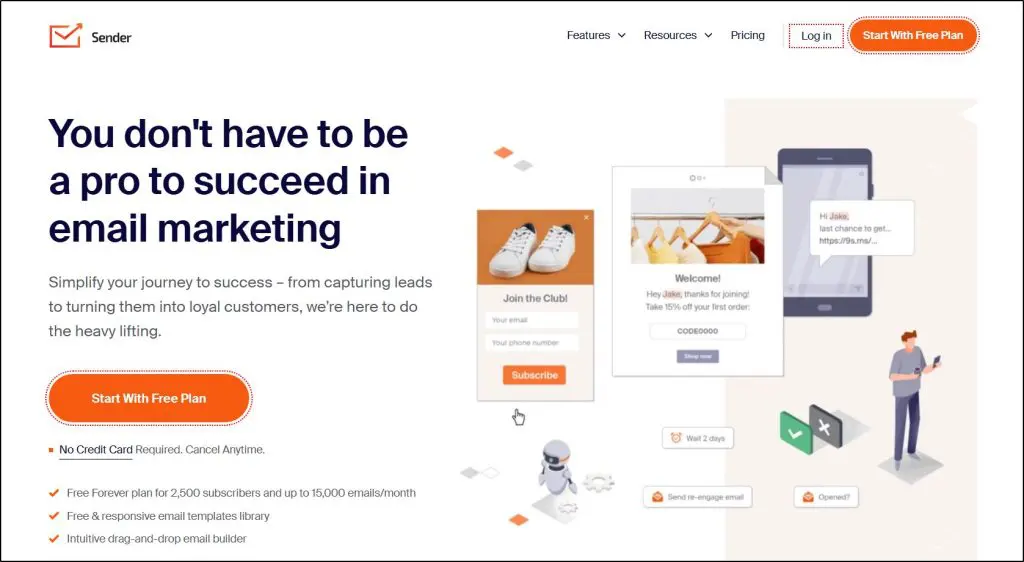
Main strengths: Generous free plan, solid automations, built-in SMS marketing, quick setup, excellent deliverability
Starting price: €6.01/month (Standard)
Free plan or trial: Free forever for up to 2,500 subscribers and 15,000 emails/month
Best for: Course creators, coaches, and small digital product sellers who want professional automation on a tight budget
Sender.net feels like what Mailchimp was in its early days — simple, affordable, and generous.
Its free plan stands out even today, giving full access to automation, segmentation, landing pages, popups, and analytics without forcing you to upgrade.
I’ve worked with coaches and course sellers who used Sender to build their first real email funnel, and they were able to automate everything from lead magnets to course launch sequences in a single weekend.
The automation system makes it easy to send welcome emails, lesson reminders, or re-engagement sequences when subscribers go inactive.
You can also connect SMS automation to your funnels, which is a powerful way to send quick reminders before live coaching calls, webinars, or cart closings.
Sender’s segmentation options help you organize subscribers based on behavior, like who clicked a course sales page or watched a video. It’s great for sending targeted follow-ups that move people from free content to paid offers.
Deliverability has been strong in my experience, and the platform’s drag-and-drop email builder is fast and easy for non-designers.
The design options are not as refined as Brevo or MailerLite, and reports could be more visual, but the overall value is hard to beat.
If you want to grow your audience, automate follow-ups, and keep your communication consistent without spending a fortune, Sender.net is one of the most practical and reliable tools you can pick.
11. Constant Contact
Main strengths: Excellent deliverability, powerful automation templates, AI content creation, integrated SMS and social posting
Starting price: €12/month (Lite)
Free plan or trial: 14-day free trial
Best for: Coaches, course creators, and small businesses that want reliable email delivery, AI help, and multi-channel marketing in one place
Constant Contact has been around since the early days of email marketing, but it’s evolved into a modern, AI-driven platform that helps creators grow faster. Coaches and course sellers use it to manage their full marketing cycle, from lead capture to nurturing and sales follow-ups, all within one dashboard.
Simplified automation is its biggest strength. You can launch ready-to-go sequences for onboarding new subscribers, reminding inactive students, or promoting new course modules without touching code.
The AI campaign builder can even suggest entire sequences and write emails for you. Plus, you can reuse that same content for social media posts or SMS messages, keeping all your channels consistent.
Constant Contact’s reporting and segmentation tools help you see exactly who’s engaging with your content and create segments based on clicks, purchases, or behavior. It’s especially useful for coaches who run periodic challenges or course launches and need to time their follow-ups precisely.
The platform’s 97% deliverability rate is one of the best in the industry, which means your emails actually reach your audience instead of landing in spam.
It’s not the cheapest tool, and some of its advanced automation features are locked behind higher-tier plans, but for small businesses and creators who want a mix of AI assistance, reliability, and all-in-one simplicity, Constant Contact remains a dependable choice.
What Is Email Marketing Software?
An email marketing platform is software that helps you connect with your audience through automated, personalized emails. You can use it to send newsletters, nurture leads, announce product launches, or follow up with customers, all without doing it manually every time.
Modern email marketing software goes far beyond just sending messages. You can build your list with forms and popups, tag and segment your subscribers, set up automated sequences that respond to user actions, and track exactly what’s working.
Many even include AI tools to write subject lines, suggest content, and personalize campaigns at scale.
For creators, coaches, and course sellers, an email marketing platform is often the engine behind everything from growing your audience to turning subscribers into paying clients or students.
It keeps your business running while you focus on creating, teaching, or coaching.
Why Is An Email Service Provider (ESP) Important For Your Creator Business?
If you want to sell courses, memberships, coaching programs, or consultancy services to thousands of customers worldwide, you need to grow an email list.
By sharing valuable content with your subscribers, you can position yourself as an authority, win their trust, and convince them to buy your offer.
For example, Justin Welsh, an audience-building expert with over 200K subscribers, drives traffic from LinkedIn and Twitter to grow his email list.

Then, he shares tons of high-value content through emails to win his subscribers’ trust and sell them his training programs.
Is he doing all that manually? Of course not.
It’s all automated using an email marketing platform or Email Service Provider (ESP).
An ESP allows you to convert your website or social media traffic into subscribers and automatically send emails in their preferred time zones.
Email platforms help you send personalized messages and create tailored email experiences for your subscribers, increasing your chances of converting them into customers.
They also help you track subscriber activity and uncover valuable audience insights, allowing you to create emails your audience wants to read.
In short, if you want to create and execute an email marketing strategy for your eLearning business, you’ll need to invest in a robust email marketing platform.
Read: 21+ email marketing best practices for creators
What Features To Look For in an Email Marketing Tool
If you sell online courses, run a membership, or coach clients, your email platform is more than a communication tool. It’s the heart of your marketing engine that helps you attract leads, nurture relationships, and drive sales on autopilot.
Here are the features that truly matter for your business.
1. Forms & Landing Pages
You’ll need built-in signup forms, pop-ups, and landing pages that help you turn traffic into subscribers. The best tools let you create lead magnets or opt-in pages that connect directly to your email sequences.
For a course creator, this means you can collect emails during a webinar, on your sales page, or even from your YouTube channel, and automatically deliver a free lesson or guide to start building trust with new leads.
2. Subscriber & List Management
A strong list management system helps you understand every subscriber’s journey. You should be able to see where they signed up, what they clicked, and which course or coaching offer they’re interested in.
For a coach or edupreneur, this insight helps you track warm leads and identify when someone is ready for a higher-ticket offer. It also keeps your communication personal and relevant without constant manual sorting.
3. Audience Segmentation
Segmentation is what lets you send the right message to the right people. Look for a tool that lets you group subscribers by tags, purchase history, interests, or behavior such as webinar attendance or quiz results.
If you sell multiple programs, segmentation ensures that your email about an advanced course goes only to those who’ve completed the beginner level, keeping your marketing targeted and effective.
4. Drag-and-Drop Visual Email Designer
You don’t need a designer to create beautiful emails. The best email platforms come with a visual editor where you can add images, testimonials, videos, or call-to-action buttons.
For course sellers, this makes it easy to design branded launch emails, share new lessons, or announce limited-time discounts without hiring anyone or touching code.
5. Email Automation & Sequences
Automation is where your business begins to scale. Choose a platform that allows you to create multi-step workflows, such as welcome emails, onboarding sequences, and re-engagement campaigns.
As a coach or course creator, you can use automation to onboard new students, send reminders for live sessions, and promote upgrades automatically while focusing on your core work.
6. AI Tools & Features
AI has become a big part of modern email marketing. Look for tools that offer AI writing assistants, smart segmentation, and automated campaign optimization.
This can save huge amounts of time for solo creators. You can generate newsletter drafts, write engaging subject lines, and even predict the best send times so your audience gets emails when they’re most likely to read them.
7. Third-Party Integrations
Your email tool should connect smoothly with your website, course platform, CRM, and payment systems. Tools like Thinkific, Teachable, Kajabi, Stripe, and Zapier should integrate without friction.
For an edupreneur, integrations help automate the entire customer journey. When someone buys your course, the system can automatically enroll them, send them a welcome sequence, and tag them as a customer — no manual steps needed.
8. Detailed Analytics & Reporting
You need more than open rates. Look for an email platform that tracks clicks, sales, and automation performance so you can see which campaigns drive the most revenue.
For a course seller or coach, these insights tell you what kind of content converts best — whether it’s your free mini-course, webinar follow-ups, or discount emails. Knowing this helps you refine your marketing and make smarter decisions.
9. Customer Support & Onboarding Help
No matter how experienced you are, you’ll need support at some point. Choose a platform that offers live chat, tutorials, and personalized onboarding to help you get started.
This can make or break your experience as a solo creator. Good support means you spend less time troubleshooting and more time launching courses, sending campaigns, and growing your audience.
Frequently Asked Questions
1. How often should creators email their subscribers?
It depends on your content type and audience engagement. For most creators, emailing once or twice a week strikes the right balance — enough to stay visible without overwhelming subscribers. Consistency matters more than frequency. Regular communication builds trust and keeps your offers top of mind.
2. What’s the difference between an email marketing platform and a CRM?
A CRM (Customer Relationship Management) system focuses on managing relationships and tracking sales interactions, while an email marketing platform is built for engagement, automation, and audience growth. Many modern tools like Brevo and ActiveCampaign now combine both, giving you automation and CRM features in one dashboard.
3. How can AI help improve email marketing results?
AI can save creators hours by writing subject lines, generating content, and predicting the best send times. Platforms like ActiveCampaign and Constant Contact use AI to optimize open rates and engagement. For solo creators, AI features act like a built-in assistant — making it easier to scale without hiring extra help.
4. How do I grow my email list as a course creator or coach?
Start by offering free lead magnets such as mini-courses, checklists, or exclusive lessons in exchange for an email address. Use forms, pop-ups, and landing pages from tools like MailerLite or Kit to capture leads. Promote these across your social channels, YouTube videos, and webinars for steady growth.
5. What’s the best way to avoid emails landing in spam?
Use a verified domain, keep your email list clean, and avoid spam-triggering phrases. Choose platforms with strong deliverability reputations like AWeber or Constant Contact. Sending consistently to engaged subscribers and maintaining good list hygiene (removing inactive users) are the biggest factors in staying out of spam folders.
6. Can I sell digital products directly from my email platform?
Yes. Tools like Kit, MailerLite, and GetResponse allow you to sell courses, downloads, or coaching programs directly from emails and landing pages. You can connect payment processors like Stripe or PayPal to collect payments and automatically enroll buyers into your email sequences.
7. What’s the safest way to migrate from one email tool to another?
Export your subscribers and tags from your current platform, clean your list (remove inactive or bounced emails), then import into your new tool. Most top providers — like ActiveCampaign, Brevo, and GetResponse — offer free migration support to help you transfer forms, automations, and templates safely.
8. Do free email marketing tools have limits worth worrying about?
Yes, most free plans limit the number of subscribers, emails, or automation features. For instance, MailerLite’s free plan allows 500 subscribers, while Beehiiv allows 2,500. Free plans are fine for starting out, but once you’re sending regular campaigns or building funnels, upgrading unlocks better deliverability and analytics.
9. Should I use different email tools for newsletters and automation?
Not necessarily. Modern platforms like Beehiiv and ActiveCampaign combine both in one place. If your main goal is content publishing and community building, Beehiiv works great. If you’re running full sales funnels with personalized sequences, ActiveCampaign or Kit is the better choice.
10. What metrics should I track to measure email marketing success?
Focus on engagement and revenue, not vanity metrics. Track open rates, click rates, conversion rates, and unsubscribe rates. For course creators, track how many subscribers actually convert into course signups or coaching clients — that’s the real measure of success.

Jeff Cobb, Founder of Learning Revolution
Jeff Cobb is an expert in online education and the business of adult lifelong learning. Over the past 20+ years he has built a thriving career based on that expertise – as an entrepreneur, a consultant, an author, and a speaker. Learning Revolution is a place where Jeff curates tips, insights, and resources to help you build a thriving expertise-based business. Learn more about Jeff Cobb here.
How We Evaluate and Test Technology Platforms & Related Software
Reviews of platforms and software on the Learning Revolution site are overseen by the site’s founder, Jeff Cobb, an e-learning industry expert with more than 20 years of experience working with online course platforms. All evaluations are conducted by a team of analysts who have extensive experience using, testing, and writing about these types of platforms. We dedicate numerous hours to researching each platform, ensuring each aligns with the needs of online course sellers, and vetting specific areas like core features, usability, pricing, and customer satisfaction. Our reviews are unbiased, and while we will participate in affiliate programs, if available, we do not accept payment for placement in our articles or links to external websites.