
TL;DR: Kajabi Communities Review (2026): Is It Good Enough For Your Members?
Kajabi Communities is the community feature inside Kajabi. It gives you channels, challenges, live meetups, and a leaderboard, all tied to your courses and digital products. It works well as part of a course or coaching business but costs too much as a standalone community.
• What you get. Feed and chat channels, challenges, meetups with a built-in live room, a leaderboard, a member directory, direct messages, and a weekly digest email.
• Biggest strength. Access comes from your offers, so a course buyer can land in the right part of the community automatically.
• Biggest weakness. Fewer engagement tools and less design control than Circle, Mighty Networks, or Skool.
• Community limits. Basic and Growth include one community, and Pro includes three. Every plan allows unlimited access groups.
• Pricing. Basic costs $143/month, Growth costs $199/month, and Pro costs $399/month on annual billing.
• Use it if your community supports courses, coaching, or a membership you already sell on Kajabi.
• Skip it if the community is your main product. A dedicated community platform like Skool or Circle costs less and does more.
Try Kajabi Communities For Free
A community makes your courses worth a lot more.
Learners get a place to ask questions, share progress, and stay accountable, which is critical now that AI can answer most factual questions on demand.
People don’t pay for information any more. They pay for the transformation they seek in their lives. A community makes achieving that transformation much easier.
Kajabi added its own community feature so you don’t need a separate platform for that. Members log in once and find your courses, coaching, and discussions in the same place.
I’ve been a Kajabi customer for years, and I think the community feature is a good fit for a specific kind of business, not everyone. In fact, in some cases, a dedicated community platform makes more sense.
In this review, I’ll cover how Kajabi structures its communities, what each feature does, what it costs, and when another platform will serve your members better.

Kajabi Communities Snapshot (2026)
| Kajabi Communities feature | Details |
|---|---|
| Structure | Community, then access groups, then channels |
| Communities per plan | Basic 1, Growth 1, Pro 3 |
| Access groups | Unlimited on every plan, each tied to its own offer |
| Channels | Feed or chat, set to public, private, or read-only |
| Engagement | Challenges, leaderboard, member directory, direct messages, announcements |
| Live events | Meetups with a built-in live room or an outside meeting link |
| Weekly digest of community activity, plus Kajabi’s email marketing | |
| Mobile | Kajabi’s customer app on every plan. Your own branded app on Pro |
| Paid access | Free, paid, and tiered groups, sold alone or bundled with products |
| Platform fees | No revenue share on any plan |
| Starting price | $143/month on annual billing or $179/month paid monthly |
| Free trial | 14-day free trial and a 30-day money-back guarantee |
Quick Verdict | Is Kajabi Communities Worth It?
Kajabi Communities is worth it when the community supports something else you sell. If you run a course, a coaching program, or a membership on Kajabi, adding a community costs nothing extra, and members don’t need a second login.
It’s the wrong choice when the community itself is the product.
If people join mainly to talk to each other, they’ll get a better experience on Circle, Mighty Networks, or Skool, and you’ll pay far less than $143/month.
What Is Kajabi Communities?
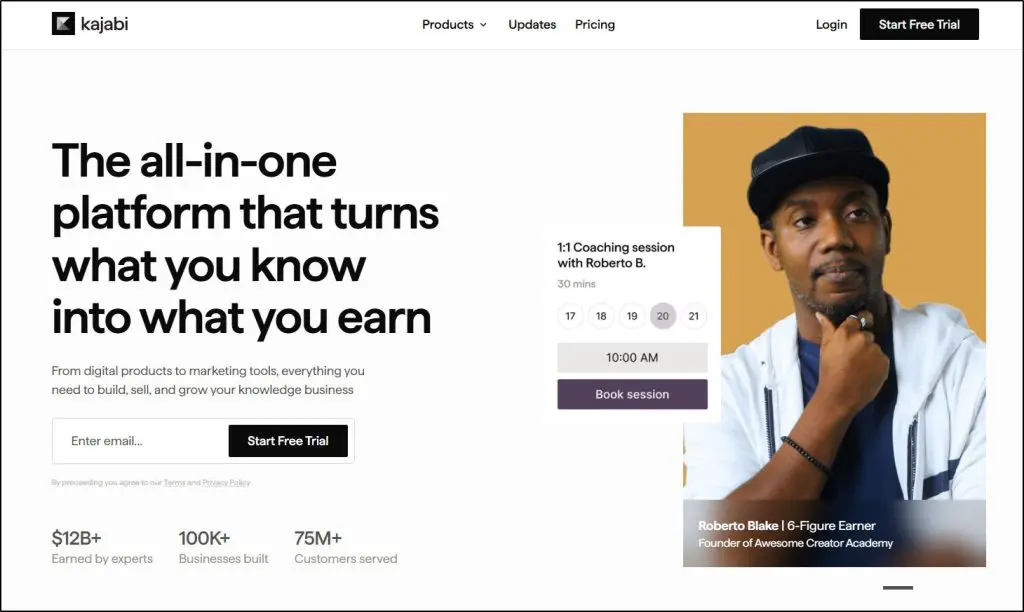
Kajabi Communities is a private, members-only space on your Kajabi site which allows you to directly engage with your audience and give them raw and informal value beyond your courses and digital products.
You can create a community under Products, where it sits alongside your courses, coaching, and memberships.
A Kajabi community has three layers.
- Community: The whole space, with its own name, description, and web address.
- Access groups: Sections of the community, each connected to an offer. A free group might be open to everyone on your list, while a paid group holds your premium members.
- Channels: Topic spaces inside each group, where members post or chat.
Kajabi rebuilt the community feature in recent years. If you started with the older community product, Kajabi’s help center has a guide for migrating to the current one. Older tutorials also use the term Circles, which Kajabi has since replaced with channels.
Kajabi Communities Features | What Each One Does And Where It Falls Short
Kajabi Communities comes with several engagement and management features. Let me explain some of the main ones.
Feature #1: Access Groups And Channels
Access groups decide who sees what. Each group links to an offer, so buying that offer grants access. You might sell a course that includes a free alumni group and offer a paid inner circle on top.
Every plan allows unlimited access groups, and you can turn features such as challenges, the leaderboard, the member directory, and direct messages on or off for each group.
Channels hold the conversation inside each group.
A feed channel works like a forum, with posts, photos, and videos. A chat channel works like a group chat. You can make a channel public to its whole group, private to invited members, or read-only so only your team can post. Members can view feed channels as a feed, a forum, or a gallery.
You can also embed a channel inside a course. That puts discussion next to the lesson it relates to, which is where most learner questions start.
Where it falls short. Only admins can create channels, so members can’t start their own topic spaces. The structure also takes planning. Shared content across several groups requires an offer that includes all of them, and that gets confusing as your tiers grow.
Feature #2: Challenges
Challenges give members a task with a start date and a deadline, such as a 14-day writing challenge or a 30-day meditation streak. Members submit entries, and you review them in one place or export them as a CSV file.
You can run a one-time challenge, repeat one on a schedule, or leave one open so new members can complete it anytime. You can attach a prize, such as a coupon for one of your courses. Kajabi also lets you rename the feature, so you could call challenges “quests” or “sprints.”
I like challenges for onboarding. A short first challenge gives a new member something to do in week one, which is when most people decide whether a community is worth their time. My guide to increasing community engagement covers more ideas.
Where it falls short. Challenges run on dates and submissions. You can’t build a structured path with lessons, check-ins, and branching steps the way a cohort tool would. For that, pair the community with a cohort course, which needs Growth.
Feature #3: Meetups And Live Rooms
Meetups are events you schedule inside the community. You can host them in Kajabi’s built-in live room or paste a link to Zoom or another tool. Members RSVP, see the time in their own time zone, and find every event on a calendar for their group.
Meetups can repeat daily, weekly, monthly, or on a custom pattern, so a weekly office hours call takes one setup. When you hold it in the live room, members never leave your site.

Where it falls short. Kajabi’s community help pages don’t state a participant limit or explain how recordings reach members afterward. If you plan large live events or rely on replays, test both during your trial. Canceling a recurring series can’t be undone, and members who RSVP’d lose access to the session.
Feature #4: Leaderboard, Points, And Member Directory
Members earn points for activity such as posting and taking part in challenges, and a leaderboard ranks them. A member directory lets people find each other, and direct messages let them talk privately. You control each of these for each access group.
Gamification works best in communities where members do something regularly, such as fitness, writing, or language learning. In a professional community, a leaderboard can feel out of place, so I’d test it before you turn it on everywhere.
Where it falls short. The reward system is simpler than Skool’s levels, which unlock content as members climb. Kajabi’s points rank people, and they don’t change what members can access.
Feature #5: Announcements, Notifications, And The Weekly Digest
Announcements let you post an update that members see first. Notifications reach members by email and in the app.
The weekly digest is the most useful of these. Every Thursday, Kajabi emails each member a summary of their group, with announcements, open challenges, popular conversations, and upcoming meetups. You choose what it includes. It brings quiet members back without you writing a newsletter.
Because the community sits inside Kajabi, you can also email members through Kajabi’s email marketing and trigger automations when someone joins, engages, or goes quiet.
Where it falls short. Members can unsubscribe from the digest, and many will. Don’t rely on it as your only way to reach people.
Feature #6: Moderation And Roles
You can appoint moderators and assistants from your team or your members. They can manage posts, comments, and member activity, and they can post in read-only channels. For a growing community, a few trusted members acting as moderators keep conversations healthy without all the work landing on you.
Where it falls short. Kajabi’s help pages describe moderation in general terms. Dedicated platforms offer more detailed controls, such as automated filters and member reporting workflows. If you expect a large, open community, compare these tools closely.
Feature #7: The Member Experience And Mobile App
Members reach the community on the web or through Kajabi’s customer app, which handles push notifications. Courses, coaching, and community share one login and one member profile.
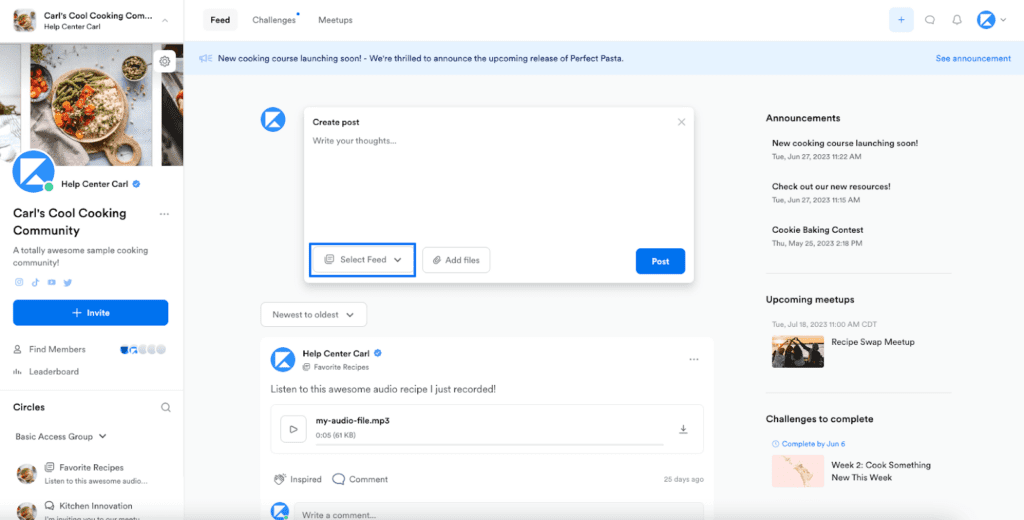
That single login matters more than it sounds. Every extra platform you add is one more password for members to lose and one more support email for you.
Where it falls short. On Basic and Growth, members use the Kajabi-branded app. Your own app in the app stores comes with Pro. Design control is also limited. You can set a cover image, colors, and channel layouts, and you can’t restructure the community the way you can on Circle.
Feature #8: Selling Access
Because every access group connects to an offer, you can sell the community in several ways.
- Standalone membership: A monthly or annual subscription to the community alone
- Bundle: Community access included with a course or coaching program
- Tiers: A free group for your audience and paid groups for deeper support
- Upsell: A paid group offered after someone buys a course
You can launch free and add paid groups later, and Kajabi says existing free members aren’t charged automatically. Kajabi takes no revenue share on any plan. For a full guide to the model, read my article on building a membership site.
Where it falls short. Kajabi charges an extra fee of up to 2% if you use an outside payment processor where Kajabi Payments is available. Affiliates, which help a paid community grow, start on Growth.
Kajabi Communities vs Facebook Groups
Many creators start with a free Facebook Group, so the comparison comes up often.
| Factor | Kajabi Communities | Facebook Group |
|---|---|---|
| Cost | Included with a Kajabi plan | Free |
| Who owns the member list | You do | Facebook does |
| Ads and algorithm | None | Both shape what members see |
| Paid access | Built in, tied to offers | Limited |
| Connection to courses | Same login and profile | Separate platform |
| Reach | Members must visit your site or app | Members already spend time on Facebook |
Facebook’s one real advantage is that members already go there every day. Kajabi wins on ownership, payment, and focus. For a paid program, I’d choose Kajabi or another owned platform, because you control access and nothing competes for your members’ attention.
5 Tips For Running An Active Kajabi Community
An empty community hurts a brand more than no community at all. These are the habits I’d follow to keep a Kajabi community active.
1. Start With Fewer Channels Than You Think You Need
Start with a welcome channel and one discussion channel, and add more when members ask for them. Don’t start 3-4 channels together from scratch. My guide on how to start an online community covers launch planning in more depth.
2. Tie Access To What People Buy
Connect each access group to the offer it belongs to, so buyers land in the right place without manual steps. If a channel relates to a course, embed it in that course. Learners are far more likely to post when the discussion sits next to the lesson.
3. Give New Members A First Task
Set up an evergreen challenge for new members, such as introducing themselves and sharing one goal. Kajabi lets you leave a challenge open so anyone can complete it after joining. A member who posts in week one is much more likely to come back in week four.
4. Put A Meetup On The Calendar Every Week
A recurring meetup gives members a reason to return at a predictable time. Keep it short, such as 30 minutes of office hours, so you can sustain it. Then switch on the weekly digest so the upcoming meetup reaches members who haven’t logged in.
5. Recruit Moderators Early
Pick two or three active members and make them moderators once the community has a few dozen people. They answer questions faster than you can, and their activity shows newcomers how the community works. My guide to building community around coaching explains why member-led support matters.
Kajabi Communities Pricing | What Will It Cost You?
Kajabi doesn’t sell its community separately. Every plan includes it, and the number of communities depends on your plan.
- Basic: $143/month on annual billing or $179/month paid monthly. 1 community, 5 products, 2,500 contacts
- Growth: $199/month on annual billing or $249/month paid monthly. 1 community, 50 products, 25,000 contacts, affiliates, and cohort courses
- Pro: $399/month on annual billing or $499/month paid monthly. 3 communities, unlimited products, 100,000 contacts, and your own branded app
| Feature | Basic | Growth | Pro |
|---|---|---|---|
| Products (courses, coaching, downloads) | 5 | 50 | Unlimited |
| Contacts | 2,500 | 25,000 | 100,000 |
| Communities | 1 | 1 | 3 |
| Websites | 1 | 1 | 3 |
| Admin users | 2 | 11 | 26 |
| AI credits | 0 | 500 | 1,000 |
| Cohort courses | ✗ | ✓ | ✓ |
| Affiliate program | ✗ | ✓ | ✓ |
| Advanced automations & webhooks | ✗ | ✓ | ✓ |
| Remove Kajabi branding | ✗ | ✓ | ✓ |
| Custom code editor | ✗ | ✗ | ✓ |
| API access | ✗ | ✗ | Yes ($25/mo value) |
| Branded mobile app | ✗ | ✗ | Included ($199/mo value) |
| Kajabi Payments fee | 2.9% + $0.30 | 2.8% + $0.30 | 2.7% + $0.30 |
| Fee with 3rd-party gateway | 2% | 1% | 0.5% |
Kajabi has no free plan. It offers a 14-day free trial and a 30-day money-back guarantee. Older articles list 3, 15, and 100 communities by plan, and those limits no longer apply. My Kajabi pricing guide covers every plan in detail.
Kajabi Communities Alternatives
If the community matters more than the courses, compare Kajabi with platforms built for community first.
| Platform | Starting price | Choose it if |
|---|---|---|
| Kajabi | $143/month, annual billing | Your community supports courses or coaching you sell on Kajabi |
| Circle | $89/month, annual billing | You want a flexible, well-designed community with several programs or tiers |
| Mighty Networks | $79/month, annual billing | Members interact every day and you want strong engagement tools |
| Skool | $7.50/month, annual billing | You want a simple, familiar layout with points and levels |
| Podia | $42/month, annual billing | You want a cheaper all-in-one for courses, a community, and email |
I compare these in depth in my guide to the best online community platforms. For a closer look at one matchup, read Skool vs Kajabi.
Kajabi Communities Pros And Cons
| Pros | Cons |
|---|---|
| Courses, coaching, and community share one login | Expensive if the community is all you need |
| Access tied to offers, with unlimited access groups | One community on Basic and Growth |
| Feed and chat channels, with read-only and private options | Only admins can create channels |
| Challenges with evergreen and recurring options | No structured paths beyond dated challenges |
| Meetups with a built-in live room and recurring schedules | Live room capacity and replay handling aren’t documented |
| Weekly digest email brings quiet members back | Fewer engagement tools than Circle, Mighty Networks, or Skool |
| No revenue share on any plan | Branded mobile app only on Pro |
| You own the member list, with no ads | Limited control over layout and design |
Who Should Use Kajabi Communities?
- You sell courses or coaching on Kajabi. Use it. The community costs nothing extra, and tying it to your offers takes minutes.
- You run a membership with content and discussion. Kajabi fits well, especially with free and paid tiers, though I’d compare it with other membership site platforms first.
- You coach groups. Pair the community with Kajabi’s coaching tools, which I review in my Kajabi Coaching review.
- The community is your main product. Choose a dedicated platform, where your members will get more and you’ll pay less.
- You’re starting out with a small audience. Start on a cheaper tool, because a community needs members before it needs features.
Overall, I recommend Kajabi Communities as part of a Kajabi business. It turns a course or a coaching program into something members return to, and it keeps everything under one login. I don’t recommend buying Kajabi for its community alone. For the full platform, read my Kajabi review, and plan your membership pricing with our free creator tools.
Kajabi Communities FAQs
What is Kajabi Communities?
Kajabi Communities is the members-only community feature inside Kajabi. It includes feed and chat channels, challenges, meetups with a live room, a leaderboard, and direct messages, with access tied to what members buy.
Is Kajabi Communities free?
It comes with every paid Kajabi plan at no extra charge. Kajabi has no free plan. You can make parts of your community free for members by connecting a group to a free offer.
How many communities can I create on Kajabi?
Basic and Growth include one community, and Pro includes three. Every plan allows unlimited access groups, so you can split one community into many free and paid sections.
What are access groups in Kajabi Communities?
Access groups are sections of a community. Each one connects to an offer, so buying that offer grants access. You can create free groups, paid groups, and tiers.
Can I charge for my Kajabi community?
Yes. You can sell access as a standalone subscription, bundle it with a course or coaching program, or offer paid tiers above a free group. Kajabi takes no revenue share.
Can I host live events in Kajabi Communities?
Yes. Meetups can run in Kajabi’s built-in live room or link to Zoom or another tool. Members RSVP, and meetups can repeat on a schedule.
Does Kajabi Communities have a mobile app?
Members can use Kajabi’s customer app on every plan. A branded app under your own name comes with the Pro plan.
Is Kajabi Communities better than a Facebook Group?
For a paid program, yes. You own the member list, control access, and avoid ads and algorithms. A Facebook Group is free and easier for members to reach, which suits a free audience-building group.
Is Kajabi Communities better than Circle or Skool?
Circle and Skool offer more community features at a lower price. Kajabi wins when your community supports courses, coaching, email, and checkout that you already run on Kajabi.
Can I embed a Kajabi community channel in a course?
Yes. Kajabi lets you embed a community channel inside a course product, so learners can discuss a lesson without leaving it.

Jeff Cobb, Founder of Learning Revolution
Jeff Cobb is an expert in online education and the business of adult lifelong learning. Over the past 20+ years he has built a thriving career based on that expertise – as an entrepreneur, a consultant, an author, and a speaker. Learning Revolution is a place where Jeff curates tips, insights, and resources to help you build a thriving expertise-based business. Learn more about Jeff Cobb here.
Table of Contents
Related Posts
Kajabi Pricing (2026): Use Fee Calculator To Find Actual Cost
How To Use Kajabi Integrations via Zapier, Webhooks & MCP
Kajabi Mobile App Types And How to Use Them