

TL;DR – Online Learning: Definition, Types, Key Facts and Takeaways
Online Learning also called e-learning, virtual learning, or online education means gaining knowledge and skills through the internet instead of a physical classroom. It combines structured lessons (videos, text, quizzes, and community discussion) with the flexibility to learn anytime and anywhere, from a short skills course to a full university degree.
Main Types of Online Learning
Type #1: Self-Paced / Asynchronous Courses – Pre-recorded lessons you follow on your own schedule.
Type #2: Live Online / Synchronous Classes – Real-time sessions on Zoom or Teams with instant Q&A and feedback.
Type #3: Blended / Hybrid Learning – Mix of online modules and in-person labs or workshops.
Type #4: Massive Open Online Courses (MOOCs) – University-level courses on Coursera, edX, or Udemy, often free to audit.
Type #5: Microlearning & Mobile Learning – Short, focused lessons (5–10 minutes).
Type #6: AI Chatbot & Conversational Learning – Personalized, on-demand guidance from AI tools such as ChatGPT, which can create step-by-step learning paths and act like an always-available tutor.
Popular Online Learning Formats
1. Online Courses – Recorded or live, organized into modules with optional certificates.
2. Membership Programs – Ongoing lessons and community access for a monthly or yearly fee.
3. Full Degrees & Certificates – Accredited university programs offered fully online.
4. Online Schooling (K–12 & Beyond) – Complete curricula delivered virtually.
5. Learning Communities – Peer-driven spaces on Circle, Skool, or Mighty Networks.
6. Digital Guides & PDFs – Focused resources like checklists or e-books.
7. Webinars & Workshops – Live, time-bound sessions that can be repurposed as evergreen courses.
Is Online Learning Effective? Yes—online learning is highly effective when well designed. Research shows it can equal or outperform classroom instruction, especially when it uses interactive practice, spaced repetition, and strong feedback.
What are the best online learning platforms?
Thinkific, Kajabi, and TalentLMS are top platforms but the best choice depends on your goals.
Read our guide to the best online course platforms
Online learning is everywhere now.
Whether it’s a high school student taking calculus on Khan Academy, a nurse earning a certification after work, or an entrepreneur packaging expertise into a Thinkific course, e-learning is a popular choice.
Yet most people don’t know how this way of learning began or how far it has come.
In just a few decades it’s grown from early computer-based training to massive open online courses, live Zoom classrooms, and bite-size lessons on mobile apps.
But the opportunity is still wide open for both learners and professionals who want to monetize their expertise.
I’ve been in the online learning industry for over two decades, and since COVID I’ve seen firsthand how people have embraced e-learning as a powerful way to democratize knowledge and opportunity.
In this article I’ll share a brief history of online learning, real-world examples, its key types, and practical strategies you can use to build skills or turn your knowledge into income.
Looking for the best online course platform? Here are my top picks
What Does Online Learning Mean?
Online learning (also called e-learning, virtual learning, online education, or distance learning) means gaining knowledge and skills through the internet instead of a physical classroom.
In plain terms, it’s education you can access anytime and anywhere with a computer, tablet, or phone.
A strong online learning experience is more than recorded lectures. It combines structured lessons, quizzes or projects, discussion spaces, and instructor feedback so that progress is measurable and outcomes are clear.
For students and career changers, online education might mean a self-paced design course, a live coding bootcamp, or a blended university program.
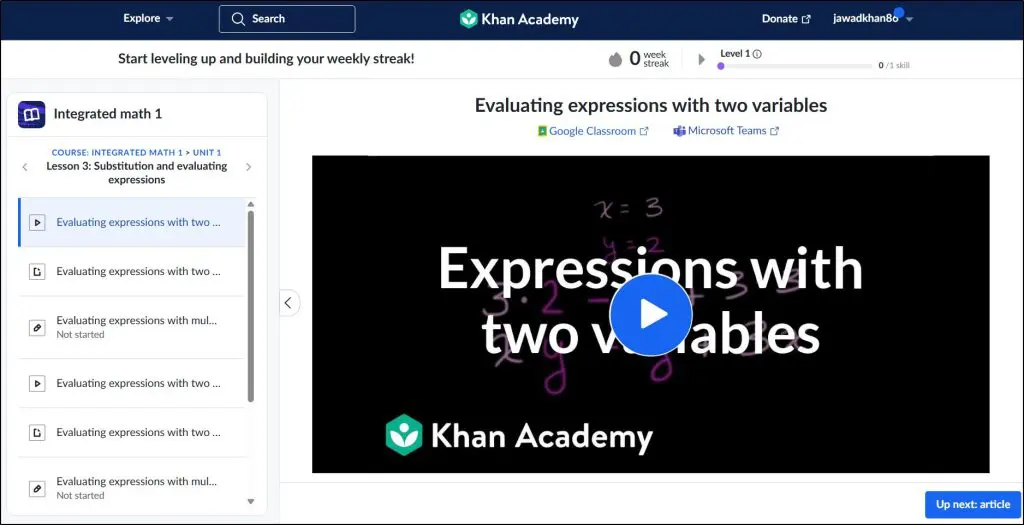
Khan Academy is among the best example sof online learning, a platform that has impacted millions of learners worldwide.
For professionals, to define online learning is to see it as a framework for turning expertise into scalable courses, memberships, or corporate training programs.
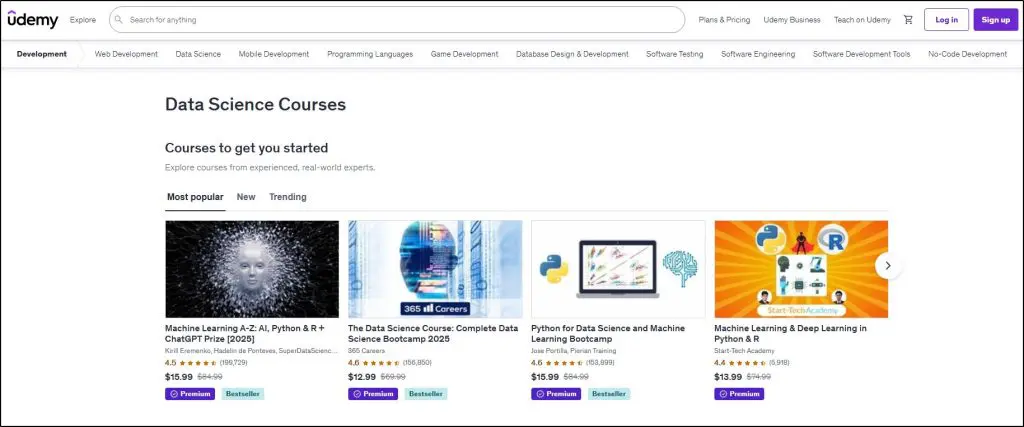
Udemy is a great example of an online learning platform that has empowered professionals to monetize their knowledge by offering courses.
Whether you want to upgrade skills, earn a credential, or build a course business, understanding the true online learning definition helps you choose the right platform and learning path.
Read: What is instructional design and how it shapes online learning experiences
A Brief History & Evolution Of Online Learning
The history of online learning spans decades of steady change, shaped by technology and new teaching approaches.
Here’s how it all unfolded.
- 1960s – Early computer-based training: Universities and research labs began experimenting with mainframe computers to deliver programmed lessons and quizzes. These early, text-based systems proved that education could move beyond paper and classrooms.
- 1970s – PLATO and first interactive systems: The PLATO network at the University of Illinois introduced discussion boards, instant messaging, and interactive exercises. It showed that learners could communicate and collaborate digitally—an idea at the heart of modern online education.
- 1980s – Teleconferencing and satellite classes: Distance learning expanded as schools and corporations used satellite broadcasts and phone-based teleconferencing to reach remote learners. These programs connected classrooms across cities and countries long before the internet became common.
- 1990s – Internet and web-based courses: The rise of the World Wide Web brought a breakthrough. In 1994, the University of Toronto launched one of the first fully online courses, and platforms like Blackboard soon made it easier to host and track digital classes.
- Late 1990s–2000s – LMS growth and open resources: Learning management systems such as Moodle allowed instructors to organize content, manage enrollments, and track progress in one place. At the same time, MIT’s OpenCourseWare opened course materials to the world, setting a standard for free online education.
This era also laid the groundwork for the creator-led e-learning revolution. Tools that followed—like Thinkific, Teachable, and early versions of Kajabi—empowered professionals and even hobbyists to share their skills globally without custom code or big budgets. - 2010s – Massive Open Online Courses (MOOCs) and creator platforms: Platforms like Coursera, edX, and Udacity made university-level instruction available to millions at little or no cost. Alongside MOOCs, creator platforms such as Kajabi, Thinkific, and Udemy fueled an even bigger shift. They gave entrepreneurs, coaches, and subject-matter experts complete control over course creation, marketing, and sales. Kajabi alone has enabled creators to earn over $10 billion, proving how powerful this model has become.
- 2022 onward – Generative AI revolution in e-learning: The rise of generative AI tools like ChatGPT and other advanced chatbots has opened a completely new age in online learning. People now use AI to learn new skills on demand, receive personalized coaching advice, and get instant answers and custom learning experiences drawn from the vast body of human knowledge.
Course creators use the same technology to script lessons, build quizzes, and personalize content at scale, making high-quality education faster to produce and easier to adapt for every learner.
Today, adaptive learning, virtual reality, and AI personalization mark the newest stage of online learning evolution, while creator-driven platforms continue to expand global access and opportunity.
Read our guide to the best Membership Site Platforms
The 6 Main Online Learning Types (With Examples)
Over the years, online learning has evolved into different formats like self-paced, live, blended, and more because people learn in different ways and have different needs.
A college student earning credits online, a nurse taking continuing education, and a coach selling a video course all require different structures and tools.
These types of online learning matter because they shape how content is delivered, how learners interact, and how professionals design and price their programs.
Choosing the right format can mean the difference between high engagement and stalled progress.
Below are six key types, with real-world examples and quick takeaways for both learners and professionals.
Type #1: Self-Paced or Asynchronous Courses
Asynchronous online courses are the most popular form of modern e-learning.
These are recorded online courses built around very specific topics and outcomes, for example, “Python for Data Analysis,” “Facebook Ads for Beginners,” or “Watercolor Basics.”
You move through pre-recorded video lessons, readings, and assignments on your own schedule, with optional quizzes or projects to track progress.
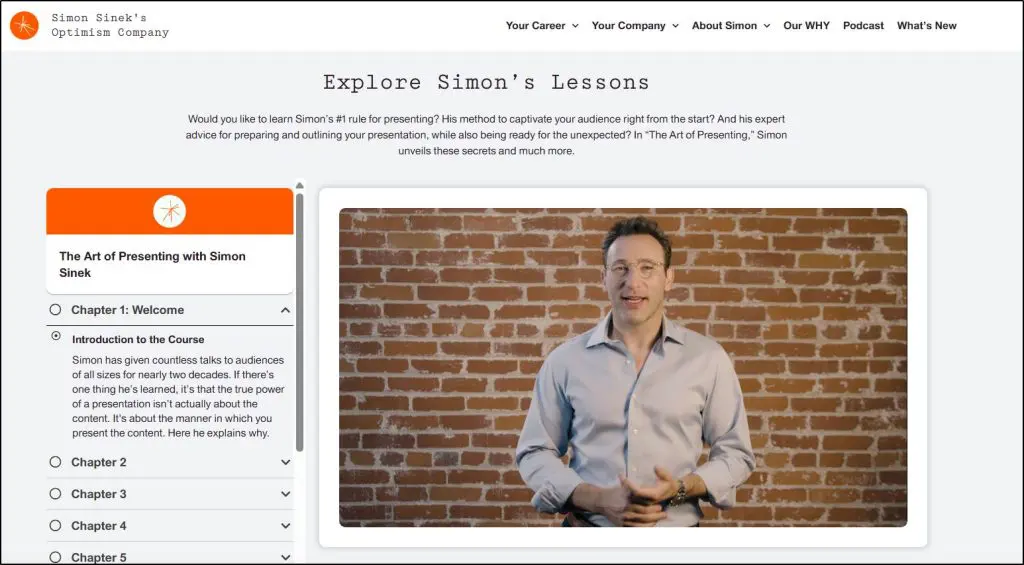
Simon Shinek’s course, The Art Of Presenting, is a classic example of self-paced online courses.
For learners, self-paced learning allows you to gain a clear, measurable skill without rearranging your calendar. You can start anytime, replay tricky lessons, and fit study sessions around work or family commitments while still earning certificates or micro-credentials.
For professionals, recorded asynchronous courses are a scalable way to teach and earn. You create the material once, update it as needed, and keep enrolling students year-round.
This model works equally well for niche topics and mainstream skills, and it’s the backbone of many online learning examples on platforms like Udemy, Thinkific, and Teachable.
Type #2: Live Online or Synchronous Classes
Live online classes bring the classroom to your screen in real time.
These sessions happen on a set schedule through platforms like Zoom, Microsoft Teams, or Google Meet. Instructors teach live, share slides or demos, and answer questions as they come in. Many programs also record sessions so learners can review them later.
Learners use live online learning for direct feedback and real-time interaction. You can ask questions on the spot, participate in group discussions or breakout rooms, and stay motivated with the structure of scheduled classes. This makes it ideal for skills that benefit from immediate guidance such as coding, music, or public speaking.
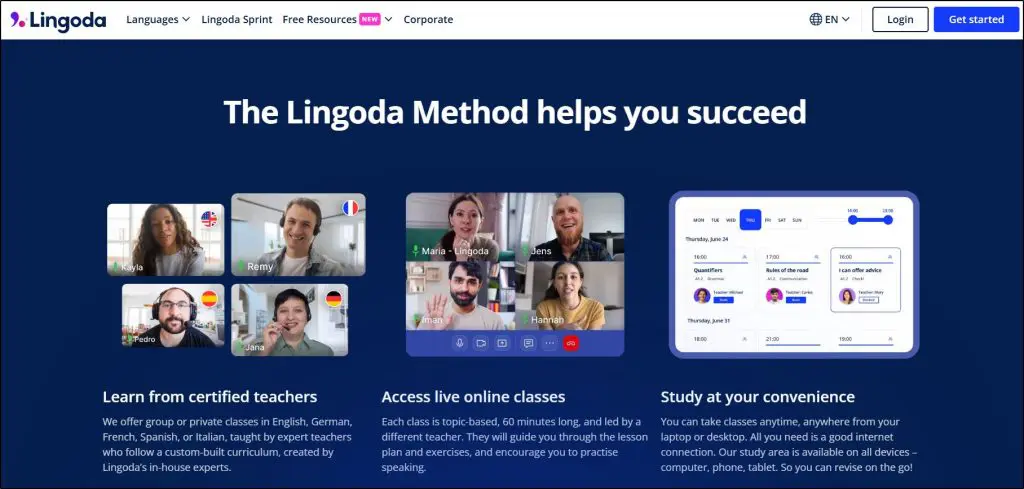
Lingoda, a language learning platform, is a good example where certified language instructors interact live with learners.
Professionals, teachers, and trainers use synchronous classes as a high-engagement, premium product. You can charge higher prices, build a stronger sense of community, and keep completion rates high through live Q&A, instant support, and collaborative exercises.
This format works well for coaching, corporate training, and any topic where conversation and accountability drive results.
Read our guide to the best corporate learning management systems.
Type #3: Blended or Hybrid Learning
Blended learning combines online modules with in-person sessions, giving learners the best of both worlds. Universities, professional training firms, and edupreneurs often use this model to balance flexibility with hands-on experience.
A typical setup might include recorded lectures and quizzes online, plus scheduled lab work, workshops, or live meetups.
Learners choose blended or hybrid learning to gain flexibility without losing personal connection. You can study theory and background knowledge at your own pace online, then use in-person time for labs, group projects, or networking, ideal for fields like healthcare, engineering, or creative arts where practice is essential.
Edupreneurs, teachers, and trainers use this model as a practical way to scale teaching while keeping key face-to-face elements.
CopyHackers, a leading online education company, uses this model in almost all of its programs.
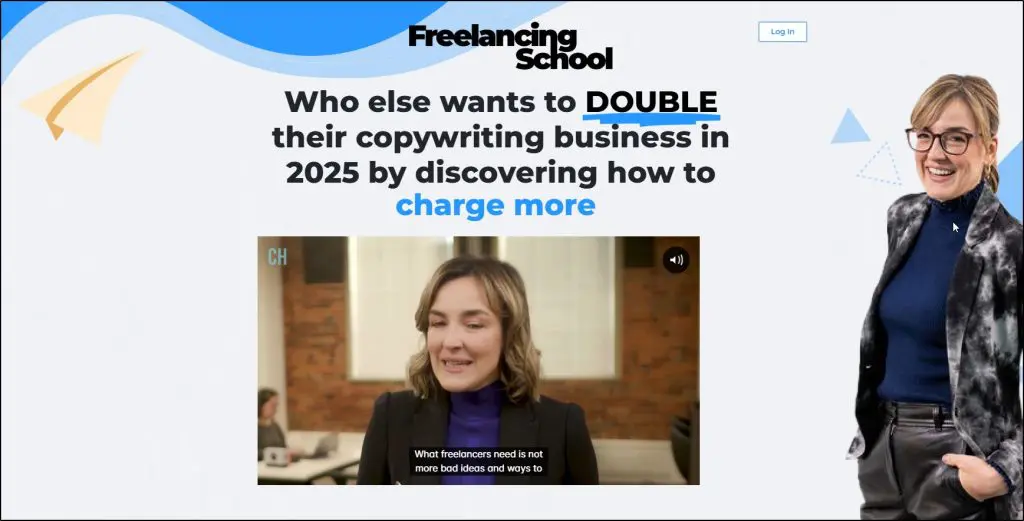
You can deliver theory and foundational skills online, then reserve classroom or on-site sessions for demonstrations, coaching, or collaborative problem-solving.
Many universities and corporate training programs rely on this format to reach more students while maintaining depth and quality.
Type #4: Massive Open Online Courses (MOOCs)
Massive Open Online Courses (MOOCs) are large-scale courses offered by universities, training companies, and online marketplaces such as Coursera, edX, FutureLearn, and Udemy.
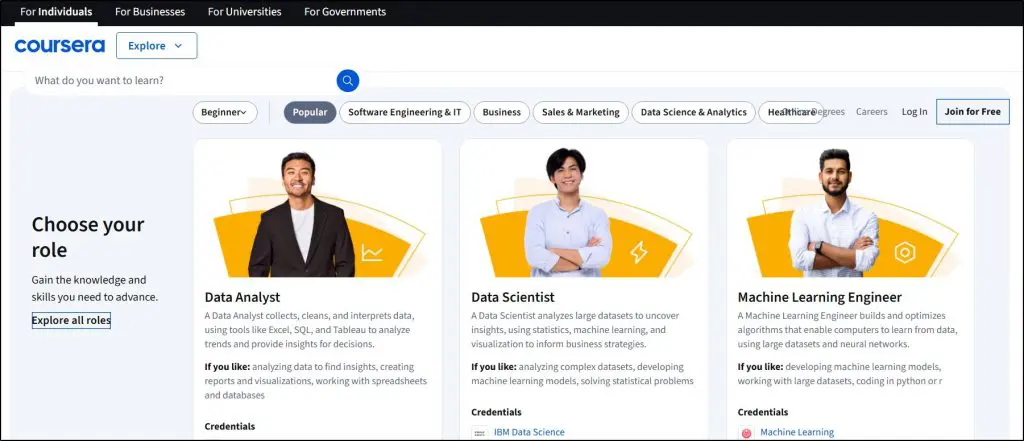
Most are free to audit, with optional paid certificates or advanced tracks for deeper learning. These platforms bring together thousands of learners in a single course and make high-quality education accessible worldwide.
Learners use MOOCs to access world-class instruction and recognized credentials at little or no cost. Whether you want to explore data science, sharpen leadership skills, or sample a new hobby, you can start immediately and learn alongside a global peer group.
For professionals, edupreneurs, and even hobbyists, MOOCs and course marketplaces are a low-investment entry point for teaching online.
They provide built-in audiences, marketing reach, and proven infrastructure so you can launch your first course without heavy upfront costs.
Established educators also use these platforms to build authority, reach a global audience, or guide learners into paid advanced programs hosted on their own sites.
Type #5: Microlearning and Mobile Learning
Microlearning breaks lessons into short, focused segments often, 5–10 minutes, delivered through apps or text.
It’s perfect for busy professionals or learners who want to study in small daily bursts rather than long sessions.
Learners use microlearning to fit skill building into everyday life. You might practice a new language on Duolingo, review key formulas on Quizlet, or watch a quick leadership tip during a coffee break. The concise format makes retention easier and keeps motivation high.
For edupreneurs and training teams, microlearning is a fast way to create habit-forming content. You can produce bite-size videos, checklists, or text lessons and distribute them through mobile apps or LMS features like TalentLMS or EdApp. Because each module is short, learners finish more often and stay engaged over time.
Type #6: AI Chatbot & Conversational Learning
AI-powered conversational learning is the latest and most advanced innovation in e-learning.
According to study by OpenAI published in September 2025, about 10% of all ChatGPT messages and 36% of “Practical Guidance” requests are for tutoring or teaching, making education one of the platform’s biggest uses
Instead of moving through a fixed course, learners interact with intelligent assistants such as ChatGPT, Claude, or Gemini to get on-demand explanations, guided practice, or step-by-step coaching.
The technology adapts to each learner’s pace and level, making it possible to get precise help whenever it’s needed.
Learners use AI chatbots to shape a fully customized learning path based on their goals. You can ask almost anything like setting up an application in Python and having the AI walk you through every step.
Or you could use AI for building a new professional skill by asking specific follow-up questions as you go. The experience feels like having a personal tutor who responds instantly and keeps lessons aligned with what you want to achieve.
For edupreneurs and coaches, AI tools create new ways to share expertise without adding hours to the calendar.
You can even build a custom AI clone trained on your own content, giving customers an always-available version of your knowledge.
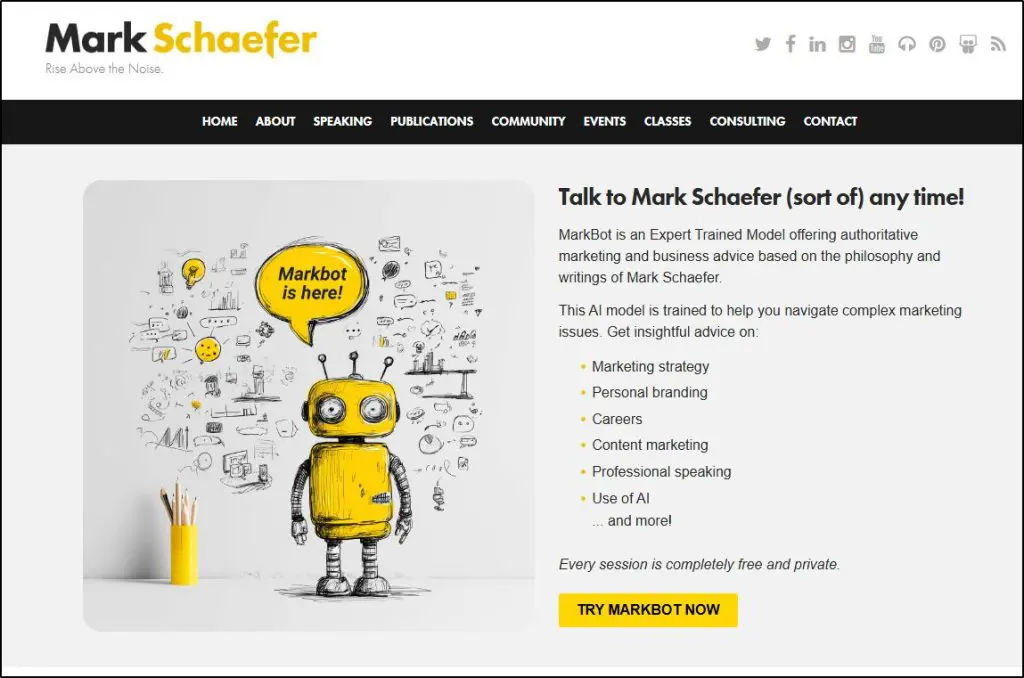
For example, Mark Schaefer, a leading marketing consultant, launched his own MarkBot trained on his content and style to help his audience.
Graham Cochrane, a business coach, also created his AI clone to make his knowledge more accessible at a lower price point.
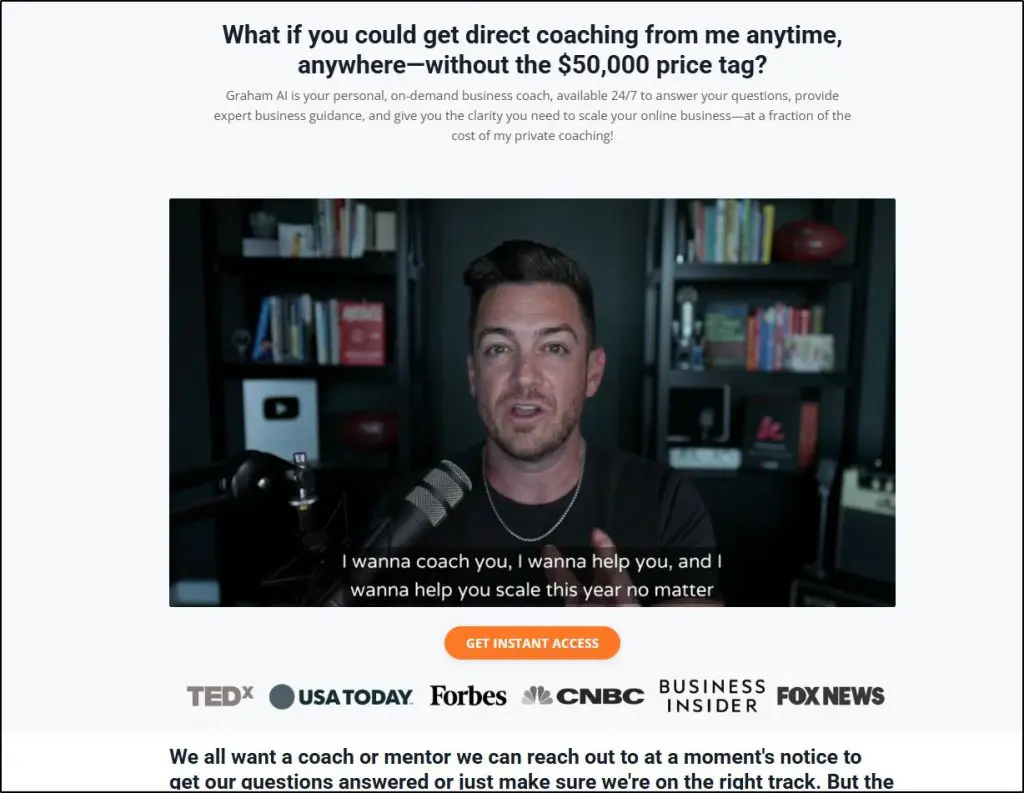
This makes coaching and course delivery scalable, while keeping one-on-one or small-group sessions exclusive and high-ticket.
AI-driven learning isn’t replacing other methods, but it’s becoming a valuable layer in the online learning mix, one that makes continuous, personalized education more accessible than ever.
How Is Online Learning Served? The Most Popular Content Formats
Online learning isn’t delivered in just one way. Depending on the subject, audience, and depth of study, it can take different shapes, from short micro-courses to full university degrees.
Some formats focus on structured lessons like recorded courses or live classes, while others emphasize community and ongoing engagement such as memberships or learning circles.
Creators may choose to share their expertise through quick digital downloads, full-length programs, or a mix of formats to meet different learner needs and price points.
Here are the most popular online learning formats, each with its own strengths for learners and unique opportunities for edupreneurs.
Format #1: Online Courses: The most common online learning product. Courses are built with pre-recorded videos, text lessons, and quizzes, often organized into modules. They can be self-paced or live and may include certificates of completion. Platforms like Udemy, Thinkific, and Teachable make it easy to create and sell to a global audience.
Read our guide to creating an online course.
Format #2: Membership Programs: A subscription model where members pay monthly or yearly for new lessons, live calls, and community interaction. Memberships work well for topics needing ongoing practice—fitness coaching, writing workshops, or business mentoring. Tools like Kajabi, Thinkific, and MemberPress provide billing, content delivery, and community spaces under one roof.
Read our complete guide to membership sites.
Format #3: Full Degrees & Certificates: Universities and professional schools now offer accredited programs completely online. Platforms like Coursera and edX deliver structured semesters, graded projects, and official diplomas or industry-recognized credentials. These programs bring the rigor of formal education to learners anywhere, without relocation or commuting.
Format #4: Online Schooling (K–12 & Beyond): Virtual schools replace or supplement traditional classrooms. Students attend live classes, submit assignments digitally, and follow a full academic curriculum at home. This model is popular with homeschooling families and those seeking flexible schedules while meeting state or national standards.
Format #5: Learning Communities: Here, community and peer support are central. Spaces on Circle, Skool, or Mighty Networks combine courses, group challenges, and networking. They’re ideal for masterminds, professional networks, or hobby groups where discussion and collaboration drive growth.
Read our guide to creating an online community.
Format #6: Digital Downloads: Concise, focused resources such as PDF e-books, templates, or checklists. They deliver quick wins like a 30-page photography manual or marketing checklist and can be sold as standalone products or used as lead magnets for bigger courses.
Format #7: Webinars & Workshops: Live, time-bound learning experiences that allow for Q&A and immediate feedback. Ideal for deep dives into a specific topic or product, and recordings can be repurposed into on-demand courses. Many creators use workshops to attract new students or upsell premium programs.
The Advantages Of Online Learning For Learners And Edupreneurs
Online learning delivers value on both sides of the screen.
It removes barriers that once limited access to quality education like no commute, no rigid timetable, and no geographic restrictions, so even a student in a rural town can earn a professional credential as easily as someone in a big city.
At the same time, it creates powerful opportunities for those who teach and share expertise. Independent educators, coaches, and subject-matter experts can now reach a global audience, build thriving communities, and generate income at scale through recorded courses, live cohorts, or AI-powered learning tools.
Let’s take a closer look at the benefits of online learning.
Benefits For Learners
- Anytime, Anywhere Flexibility: Online learning fits your schedule instead of the other way around. You can log in from home, during commutes, or after work, no commuting or fixed class times required. A nurse, for example, can finish continuing-education credits after a late shift without missing family time.
- Self-Paced and Personalized Paths: You decide the speed. Pause, rewind, or skip material you already know, or follow an AI-driven plan tailored to your goals. Someone learning Python, for instance, can ask an AI tutor for step-by-step guidance and get instant feedback while coding.
- Lower Costs and Global Reach: Online education eliminates housing and travel expenses and often costs far less than traditional programs. Many top universities and MOOC platforms like Coursera or edX even let you audit classes free or earn affordable certificates recognized worldwide.
- Endless Choice of Courses and Credentials: From five-minute Duolingo language lessons to full degrees on Udemy or Coursera, the variety is unmatched. Whatever the subject, you can start right away and find a level that fits your ambition.
- Career Growth and Lifelong Learning: Upskilling no longer means taking a career break. Whether adding a new certification, pivoting into tech, or simply exploring fresh interests, you can keep working while steadily building new expertise that stays relevant in a fast-changing job market.
Benefits For Edupreneurs
- Reach Students Worldwide: You’re no longer limited to a local classroom. Platforms like Thinkific, Kajabi, and Teachable let you teach anyone, anywhere. A single course can attract learners from dozens of countries, giving you global influence and a much bigger market than in-person training ever could.
- Earn Scalable, Ongoing Income: Instead of selling only your time, you can build recorded or semi-automated courses that sell year-round. Create a $99 mini-course or a $999 flagship program once, update it as needed, and keep enrolling new students without repeating live sessions.
- Offer Multiple Learning Products: You’re free to design different formats—self-paced courses, memberships, live cohorts, or microlearning bundles—to suit various budgets and learning styles. Many edupreneurs pair a core self-paced program with premium live coaching to diversify income and deepen student engagement.
- Use AI to Build Faster and Smarter: Generative AI can help draft lessons, quizzes, and even personalized learning paths, cutting course-creation time dramatically. You can also create an AI clone trained on your content, giving students an always-on assistant while keeping your one-on-one coaching exclusive and high-ticket.
- Grow Your Brand and Authority: Publishing a well-designed online course builds credibility. Each enrollment strengthens your reputation as an expert, leading to speaking gigs, consulting offers, and media opportunities. Over time, your courses become both a revenue engine and a powerful showcase of your thought leadership.
The Disadvantages Of Online Learning
Online education opens doors, but it’s not free of challenges.
Technology glitches, lack of in-person interaction, and the need for strong self-discipline can derail even the most motivated learner. Certain subjects—like lab sciences or trades—still demand hands-on practice that’s hard to replicate online.
From an edupreneur’s side, running an e-learning business means more than uploading videos. You’ll deal with content upkeep, platform costs, and the ongoing effort to keep students engaged so they actually finish what they buy.
Let’s discuss the main drawbacks and limitations of e-learning.
Drawbacks & Limitations For Learners
- Less Face-to-Face Connection: If you learn best through in-person discussion, body language, or hands-on group work, the online format can feel isolating. A recorded coding class can teach syntax, but it won’t match the energy of a live hackathon or studio critique.
- High Need for Self-Discipline: Online courses put you in charge of pacing and deadlines. Without a teacher physically present, it’s easy to fall behind or quit halfway. Many learners sign up with good intentions but never finish—completion rates for massive open online courses (MOOCs) often stay below 15%.
- Technology and Environment Barriers: Unstable internet, outdated hardware, or a distracting home setting can make it hard to keep up. Even short outages during live sessions can cause missed explanations and break focus.
- Limited Hands-On Practice: Fields like nursing, culinary arts, or mechanical trades require lab work and tactile feedback. While simulations and VR help, they can’t fully replace real-world practice or the mentorship that happens face to face.
- Quality Varies Widely: Not every course is well designed or accredited. Without careful research, a learner can invest time and money in a program that lacks depth or recognition.
Drawbacks & Limitations For Edupreneurs
- Keeping Students Engaged: Recorded courses need constant updates and active community management to avoid low completion rates. Without live touchpoints, learners may drift away, lowering reviews and repeat sales.
- Platform and Production Demands: Creating a polished course means dealing with video equipment, editing, hosting, and platform fees. Even “simple” courses take planning and ongoing maintenance to stay current.
- Competition and Market Saturation: With thousands of similar courses on marketplaces like Udemy or Coursera, standing out requires strong branding, marketing, and consistent content upgrades.
- Support and Technical Load: Students expect quick responses to login issues, billing questions, or technical glitches. Unless you build solid systems or hire help, customer support can become a time drain.
- Subject Limits: Some topics just don’t translate well to pure e-learning. If your expertise relies on live demonstrations, physical labs, or subtle in-person coaching, you’ll need blended or hybrid formats, which require more coordination and cost.
How Online Learning Works For Learners And Edupreneurs
Online learning may look different depending on whether you’re the one taking a course or the one creating it.
But the basic journey follows a clear sequence in both cases.
Let me walk you through the experience, so you know what to expect on each side of the process.
An Edupreneur’s E-Learning Journey
From an edupreneur’s perspective, here’s what a typical e-learning journey looks like.
Step 1: Identify a Marketable Topic: The creator starts by understanding their audience and the problems they can solve. It might be a focused skill—like watercolor painting for beginners—or a professional subject such as data analytics or leadership training. The aim is to build a course around a specific result learners want.
Step 2: Create the Course Content: Next, the edupreneur develops lessons in the most suitable formats: pre-recorded videos, text lessons, slide decks, PDFs, and sometimes interactive quizzes or assignments. Each course is usually organized into modules, with several lessons inside each module, so learners can move through the material in a logical sequence.
Step 3: Choose a Delivery Platform: Once content is ready, the course needs a home. There are two main approaches:
- Marketplaces such as Udemy or Skillshare, which provide built-in discovery and handle marketing to some extent, but take a revenue share and limit branding.
- Dedicated platforms like Thinkific, Kajabi, or Podia, where the creator controls pricing, branding, and student data, and pays a subscription or transaction fee instead of sharing revenue.
Step 4: Set Up the Course Site and Payments: The platform provides the course website or landing page, manages student sign-ups, and processes payments automatically. Marketplaces pay out after taking their cut, while private platforms pass nearly all revenue to the creator after their flat or tiered fees.
Step 5: Deliver Value and Grow Once live, the course runs as a complete learning environment. Students watch videos, download resources, join discussions, and take quizzes at their own pace or on a set schedule. The creator supports learners through built-in discussion areas, live coaching calls, or private communities hosted on tools like Circle, Mighty Networks, or Skool.
Over time, analytics and student feedback guide updates, new modules, or entirely new courses, allowing the edupreneur to retain learners and generate repeat sales while scaling their reach globally.
A Learner’s Online Learning Experience
From a learner’s perspective, here’s what a typical online learning experience looks like.
Step 1: Decide What to Learn: The process begins with a goal. A learner might want to pick up a single skill on Udemy or Skillshare, earn a professional certification or even a degree on edX or Coursera, join a creator-led learning community on Circle, Skool, or Mighty Networks, or take a focused course offered directly by an independent edupreneur on their own site.
Step 2: Enroll and Set Up Access: Next comes enrollment. Depending on the program, the learner pays for premium access or joins a free course. Some platforms may include an intake form or a short quiz to tailor the learning path. Once registered, the learner gets access to a personal dashboard with modules, schedules, and community spaces.
Step 3: Learn Through Multiple Formats: The core of the experience is consuming content in various forms: pre-recorded videos, PDF guides, slide decks, interactive checklists, or live sessions via Zoom or similar tools. Students follow modules at their own pace or attend scheduled classes if the course is live or blended.
Step 4: Gauge Progress: Most well-designed courses include quizzes, assignments, or projects to help learners check understanding and reinforce concepts. These assessments also give instructors insight into where students may need extra support.
Read our guide to creating quizzes for your e-learning program.
Step 5: Engage with the Community and Instructor: Along the way, learners often participate in discussion boards, private groups, or live Q&A sessions, interacting with peers and the course creator. This adds motivation, accountability, and a sense of belonging that pure self-study often lacks.
Step 6: Earn a Certificate or Proof of Completion: At the end, many courses provide certificates, badges, or formal credentials—from micro-credentials on Udemy to accredited degrees on edX or Coursera. Learners can add these to résumés, LinkedIn profiles, or portfolios to showcase new skills and move on to the next learning goal.
Is Online Learning Effective?
Yes, online learning is still highly effective when it’s designed and delivered well. Decades of research show that learning outcomes depend more on the methods than the medium.
Studies summarized by Dr. Will Thalheimer and in E-Learning and the Science of Instruction confirm that when the same instructional practices are applied, online courses produce results equal to or better than classroom instruction.
Blended formats, which mix online with in-person sessions, often outperform traditional classrooms because they combine flexibility with deeper practice opportunities.
The numbers support this.
In 2024, Udemy reported 67 million learners and 900 million enrollments, while Coursera reached 148 million users. Nearly 98 percent of learners plan to take more online courses, and 77 percent worldwide report career gains, from promotions to higher salaries.
The global e-learning market, valued at $456 billion in 2023, is on track to hit $842 billion by 2030—evidence of continued trust and demand.
For edupreneurs, effectiveness shows up in measurable business impact.
Platforms like Kajabi, Thinkific, and Teachable enable creators to earn serious revenue. For example, thinkific creators have earned almost $4 billion since it was founded. Similarly, Kajabi users have collectively generated over $10 billion.
Built-in analytics help refine lessons and track completion rates so students reach promised outcomes. High learner satisfaction and repeat enrollments translate into sustainable income and long-term authority in a niche.
Bottom line: when courses include clear goals, interactive practice, and feedback—whether self-paced, live, or AI-assisted—online learning delivers strong educational and financial results for both learners and course creators.
The Most Popular Online Learning Platforms
I’ve written in a lot of detail about online learning platforms for different business goals on the learning revolution. But before closing this article, let me share the most popular sites and software learners and edupreneurs use to access online learning.
Read our guide to the best online course platforms
- Udemy & Skillshare (Marketplace): Udemy and Skillshare are among the largest global course marketplaces, hosting over 220,000 courses from experts in every field. Learners browse, purchase, and start instantly, while creators gain access to millions of students without needing their own website. Great for anyone starting with low upfront costs and looking for built-in reach.
- Coursera (MOOC & Degrees): Partnered with top universities like Stanford and Yale, Coursera offers certificates, professional tracks, and full degrees online. Students value its academic credibility, and professionals use it to gain career-ready credentials from globally recognized institutions.
- TalentLMS (Corporate & Team Training): TalentLMS is designed for companies and training organizations that need to train employees, customers, or partners at scale. It supports compliance courses, onboarding programs, and ongoing professional development with features like gamification, assessments, and detailed reporting. Its strength lies in making large-scale training simple and measurable.
Read our detailed TalentLMS review. - Thinkific (Dedicated Course Platform): Thinkific lets creators build branded course websites with complete control over design, pricing, and student data. It’s perfect for experts who want to run their own school or training business without sharing revenue with a marketplace.
Read our detailed Thinkific review. - Kajabi (All-in-One Business Platform): Kajabi combines course hosting, memberships, email marketing, and landing pages in one place. Many edupreneurs choose it to manage everything—content, payments, and marketing—while keeping 100% of their sales.
Read our Kajabi review. - Teachable (Creator-Friendly Platform): Known for ease of use and strong payment management, Teachable helps independent creators launch courses and coaching quickly. It supports bundled offers, one-on-one sessions, and integrates with major email tools.
Read our Teachable review. - Mighty Networks & Skool (Community-Driven Learning): These platforms focus on building learning communities. Creators can combine lessons with discussions, group challenges, and events—ideal for masterminds, peer-to-peer learning, and ongoing memberships.
Read our Might Networks review. - Podia (Courses + Digital Downloads): Podia works well for creators selling not only courses but also e-books, templates, and webinars. It’s a clean, low-maintenance option for packaging different types of digital products.
Read our Podia review - Coaching Platforms (e.g., CoachAccountable, Practice): These tools help coaches deliver structured programs, track client progress, and manage bookings and payments. They’re designed for live sessions, recurring coaching plans, and personalized learning paths.
Read our guide to the best online coaching platforms
Are You Ready to Leverage Online Learning?
If you’ve read this far, you already know how powerful the online learning market has become and how wide the opportunity still is.
Whether you want to package a single skill into a course, run a thriving membership, or launch an entire digital academy, the tools and audience are ready.
The next step is to validate your idea and start building. Identify the questions your audience is asking, choose the format that fits best (course, membership, community, or a mix), and pick a platform that gives you control—like Thinkific, Kajabi, or Teachable.
Focus on one course or program first, then expand as your audience grows.
I’ve worked in this space for more than two decades, and one thing has stayed constant: people will always invest in practical, high-quality education that solves real problems. The sooner you start, the sooner you’ll build authority and recurring revenue while helping others gain valuable skills.
Now is the time to share what you know.
Turn your expertise into a scalable learning business and join the next generation of edupreneurs shaping the future of education.
Frequently Asked Questions (FAQs)
1. What equipment do I need to start online learning?
You don’t need a studio setup. A reliable internet connection, a laptop or tablet, and headphones with a mic are usually enough. For live classes or project-based courses, a webcam and a quiet space help, but most platforms are mobile-friendly and allow you to study from anywhere.
2. How do I know if an online course is credible?
Look for a clear course outline, instructor bio, and independent reviews. University-backed platforms like Coursera and edX provide accredited certificates, while private creators on platforms like Thinkific or Kajabi should show testimonials, sample lessons, or verifiable success stories.
3. Can online learning replace traditional degrees?
For many careers—especially in tech, marketing, or design—online certifications and portfolios carry significant weight. Some fields (medicine, law, certain engineering roles) still require accredited degrees and on-site training, but even there online study can complement in-person education.
4. How long does it take to create an online course?
It varies with topic and depth. A focused mini-course can take a few weeks; a multi-module flagship program might need a few months. Using tools like Thinkific, Kajabi, or AI-assisted course builders can speed up scripting, video production, and publishing.
5. What are typical costs for creating and hosting a course?
If you use a marketplace like Udemy, there’s no upfront hosting fee, but they keep a share of each sale. Dedicated platforms like Kajabi or Thinkific charge a monthly or annual fee (often starting around $30–$150) but let you keep almost all of your revenue.
6. Can I teach without showing my face on camera?
Yes. Many successful creators use screen recordings, slide-based lessons, or voice-over presentations. You can also combine text lessons, PDFs, and quizzes to deliver value without live video.
7. How do learners stay motivated in self-paced courses?
Choose courses with interactive elements—quizzes, projects, or community discussions. Scheduling dedicated study times and joining peer groups on platforms like Mighty Networks or Skool also helps maintain consistency.
8. What’s the difference between an online course and a membership site?
A course is usually a one-time product with a defined start and end, while a membership offers ongoing access to new lessons, group coaching, or community events for a recurring fee. Many edupreneurs pair them, using a course as the core and a membership for continued engagement.
9. Is AI going to replace human teachers?
AI tools like ChatGPT and Claude are powerful for on-demand explanations and personalized practice, but they complement rather than replace human instruction. Effective learning still depends on human expertise for guidance, empathy, and real-world context.
10. How do I protect my course content from piracy?
Most platforms prevent easy downloads, stream videos securely, and allow watermarked PDFs. You can also include your brand name or URL inside materials. While no method is 100% foolproof, these steps discourage unauthorized sharing.
Table of Contents