

TL;DR: The Best AI Video Tools for Course Creators and E-learning Professionals
AI video generators use artificial intelligence to create, edit, and enhance videos from text, recordings, or prompts. Course creators do not need the cinematic ones built for filmmakers. You need tools that help you deliver lessons, sell your course, and grow your audience without a camera crew or a production budget.
1. HeyGen — Best custom avatar quality for independent creators
2. Pictory — Best for turning written content into social videos
3. Descript — Edit video by editing the transcript, remove filler words, fix eye contact
4. Filmora AI — Best balance between production control and ease of use
5. Synthesia — Best for corporate training and LMS integration
6. Vyond — Best for animated explainer and process-based content
7. Veed.io — Best for finishing, captions, and multilingual dubbing
8. Captions.ai — Best for pulling social clips from lesson recordings
9. InVideo AI — Fastest path from prompt to publishable sales video
10. Runway Gen-4 — Best cinematic B-roll for advanced creators
11. Google Gemini Omni — Best middle ground, conversational interface with strong output
12. OpusClip — Best for turning long video recordings into short clips automatically
13. Loom — Fastest for short personal async updates
Most articles about AI video generators will show you cinematic clips of women walking through rain-soaked Tokyo alleys and men diving into pools in slow motion.
That is impressive.
But it is completely useless if you are building an online course because you do not need photorealistic physics or Hollywood B-roll.
You need videos that help people learn something, convince someone to buy your course, keep your students engaged between modules, and grow your audience on social media. Those are four different jobs. The tools built for filmmakers and content agencies do not do any of them particularly well.
So I have done something different here.
Instead of ranking AI video generators by cinematic quality, I have broken down the six actual reasons a course creator needs video and matched the right tools to each one.
For each use case, I will show you two or three options and tell you which one wins and why.
If you landed here looking for the best AI video tool for your online course, you are in the right place.
Quick Verdict: The Best AI Video Tools For Different E-learning Use Cases
| What you need to make | Winner | Best alternative |
| Lesson videos without recording yourself | HeyGen | Synthesia |
| Polish your raw recordings into finished lessons | Descript | Veed.io |
| A sales video for your course landing page | InVideo AI | Runway Gen-4 |
| Social clips from your existing content | OpusClip | Pictory |
| Quick student updates and community videos | Loom | Descript |
| Your course in another language | HeyGen | Veed.io |
Looking for the best AI Image generators? Here’s our list of the top tools.
What Is an AI Video Generator and Editor?
An AI video generator creates video content from text prompts, scripts, or images without you ever turning on a camera. An AI video editor takes footage you’ve already recorded and uses artificial intelligence to cut it, clean it, caption it, and repurpose it faster than any manual process could.
For course creators, the distinction matters. Generators solve the “I don’t want to be on camera” problem by producing realistic avatar presenters or cinematic B-roll from a written description. Editors solve the “I have hours of raw footage and no time” problem by transcribing your recordings, removing the dead air, and pulling the best moments for social media automatically.
Most modern tools do both. The ones in this article were chosen because they handle the specific jobs course creators actually need done, not because they produce the most impressive slow-motion rainstorm clips.
What Do Course Creators Need AI Video Generators For?
The answer depends entirely on where you are in your course business and what you are trying to accomplish.
A coach recording her first module has a completely different problem from a course creator who already has 10 hours of lesson recordings and needs to get them onto social media.
Both need video content, but not the same tools.
Here are the six situations where AI video tools actually make a difference for course creators.
Scenario #1: You want to deliver lessons without getting in front of a camera
Recording 15 modules consistently takes time, equipment, and a level of comfort on camera that not everyone has. AI avatar tools let you script your lessons and have a realistic digital presenter deliver them, without a single recording session.
Scenario #2: You have raw recordings and need to edit them into finished lessons
You recorded yourself on Zoom or a basic camera setup. The raw file is rough. AI editing tools let you clean it up by editing the transcript rather than scrubbing through a timeline, removing filler words and dead air in minutes rather than hours.
Scenario #3: You need a sales video for your course landing page
This is the one video that directly affects your revenue. Potential students watch it before they decide to buy. AI video generation tools let you produce cinematic B-roll and a polished trailer without a production crew or a large budget.
Scenario #4: You want to turn your existing content into social clips
Every webinar, podcast episode, and long lesson you have recorded contains multiple moments worth sharing on Instagram, TikTok, or YouTube Shorts. AI repurposing tools find those moments automatically, add captions, and format them for vertical without you watching hours of footage to find them.
Scenario #5: You need to keep students in your community engaged
Welcome videos, module introductions, community updates. These short videos keep students engaged and reduce drop-off rates. AI tools make them fast enough to actually produce consistently.
Scenario #6: You want to translate your course in other languages
Re-recording your entire course in Spanish or Portuguese is not realistic for most independent creators. AI translation tools take your existing videos and re-voice them with accurate lip sync, opening your course to a new market without starting from scratch.
Let’s discuss each use case and the best AI video tools for it.
Read: The best generative AI tools for course creators
Use Case #1: Create AI Avatars and Talking Head Videos for Your Course Lessons
You have the expertise and you have the content, but stepping in front of a camera for 15 modules is either something you actively dread or something that would cost you more in studio setup, lighting, and equipment than you want to spend.
What you actually need is a realistic digital presenter who can deliver your material clearly and convincingly, so your students get a consistent, professional experience without you ever hitting record.
Here are the best tools that can do that.
1. HeyGen – The Best Overall Video Generator and Editor for Course Creators
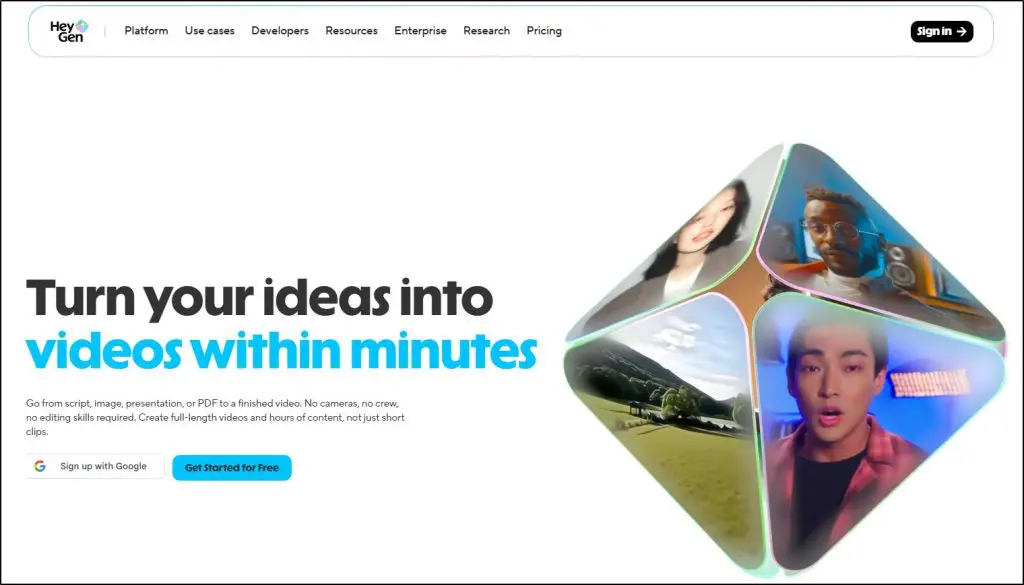
HeyGen is one of my top recommendations for course creators and coaches who want to create AI avatar videos for their lessons. I’ve used it extensively over the past couple of years and it keeps getting better, especially on avatar realism. The quality has reached a point where most students genuinely cannot tell the difference unless you bring it up yourself.
It’s primarily an AI video platform that turns your script into a finished video using a digital presenter. You pick a stock avatar from its library of over 1,100 options, or you film a short clip of yourself and it builds a custom digital twin that looks and moves like you. Feed it your lesson script, select a voice and language, and it generates a complete talking-head video with synchronized lip movement, natural gestures, and consistent delivery across every module. That last part matters more than it sounds. When you’re recording 15 modules, consistency is something a real camera setup rarely gives you.
For course creators, the workflow is straightforward.
- Film a two-minute clip of yourself or use a photo to create your custom avatar
- Paste your lesson script into the AI Studio editor
- Choose your voice, language, and background visuals
- Import your slide deck or PDF if your lesson follows a presentation format
- Generate and export as MP4, ready to upload to Thinkific, Kajabi, or any course platform you’re on
Once you have the video you can add captions for accessibility, translate it into another language with one click, or cut it into shorter clips to promote the course on social media.
You can get started for free with three videos per month up to one minute each. The Creator plan starts at $29 per month and unlocks videos up to 30 minutes, 1080p export, voice cloning, 175 languages, and watermark removal. That’s where most course creators will want to start.
Read: The best online course selling platforms for modern creators
2. Synthesia

Synthesia is probably the most well-known name in AI avatar video and for good reason. It’s a mature platform, trusted by over 50,000 teams including 90% of the Fortune 100, and it shows in the product quality. Over 240 avatars, 160+ languages, solid analytics, SCORM export, and a full LMS integration workflow that enterprise L&D teams rely on heavily.
For course creators though, I want to be honest about where it fits and where it doesn’t.
If you’re an independent coach or course creator building a personal brand, Synthesia’s stock avatars can work against you. They look professional, but they look corporate. Students who buy from you personally want to see you, and a polished generic presenter doesn’t deliver that. HeyGen’s custom avatar quality is better for that use case, and the pricing is more accessible at the creator tier.
Where Synthesia genuinely wins is structured training content. If you’re building compliance courses, onboarding programs, or anything that needs to live inside a proper LMS with SCORM packaging, version control, and team collaboration, Synthesia handles that workflow better than anything else in this category. The one-click translation into 80+ languages, the automatic smart updates when you edit a video, and the branded video player are all features that matter at scale.
To create a lesson video in Synthesia:
- Pick a stock avatar or create a personal avatar from a short video of yourself
- Paste your script into the editor or import a PowerPoint or PDF directly
- Select your voice and language
- Generate and export as MP4 or SCORM for LMS upload
You can try Synthesia free with 10 minutes of video per month and 9 stock avatars. The Starter plan runs $18 per month billed annually and includes 120 minutes of video per year, 125+ avatars, and the ability to download your videos without the Synthesia watermark.
Read: The best AI voice generation platforms for creators
3. Vyond

Vyond takes a different approach from HeyGen and Synthesia. Rather than realistic avatar videos, it specializes in animated character videos.
If your course teaches a concept, a process, or a step-by-step workflow, animation can actually communicate that better than a talking head.
For example, a financial planning course that walks through scenarios, a compliance training module that shows what happens when a rule is broken, or a coding tutorial that needs to visualize abstract logic, these are cases where an animated character in a clearly designed scene does more work than a realistic presenter staring at the camera.
Vyond’s library of over 1,100 avatar options, 40,000+ props and character actions, and pre-built eLearning templates makes that kind of content faster to produce than starting from scratch.
But I usually recommend it for corporate learning and training and develeopment, not courses by edupreneurs.
If students bought your course because of your personal brand, an animated character won’t hold the connection a realistic avatar or your own face would.
HeyGen or Synthesia will serve you better.
To create a lesson video in Vyond:
- Type a prompt or paste your script into Vyond Go for an instant draft
- Choose your character, visual style, and scene templates
- Edit in Vyond Studio to adjust timing, actions, and branding
- Export as MP4 and upload to your course platform
Vyond does not offer a free plan. The Starter plan begins at $58 per month billed annually, which includes AI avatars, text-to-video, screen recording, and 100 video downloads per month.
My Winner: HeyGen
For an independent course creator who wants lessons to feel personal without recording every module, HeyGen is my strongest choice.
Its custom avatar quality is better than Synthesia at this price point, the lip sync is more natural, and the workflow is built for a solo creator rather than a team.
One honest caveat worth mentioning. Avatar videos still look AI-generated to anyone paying close attention.
For your core lesson content that is usually fine, students adapt quickly once they know what to expect. For your course sales video or any first impression moment, you may want something that feels more human.
Read: How to create viral videos? The complete guide
Use Case #2: You Want To Edit Raw Recordings Into Polished Content
You hit record, you got through the content, and now you’re staring at a 40-minute Zoom file that has everything you need buried inside it.
The dead air, the filler words, the three false starts on the intro, the moment you looked at the wrong screen for 20 seconds.
The lesson is in there.
The question is how fast you can get it out without spending more time editing than you did recording.
Here are the best tools that can do that.
4. Descript – The Best Overall AI Video Editor for Course Sellers

Descript is my top recommendation for the best AI video editor for course creators. I’ve been using it for over three years and have recommended it to hundreds of coaches, consultants, and course creators in my community, who’ve all found it exactly what an edupreneur needs.
It’s an AI video editor that lets you edit your recording the same way you’d edit a Word document.
You drag in video your file, Descript transcribes it automatically, and from that point you’re working with text. Delete a sentence from the transcript and it disappears from the video. That’s the core idea.
It has several other powerful editing features as well.
For example, Studio Sound cleans up your audio without any EQ knowledge required, which matters when you’re recording in a spare bedroom with a basic microphone.
Eye Contact fixes your gaze so it looks like you were looking at the camera the whole time, even when you were reading notes off screen.
Remove Filler Words does exactly what it says across your entire recording in one click. And if you mispronounced something or want to fix a line, Regenerate lets you retype the words and Descript clones your voice to match.
For turning a raw recording into a finished course lesson, here’s how the Descript workflow goes.
- Import your Zoom, Loom, or camera recording
- Read through the auto-generated transcript and delete anything you don’t want
- Run Remove Filler Words and Studio Sound to clean everything up
- Fix your eye contact and correct any mistakes with Regenerate
- Add captions, B-roll, or screen recordings where needed
- Export as MP4 and upload directly to your course platform
Once your lesson is done you can also pull social clips from the same file using Descript’s Create Clips feature, so one recording gives you both a finished lesson and promotion content for social media.
Descript has a free plan with one media hour per month and 720p export. The Hobbyist plan starts at $16 per month billed annually.
Read: The best AI presentation makers for modern creators
5. Filmora AI

Filmora is an AI video editor that produces polished lesson videos, pulls social clips from long recordings, and has modern visual elements that make videos more engaging.
For your e-learning business, Filmora can do three things better than most.
Repurposing long lessons into short social clips is handled by Smart Short Clips. You import your lesson recording, the AI identifies the most engaging moments, trims them, adds animated captions, and formats everything for vertical.
Editing raw recordings is handled by AI text-based editing, which works like Descript. Your recording gets transcribed automatically, and you edit by cutting lines from the transcript rather than scrubbing a timeline.
Making videos look current is where Filmora genuinely pulls ahead of most tools in this list. It includes Dynamic Captions with animated styles that match what actually performs on Reels and TikTok right now, AI Sound Effects that generate audio to match your scene, Animated Charts if you teach anything quantitative, AI Video Enhancer for cleaning up blurry footage, and direct access to Veo 3.1 and Seedance 2.0 inside the editor for generating B-roll.
For course creators, the workflow looks like this:
- Download Filmora at filmora.wondershare.com and open your recording
- Run Smart Short Clips to identify and extract the best social moments automatically
- Use AI text-based editing to cut the full lesson by deleting transcript lines
- Apply silence detection and filler word removal in one click
- Add Dynamic Captions and pick an animated style
- Export the full lesson as MP4 and the short clips in vertical format for social
If you’ve used any video editor before, or if you want to do more than basic editing without switching tools, Filmora is a strong long-term choice. But if you want to keep things simple, Descript is still the better option.
Filmora has a free plan with basic editing and watermarked exports. The Basic plan is $9.99 per month for watermark-free 4K export.
6. Veed.io

Veed.io is a browser-based video editor and AI video creation platform that covers a wide range of tasks including auto-captions, background noise removal, video translation, AI avatars, and social clip generation, all without downloading any software.
For course creators, I’d say it’s a strong finishing and repurposing tool rather than a primary editor. Where Descript gives you deep control over transcript-based editing, Veed.io is faster for the tasks that come after the main edit is done.
Auto-captions are accurate and easy to style. The multilingual dubbing lets you translate an existing lesson video into another language without re-recording anything.
The brand kit keeps your exports visually consistent across every video you publish. And if you want to pull short clips from a finished lesson to post on social media, the repurpose tool handles that quickly.
Veed.io gives you direct access to some of the best AI video generation models available right now, including Veo 3.1, Sora 2, Kling AI, and Seedance, all from inside the same editor. That makes it useful if you want to generate B-roll or promotional clips without switching platforms.
To use Veed.io for finishing and publishing a course lesson:
- Upload your edited MP4 from Descript or any other editor
- Add auto-captions and style them to match your brand
- Apply background noise removal if needed
- Use the video translator to dub into another language for international students
- Export in 1080p and download or share directly
Veed.io has a free plan with basic editing and a watermark on exports. Paid plans start at $12 per month for 1080p exports, watermark removal, and access to the full AI tool suite.
7. Captions.ai
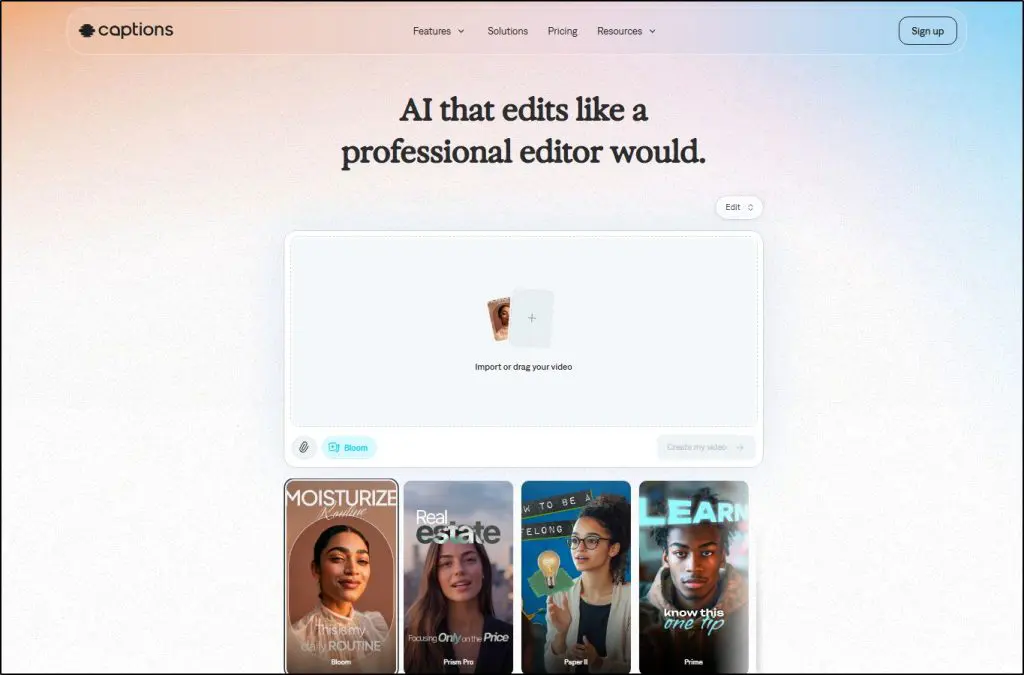
Captions.ai is an AI video editor built primarily for short-form content. The core product is an AI editing engine that takes raw footage and transforms it into a finished, styled video automatically, handling cuts, B-roll, transitions, captions, and music in one pass.
As a course creator or coach, if you’ve recorded a lesson and you also want to pull short clips from that same recording to post on Instagram Reels, TikTok, or YouTube Shorts, Captions handles the social-format output faster than any other tool in this list.
The AI Edit feature applies a style, trims pauses, adds captions, and formats everything for vertical in minutes. It also has a chat-based editor that lets you type what you want changed rather than digging through menus.
Where it falls short for course creators is deep lesson editing.
It’s not built for a 20-minute Zoom recording that needs careful structure and transcript-level control. For that, Descript is still the right tool.
Captions works best as a secondary tool for getting promotional content out of footage you’ve already edited elsewhere.
To use Captions.ai for course promotion clips:
- Upload your finished lesson video or raw recording
- Select an AI Edit style that matches your brand
- Let the AI trim pauses, add captions, and apply B-roll
- Use the chat editor to request any specific changes
- Export in vertical format for Reels, TikTok, or Shorts
Captions.ai has a free plan with limited features. The Max plan starts at $24.99 per month and includes 500 credits, access to all AI Edit styles, custom AI actors, a chat-based editor, and generative B-roll and music.
My Winner: Descript
If you record your own content and you’re not using Descript, you’re spending more time editing than you need to. Nothing else at this price point combines transcript-based editing, audio cleanup, eye contact correction, and social clip extraction in one tool.
Filmora AI is worth adding for captions and multilingual dubbing once your lesson is finished.
Use Case #3: Sales & Marketing Videos for Your Course
Most course creators treat sales and marketing videos as an afterthought.
In reality, landing page videos often determine your conversion rates. It does not need to look like a film production.
But it needs to do three things clearly: show what the course covers, who it is for, and why it is worth the price.
Get those three things right in under two minutes and the video is doing its job.
Here are AI video generators for sales and marketing content in my experience.
8. Runway Gen-4
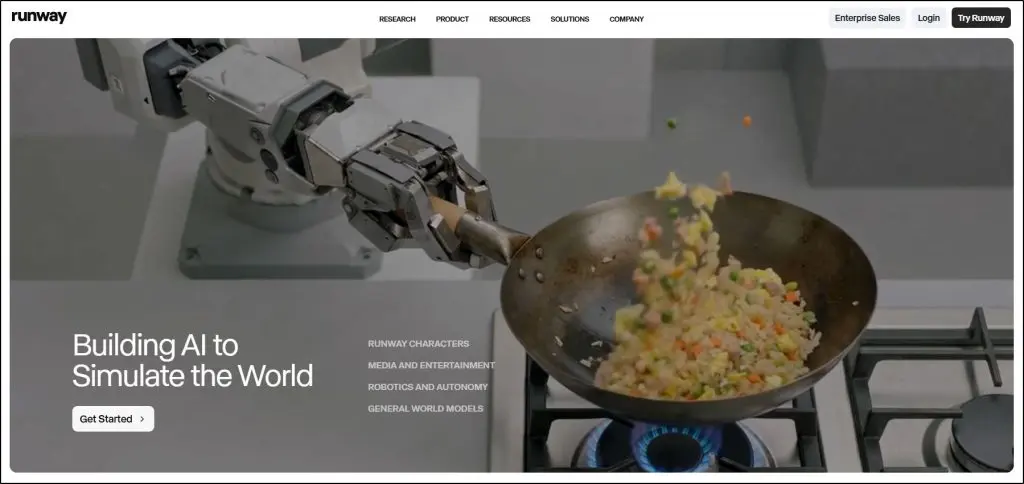
If you want your course sales page video to look genuinely cinematic, Runway is the best tool to do it.
It’s an advanced AI video generation platform used heavily by filmmakers, advertising agencies, and video production studios. Gen-4 and Gen-4.5 are its current flagship models, and the output quality is among the best available right now for controlled, consistent visual storytelling.
For a course sales video, you write a description of a scene that represents your course outcome, like a consultant reviewing a strategy with a client, someone working through a problem and reaching a solution, a professional environment that signals credibility, and Runway generates that scene as a short cinematic clip.
You then combine those clips with your own recorded pitch or a scripted voiceover to build a complete sales video that looks far more polished than anything you could film on a phone or basic camera.
Consistency is Runway’s biggest strength. Gen-4 can maintain the same character, location, and visual style across multiple scenes, which matters when you’re building a sales video with several different B-roll moments.
The camera controls let you specify movement like a slow zoom, a pan, or a handheld feel, and the model follows those instructions more reliably than most competitors.
That said, I want to be honest about who this tool is actually for.
Runway is an advanced platform that has a learning curve. Its interface has a lot going on, its credit system can feel confusing at first, and getting consistently good results requires practice with prompt writing.
If you’re not comfortable experimenting with a tool before you get what you need, Runway may frustrate you before it helps you.
You access Runway, though tools like Veed.io and HeyGen have started integrating some Runway models if you want to stay in a single editor.
For most course creators, going directly to Runway gives you the most control.
To generate B-roll for a course sales video in Runway:
- Go to runwayml.com and create an account
- Upload a reference image that matches the visual style you want, or start from a text prompt
- Describe your scene in detail, including the setting, action, lighting, and camera movement
- Select Gen-4 or Gen-4.5 as your model
- Generate your clip, review it, and regenerate if the result needs adjustment
- Download the MP4 and bring it into Descript or Veed.io to assemble your full sales video
Runway has a free plan with 125 one-time credits to get started. The Standard plan is $12 per month and includes 625 monthly credits, access to all models, no watermark, and higher export quality.
If Runway feels like too much, the easier alternative is InVideo AI. You give it a text prompt describing your course, it builds a complete video with stock footage, voiceover, captions, and music automatically, and the whole process takes under 30 minutes.
The output is less cinematic but more than good enough for a first sales page video, and the learning curve is close to zero.
9. Google Gemini Omni

Gemini Omni combines text, images, and video generation in one place. It’s Google’s answer to the question of what happens when you make video creation feel as simple as having a conversation.
For course creators, the most relevant thing about Gemini Omni is how accessible it is. You don’t need to learn a new interface, understand a credit system, or figure out how prompting works in a specialized tool.
You open the Gemini app, describe the scene you want, and it generates a 10-second video with spatial audio already included. If something is off, you type what you want changed and it edits the clip in the same conversation. Swap the background, adjust the lighting, stabilize shaky footage, change the wardrobe on a character.
All of it happens through chat.
The video-to-video editing feature is particularly useful for course sales videos. You can upload an existing clip and ask Gemini Omni to transform it, changing the environment, adding cinematic qualities, or converting a photo into a moving scene.
If you already have some footage but want it to look more polished, this is a faster path than generating everything from scratch.
Gemini Omni is faster and more conversational but gives you less precision over the final output. For a short cinematic intro or a few atmospheric B-roll clips to open your sales video, Gemini Omni is genuinely excellent.
For a complex multi-scene production with consistent characters, Runway is still the stronger tool.
To create a sales video clip in Gemini Omni:
- Open the Gemini app at gemini.google.com and sign in
- Navigate to the video creation section
- Type a description of your scene including mood, setting, and any audio you want
- Review the 10-second generated clip
- Use the chat editor to request changes until the clip matches what you need
- Download and bring into Descript or Veed.io to assemble your full sales video
Gemini Omni requires a paid Google AI subscription. The AI Plus plan starts at $19.99 per month and includes access to video creation alongside other Gemini features and 400GB of storage.
10. InVideo AI
InVideo AI is the fastest way to go from nothing to a complete sales video. You describe your course, your audience, and what students get out of it, and InVideo’s AI agent builds a full video with stock footage, voiceover, captions, and music automatically.
The output is not as cinematic as Runway or Gemini Omni. You’re working with stock footage rather than custom-generated scenes, which means the visuals are more generic.
But for a first sales page video, generic and done beats cinematic and never published.
Most course creators overthink their sales video and delay launching because of it. InVideo removes that excuse entirely.
It also gives you access to the same underlying AI models as the other tools on this list, including Veo 3.1, Seedance 2.0, and Kling 3.0, so you can generate custom footage inside the same platform if you want to step up the production quality over time.
To build a course sales video in InVideo AI:
- Go to invideo.io and create an account
- Type a prompt describing your course, who it’s for, and what it delivers
- Let the AI agent generate a full draft with footage, voiceover, and music
- Review the draft and use the chat editor to request any changes
- Export as MP4 and upload to your course landing page
InVideo AI’s Plus plan starts at $17 per month billed annually and includes 75 credits per month, access to all AI models, unlimited watermark-free exports, and four AI avatars.
My Winner: InVideo AI
If you want full control over every scene, the lighting, the camera movement, the character consistency across clips, use Runway Gen-4.
But for most independent course creators, I recommend starting with InVideo AI.
The learning curve is low, the results are more than good enough for a first sales page, and you can always upgrade to Runway later when you have more videos under your belt and a clearer sense of what you want your brand to look like on screen.
Gemini Omni sits between the two and is worth trying if you already have a Google AI subscription.
Use Case #4: You Want to Repurpose Your Content Into Social Media Clips
You have hours of recorded content sitting on your hard drive doing nothing. Webinar recordings, podcast episodes, long lesson videos, each one packed with moments that would stop someone mid-scroll on Instagram, TikTok, or YouTube Shorts.
The problem is finding those moments, trimming them, adding captions, reformatting for vertical, and doing it consistently enough to actually build an audience. If that process takes an hour per clip and you need to post five times a week, the math breaks down before you even start.
These tools fix that.
Here are the best tools that can do that.
11. OpusClip

OpusClip is the tool I recommend for course creators who want to turn long recordings into social media clips without watching hours of footage to find the good parts.
Its core feature is AI clipping.
You paste a video link or upload a file, tell OpusClip what you’re looking for, and it analyzes the entire recording to find the most engaging 60 to 90 second moments.
Each clip gets a virality score that tells you how likely it is to perform. Captions are added automatically, the video is reformatted for vertical, and you can schedule it directly to YouTube Shorts, TikTok, or Instagram Reels from inside the same platform.
If you’re already using Descript or Captions.ai, both can generate clips from your recordings too, and if you’re producing a small volume of content, you may not need OpusClip at all.
But if you want to post daily across multiple platforms from a library of long recordings, and want AI to handle the moment selection rather than doing it manually, then OpusClip is the dedicated tool you need.
To repurpose a course recording with OpusClip:
- Go to opus.pro and create an account
- Paste your YouTube link or upload your video file
- Select your preferred clip length and topic focus
- Review the AI-generated clips and their virality scores
- Edit captions, adjust reframing if needed, and schedule to your social platforms
OpusClip has a free plan with 60 credits per month, though clips expire after three days and include a watermark. The Starter plan is $15 per month and removes the watermark, adds filler word removal, and gives you 150 credits per month with no expiry on exports.
12. Pictory

Pictory solves a different problem from OpusClip. OpusClip starts with a video and finds the best moments inside it. Pictory starts with text and turns it into a video.
If you have a blog post on your course topic, a written lesson summary, a script you’ve drafted but never filmed, or a transcript from a webinar you’d rather not re-edit, Pictory converts that written content into a complete social video with stock footage, AI voiceover, captions, and music automatically.
Most of us already produce a lot of written content, emails, blog posts, course outlines, sales page copy. Pictory treats all of that as raw material for video.
You paste in your text, it breaks the content into scenes, matches each one to relevant stock footage from Getty Images and Storyblocks, adds a voiceover in your chosen language, and delivers a finished video you can post directly to social media.
The whole process takes minutes rather than hours.
The important distinction is that Pictory is a text-in tool, not a video-in tool. If you have footage that needs clipping, OpusClip or Descript will serve you better.
Pictory’s strength is specifically for creators who want to turn written content into video without touching a camera or a timeline.
To create a social clip from written content in Pictory:
- Go to pictory.ai and create an account
- Paste your blog post, script, or lesson summary into the text editor
- Review the auto-generated scene breakdown and adjust any scenes that need changing
- Select your AI voice, language, and visual style
- Export in the aspect ratio you need for your platform
Pictory’s Starter plan starts at $25 per month billed annually and includes 200 video minutes, access to Getty Images and Storyblocks footage, ElevenLabs AI voices in 29 languages, and no watermark on exports.
My Winner: Pictory
For coaches, course sellers, and anyone selling e-learning products, Pictory is the ideal tool for content repurposing.
Use Case #5: Engage With Students
Welcome videos, module intro clips, community updates, milestone messages. Students who feel connected to the course creator they bought from stay longer, complete more of the course, and leave better reviews.
These tools make it a two-minute job.
Here are the best tools that can do that.
13. Loom

Loom is my go-to screen and camera recording tool that lets you record yourself, your screen, or both at the same time and share the result as a link instantly. No editing, no exporting, no uploading to a separate platform.
For student updates specifically, Loom is genuinely hard to beat on speed. You can record a 90-second welcome message, a module intro, or a community update and have it in your students’ hands in under three minutes.
Loom generates a transcript automatically, adds basic AI cleanup to remove long pauses, and gives you a shareable link you can drop directly into your course platform, email, or community.
To send a student update with Loom:
- Download Loom at loom.com or use the browser extension
- Click record and choose camera only, screen only, or both
- Record your update in one take
- Copy the link Loom generates automatically
- Paste it into your course platform, community, or email
Loom has a free plan that includes unlimited videos up to five minutes each. The Business plan starts at $12.50 per seat per month billed annually and removes the time limit, adds AI video cleanup, and unlocks analytics on who watched and for how long.
14. Descript and HeyGen
Both Descript and HeyGen can handle this job, and if you’ve already set one of them up for your lesson videos, you don’t need anything new.
With Descript, you record a quick clip, drop it in, clean it up in under five minutes, and export. The filler word removal and Studio Sound do the heavy lifting so even a casual phone recording comes out sounding polished. For a 90-second welcome message or module intro, that’s more than enough.
With HeyGen, you skip recording entirely. Write a short script, generate the video with the same avatar you use for your lessons, and drop the link into your course platform or community. Students see the same presenter they’ve been learning from, which keeps the experience consistent across every touchpoint in your course.
My Winner: Loom
Loom is my top recommendation for quick student updates. It’s faster than Descript for this specific job because there’s no editing step at all. Record, stop, send the link. Done in two minutes.
So How Many AI Video Tools Do You Actually Need?
Should you get all the AI video tools I’ve mentioned in this article? Not really.
Let me explain
If you don’t mind getting on camera, start with Descript and OpusClip.
Descript handles your lesson editing, your audio cleanup, and your student updates. OpusClip turns your recordings into social clips. That combination covers most of what’s in this article at a combined cost of under $30 a month.
If you’d rather stay off camera, start with HeyGen and OpusClip.
HeyGen generates your lessons, your welcome videos, and your student updates with a consistent avatar. OpusClip repurposes the output for social. Same price range, same coverage.
Get Pictory if you already have a lot of written content and want to repurpose it into video.
Everything else I’ve covered here is worth knowing about, but none of it is urgent.
Get Runway when you’re ready to build a serious sales page video or use Veed.io when you’re ready to go after international audiences.
Table of Contents
Related Posts
Camtasia Review (2026) – Is It The Best Screen Recording & Editing Tool | Pricing, Pros & Cons
110 Email Marketing Statistics for Marketers and Creators (2026)
21+ Best ChatGPT Prompts for Course Creators [With Examples]