
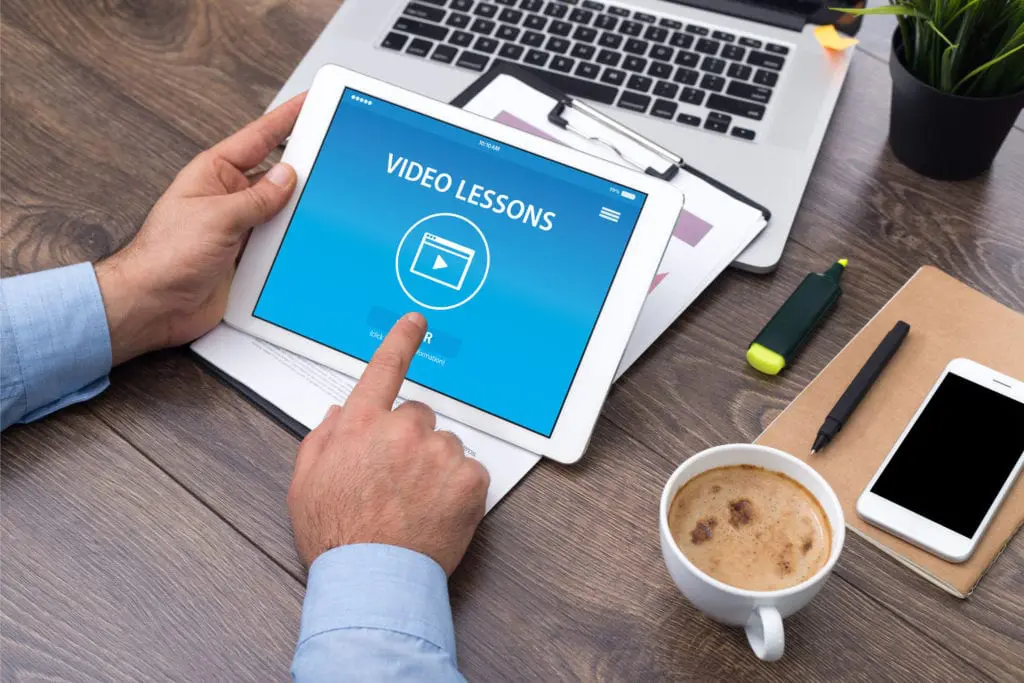
Video learning improves retention, and learners are 75 percent more likely to choose video-based learning than any other medium.
But just because video is effective doesn’t mean it’s easy to sell. Let’s face it: videos are everywhere.
Today, 85 percent of U.S. internet users watch videos online, spending on average one-third of all their browsing time on streaming sites, vlogs, and social media videos. YouTube alone has over 1 billion viewers—a third of the entire global online population.
Video is a powerful medium, but because of its massive popularity, selling your own online video course can be a challenge. There are so many hosting sites out there, and so much competition already, that making an impact on the marketplace can be difficult.
So, below you’ll find my advice on how to create and sell video courses in order to reap the most success.
Related Post: Uscreen: A Beginner’s Guide to Monetizing Your Online Videos
How To Create And Sell Online Video Courses | My Proven Step-by-Step Guide
If you want your online video course to stand out and attract the right buyers, you must carefully follow the steps that I’ve shortlisted after years of trial and error.
Here’s the full breakdown.
Step #1: Understand your niche and audience needs
Before creating your first video or picking a platform, you need to validate your course idea and understand your learners. Whether you’ve been teaching in your field for years, or you’ve identified a new opportunity to explore, it’s important to know what competition is out there and whether your topic is one people are likely to pay for.
Start by exploring your subject on existing e-learning platforms. Review not only the number of competitors in your field, but drill into the content of their courses, pricing, audience, and more. The more you can learn about what other edupreneurs are doing, the better you can tailor your material to appeal to learners.
Look for a Unique Selling Proposition (USP). What can you teach that isn’t already available? What unique perspective can you bring to the material? What demand is currently unfilled?
Conduct targeted research among prospective learners and listen in closely to social media conversations in your field. Many learners will take to social media to complain about something they want but have not been able to find. Smart edupreneurs follow those conversations to identify gaps in the market.
Once you’ve decided on a subject for your video classes, tailor your course to your target audience from the pricing and platform up. If you’re teaching a subject aimed at teens and young adults, for example, a self-hosted course with a four-figure price tag isn’t going to perform effectively. Likewise, you’ll be selling yourself short if you charge a minimal fee on an online learning platform for a niche course aimed at C-suite executives.
Step #2: Pick a business model
Although your overall course fees will depend in large part on what your target learners can sustain, there are still variables to consider when it comes to pricing both your individual classes and overall course.
1. Ad revenue splitting provides free access to your learners in exchange for a small time consideration (generally ad revenue is generated when an ad is clicked, or when it has been watched for 30 seconds or more).
The downside to this kind of revenue generation is the low price per view and uncertain income. A video on YouTube could have zero views or a billion, making it impossible to accurately predict the revenue it will generate, especially for edupreneurs just starting out on a platform and still building their audience.
However, if you are producing e-learning courses in areas that have a broad appeal, especially to a younger audience that doesn’t control their purchases or has low disposable income, ad revenue can still generate large and sustainable profits.
2. Subscription models are also popular for e-learning courses. With a subscription, a learner purchases access to a course by paying a small recurring amount.
Subscriptions work best when you are producing new video classes on a regular basis, or have a large backlist of existing e-learning content.
This model is a good middle-ground for edupreneurs looking for a steady, predictable income, and appeals to learners who want to make a long-term commitment without paying large upfront fees.
For edupreneurs targeting executive and advanced learners, a one-time fee model often works best.
While the one-off price for an e-learning course can be as high or low as you choose, chances are you aren’t charging enough.
E-learning, as with any online industry, can be a race to the bottom when it comes to rates, but if you want to create and monetize a successful online course, aim your prices high.
When you’re choosing your business model and pricing level, you need to find a balance between your market size, learners’ circumstances, your fair compensation, and the ultimate benefit to the learner. If they finish your course with knowledge that will improve their career prospects, price according to the value you have added and their potential gains from the information you imparted.
And remember, people spend thousands of dollars each year on their hobbies, so even just-for-fun courses shouldn’t be devalued.
Use our course pricing calculator for more insights
Step #3: Choose the right online video course platform
Once you have your market and business model identified, it’s time to find the right platform. Different platforms offer different advantages (and disadvantages). When considering your choice, keep in mind how you intend to monetize your online learning course.
1. Video on Demand (VOD) platforms
The simplest and most flexible way to monetize your online course is to sell each video through an on demand service such as Vimeo or Amazon Prime Video Direct. Like conventional video sales, these platforms work by distributing your videos to the paying public, who can choose from a variety of ways to purchase and view your content. As the creator, you can set a fixed price for individual videos and full collections, or collect revenue through subscriptions, rental models, or ad and other revenue splitting.
The advantage to this model comes in the control you have as a content creator. Unlike some of the other choices below, you can diversify your learners’ options for accessing your videos, meaning your course will have wider reach and appeal than using a fixed model of revenue generation. By hosting with an established video provider such as Vimeo or Amazon, you also get access to their large user base. Amazon Prime surpassed 100 million users in January 2019, and Vimeo has 170 million regular users viewing 715 million videos each month.
Even if you don’t think your target learners will be looking for e-learning videos through large video on demand sites, there are smaller VOD services such as Uscreen to consider. These provide “over the top” or OTT film and TV services delivered through apps to smart devices such as phones and TVs. Uscreen has over 1 million subscribers, and provides a convenient way for you to deliver your course directly to your learners’ devices.

2. Ad revenue splitting
Hosting ads is a common way of monetizing video online, and is a popular way a lot of video content creators earn revenue. YouTube is the most obvious example of a video hosting platform with ad monetization. The advantage to this model is it costs the viewer nothing except the time it takes them to watch the ad, meaning there’s no financial barrier between your learners and your content. The downside to monetizing through ads is the low earning potential. In 2013, YouTube’s average Cost Per Thousand views (CPM) was $7.60, which is split 45/55 with Google, meaning a content creator can earn an average of $4.18 for every thousand views their video gets. (There are, however, plenty of other ways to monetize your videos on YouTube.)
This can still be profitable to edupreneurs who are creating e-learning videos in popular fields. Veritasium’s science learning channel has 5.4 million subscribers and over 520 million views across 267 videos, giving them an average income potential of around $2.17 million. Math channel Numberphile is another good example of ad revenue success, with 2.9 million subscribers and over 400 million views for a $1.67 million average revenue potential.
Those examples are outliers, however. Very few edupreneurs come close to that level of success, and few e-learning topics have broad enough appeal to attract those kind of viewing figures. If you’re planning an online learning course in a niche or less accessible subject, the ad revenue model probably isn’t for you.
3. Online learning platforms
Using video on demand or YouTube can work just fine if your content is video-only. If, however, you want to add in other capabilities, like text pages, quizzing, the ability to download documents, or facilitated discussion, then a true online course platform would be a better choice for hosting and selling your videos.
I’ve already covered online course platforms extensively in other posts, so I won’t go into great detail here other than to say that there are four major options to consider.
- Standalone Platforms – These include popular options like like Thinkific, Teachable, and as the name suggests, they are platforms separate from your own Web site. They usually have the advantage of being relatively simple to use while offering the full range of features you need to turn your videos into full-blown courses and sell them.
- All-In-One Platforms – These include platforms like Kajabi and Podia. Unlike the standalone platforms, you can use these for your whole Web and marketing presence – and they offer all of the features you need for creating and selling platforms.
- Plug-ins and Themes – If you use WordPress, you can used plug-ins and themes to sell training videos online from your own Web site. There are a ton of options in this category and most of them require a pretty strong level of technical expertise for working in WordPress. If video courses are your main focus, the main one I would recommend for most edupreneurs is MemberPress.
- Marketplace Platforms – These include options like Udemy and Skillshare. The main advantage they offer is that they already have an established marketplace for online courses, so you get to publish your videos in a place where people are actively seeking online education. Sounds great, but keep in mind that you usually have very little control over your pricing in these platforms, you don’t get access to your user contact information, and because you will still have to put effort into marketing to stand out from other sellers in the marketplace. In general, I tell people to think very hard before considering this model.
Overall, before choosing the right course platform for you, it’s important to consider the size of your target audience, as well as your future learners’ budgets and online behaviors, in conjunction with your technical abilities and budget. Before you decide on a host, be sure to review the major online learning platforms to find the best fit for you.
Step #4: Create your online video course content
Once you’ve chosen a hosting platform, you need to make your e-learning videos. The platform’s requirements can have an impact on the technical aspects of creating the right video, so you may have to consider your filming equipment and editing capabilities when choosing how to host your online course.
To begin, most edupreneurs will need a basic home studio setup, and have a general understanding of how to produce an e-learning video.
If you’re just getting started creating video learning courses, you don’t need to spend thousands on fancy equipment. My guide to creating a home studio will talk you through filming your first e-learning class using your smartphone or an inexpensive camera. Depending on your subject, you can also use screen recording software to film your desktop and teach without appearing on camera at all.
Increasingly, edupreneurs are using livestreaming to get started with video learning, broadcasting their lessons through platforms like Restream and StreamYard that allow you to multistream to many different social media platforms and other sites at once. Livestreams are the fastest and easiest way to distribute video classes as the audience will have low requirements for technical expertise.
They can be a great option for piloting your material (which I always recommend), but keep in mind that a livestream doesn’t always make a good evergreen e-learning video, especially if the quality of the recording isn’t great. You will most likely want to create a more scripted, higher quality video after using livestreaming to test your material.

Step #5: Market your online video course
Self-promotion is many an edupreneur’s stumbling block, but there is no avoiding it if you want to make sales. When creating an online video course, it isn’t enough simply to publish the videos.
Keep in mind that if you have done good market validation work and have piloted your materials, you have already taken some steps toward promotion. Also keep in mind that, even if marketing is your biggest fear, you probably already know how to market your course better than you think.
So, take heart, and focus on the three key aspects of promotion: awareness, attraction, and conversion.
Read our guide to building a marketing funnel for your courses.
Awareness
This one is probably obvious: if no one knows about you or your online video course, no one is going to buy.
Fortunately, between the experience you already have and the work you’ve done to validate your course idea, you should already have a good idea of where the prospective customers for your course are hanging out.
As early on as possible – ideally well before you even start creating your course – you need to start getting in front of these people. The idea is not to “pitch” people on your course, but simply to make them aware of the value and expertise you offer.
Some key ways to do this are to:
Be a guest contributor on podcasts and blogs that are popular among your target audience. In just about any niche, there are dozens, if not hundreds or thousands of blogs and podcasts that reach at least some of your potential audience. As I’ve written before, I’m a fan of finding blogs and podcasts that are just a little below the top tier. The people running these are almost always hungry for relevant content. You just need to take the time to understand their content focus and reach out in a non-spammy way to offer content that will truly be useful to them.
Speak at events your audience attends. There’s a trade or professional association for just about anything, which means there are opportunities for you to present at the meetings of these organizations or be a presenter on their Webinars. (More than 90 percent of them offer Webinars.) If you need help finding these groups, check out the AssociationExecs database there are also plenty of opportunities with local chambers of commerce and other business groups. Do some searching, and you will almost certainly come up with places where you can get in front of a room full of prospects.
Follow, connect, and share on social media. Social listening can be a powerful part of validating your market as well as figuring where it makes sense to follow people and – by sharing relevant resources – attracting a following. Figure out the one or two channels where your prospective audience seems to be active and become an active participant on those channels.
Advertise on channels that attract your audience. Finally – and particularly once you have the best social media channels identified – you can invest in advertising. Keep in mind that even before you have a product, you can “boost” your posts on most major social media channels to attract and engage followers. You can also advertise on search engines to get in front of people searching on topics related to your course. Usually, though, you aren’t going to want to invest significantly in advertising until you have a way to actually capture leads – which leads us to the next factor in promotion.
Attraction
Awareness is all well and good, but to move your prospects towards becoming customers, you have to move them beyond awareness and actually attract them to you. To do that, you need to not only showcase your expertise, but also offer something of value that will make them want to find out more.
Eventually, that “something of value” will be your online video course, but before you ask a prospect to pay for something like a course, you usually want to offer other forms of value first.
These might include:
Blog, video, and/or audio content that solves key problems for your prospects. One of the steps every edupreneur should take as early on as possible is to start creating a body of work that showcases your expertise. Personally, I’ve always found the benefits of blogging to be huge, but I’ve also had a lot of success with podcasting. Choose whichever medium works best for you, but creating useful content that will attract your prospects to you
Free eBooks, reports, checklists, and other “lead magnets.” Attracting people to your freely available content is a critical step, but ideally you want to know who these people are and how to contact them when you have something to sell. For that, you need a reason for them to hand over an e-mail address and a lead magnet accomplishes this purpose. While lead magnets are nowhere near as effective as they used to be, if you offer valuable, useful content that truly addresses a key issue for your audience, you can still get a significant percentage of visitors to your site to provide contact information in exchange for access to your content. These people become well-qualified leads for your online video course.
You don’t even have to have a Web site or course platform up and running to start offering a lead magnet. You can use a platform like Leadpages, for example, to set up a page where prospects can sign up for a lead magnet. Leadpages even has site builder capabilities to help you put together Web sites specifically for driving leads and sales.

Keep in mind that Awareness and Attraction support each other, primarily as a result of search engines and social sharing. It won’t happen overnight, but when you create valuable content – particularly if you are careful to use language that your audience is likely to use – search engines will find it and at least some of the people who access your content will share it. So, as you are creating content, definitely keep search engine optimization and shareability in mind.
Conversion
We’ve already touched on one type of conversion: getting people to hand over an e-mail address. Enticing them to follow you on social media is another type, but the other type, of course, is to make the sale – to convert your prospects into actual paying customers for your online video course.
It’s relatively rare an actual sale to happen the first time a prospect finds you – that’s why continuing to raise awareness and attract people to a body of content are so important. When you do go for the sale, it’s important to have a landing page – aka a sales page – that makes the likelihood of a purchase as high as possible.
I discuss the critical elements of an effective landing page in more detail here. Keep in mind that where you host your course will have a big impact on how much control you have over your landing pages. You are going to have much less control if you host with a video-on-demand or marketplace site, much more control with most standalone online course platforms, and nearly complete control if you host through your own Web site with an all-in-one platform or theme/plug-in.
Step #6: Analyze your data and keep improving
Of course, your work isn’t done – nor does the opportunity end – when your e-learning video course has been published or even when you make your first sales.
In order to maximize your course’s potential, consistent monitoring will help you attract new learners. Pay attention to feedback on your video course, including reviews and ratings and more subtle feedback such as course drop-off points and other metrics that indicate where your classes are failing to deliver. Tweaking and improving the course based on learner feedback will help you improve course retention rates and capitalize on success.
Keep an eye, too, on what’s working when it comes to awareness, attraction, and conversion. Google Analytics will help you do this as will the reporting tools in whichever type of platform you choose to use. By tracking this data, you inevitably find new ideas as well as ideas for improving on what’s already working.
4 Rules for Creating Engaging Educational Videos
If you’ve never recorded yourself before, it can be overwhelming to take the first step. But if you follow these four simple rules, you’ll be able to create more engaging and effective educational videos than most poeple.
Rule #1: Set clear instructional goals
When writing your script, keep your lesson goal firmly in mind. Just as with any other medium, your video should guide learners through the subject in a concise, easy-to-follow style. Use images or diagrams, or highlight key words and phrases, to help the lesson sink in.
Video has an advantage over other formats because learners usually retain more information from video than other media, but staying focused and reiterating key points is still important. Experiment with how you present the information, and use different techniques to reinforce your teaching and ensure your learners will remember what they have been taught.
Storytelling, for example, is closely linked with memory. Our brains are hardwired to remember stories—and video allows you to capitalize on that by harnessing emotive narratives, happy or sad, to further aid retention. So, when making key points, always consider how you can illustrate and support them with a relevant story.
Be wary, however, of overloading your learners. When watching a video learners need to be able to distinguish between necessary and unnecessary information. Too many asides and anecdotes can result in cognitive overload and lead to your key points being lost. A script helps ensure all the information you provide is relevant and to the point.
Rule #2: Write a script—and rehearse
You might have delivered your course lessons a thousand times already, but that doesn’t mean you won’t freeze up when the camera starts recording. And, it doesn’t mean that what you have delivered off camera doesn’t need to be polished significantly before you capture it for posterity.
Keep in mind that idiosyncrasies common to normal speech become glaring – and often annoying – when they’re recorded. Pauses, false starts, ums and repetition are distracting to the learner when delivered via video and can interfere with achieving your goals.
Creating and then thoroughly rehearsing a script for your course is the surest way make sure your material is tight, that any annoying distractions are eliminated, and that you appear as poised and confident as possible in presenting your content. It also has the huge benefit of helping you avoid the need for extensive, time-consuming post-production editing. When you’re starting out creating an online video course, the more you can do at the front end to make life easier, the better.
Keep your script simple, and don’t worry about getting all of your wording perfect in either your writing or your memorization. You should remember your talking points well enough to speak confidently and naturally about the subject, but a robotic drone is just as distracting to learners as fillers and false starts.
Stay natural and remember to be you. (More on this point below.) After all, it’s your expertise your learners are paying to access. By the time you’re ready to record, your script should be little more than a bullet point guide.
A couple of tips for memorization:
- Don’t just read over your script repeatedly. Put the script aside and make yourself try to recall all of the lines from memory. This is called “effortful retrieval” and it is one of the most effective methods there is for memorizing effectively
- Review your script and practice “effortful retrieval” shortly before going to bed for one or more nights before you plan to shoot your videos. Sleep is very powerful for helping the human brain solidify memories.
My strong preference is to memorize – you are just much more likely to come across naturally – but if you feel there is no way you can memorize all of your material, you can also use a teleprompter. If you are capturing video on smartphone or tablet, there are a range of free and low cost teleprompter apps available, like Video Teleprompter. https://videoteleprompter.com/
Or, if you want to go for a more professional teleprompter solution, check out this rig from Glide Gear for use with a digital video camera.
Rule #3: Keep it short
Longer is usually not better when it comes to video content. Online, videos with the most engagement are under two minutes long. That includes all video, from ads and music to interviews and how-tos.
Now, you probably shouldn’t attempt to teach a whole course in two-minute increments, but shorter usually is better even when it comes to instructional content. . One large-scale study by MIT, for example, found that the optimal length for online learning videos is only six minutes.
The University of Wisconsin found similar results, and reported that videos over 15 minutes suffered significant viewer attrition, with many learners refusing to even start a video of that length.
The greater attention rates and overall effectiveness of shorter content is also the main driver of the 18-Minute Rule for the TED videos that have been shared and viewed hundreds of millions of times across the Web.
Keep in mind, too, that short video jibes with one of the hottest current trends in e-learning: microlearning
Microlearning is a useful tool for both learners and edupreneurs. It helps learners advance faster while retaining more information, and it takes the pressure off of educators to produce hours of video content. The average YouTube user spends 40 minutes per day watching videos, so learners will likely watch several short educational videos at a time, when they might shy away from watching one longer video.
Bottom line: instead of investing your time in creating a large quantity of video – which is also likely to require a larger amount of editing – spend your time on paring down the content you have and organizing it into brief, high-impact chunks.
Rule #4: Be yourself
The most important thing to remember when creating an e-learning video course, is to be yourself – after all, you are the most valuable part of your course.
Related to this point, the MIT study referenced above reviewed over 6.9 million video sessions recorded for Massive Open Online Courses (MOOCs) and found that videos with a personal feel, delivered by enthusiastic instructors, got the best engagement.
You build trust when you are seen and heard. Learners feel a personal connection with their educators, and through video they can understand the nuances of tone and inflection that are lacking in written communication. Look into the camera and speak directly to reinforce your relationship with your learner.
A more personal approach not only makes learners more receptive to your classes, it encourages students to build a rapport and leads to increased positive feedback for your course and better learning outcomes.
Essentials for Recording High Quality Video
The focus of this post is on how to create effective educational video rather than on the technical aspects of how to shoot video. Nonetheless, once you’ve decided to take the plunge into video-based learning, you’ll need to make sure you have the right tools. It’s easy to go overboard, so I recommend that you let the following rules of thumb drive your investments in video hardware and software.
- Use the camera you have. If you have a smartphone or tablet, then you already have a camera that’s good enough for most purposes. Wait until you’ve gotten some experience – and results – before upgrading to something more professional.
- Get a tripod. If you don’t already have one, get a tripod and an adapter to enable you to mount your cell phone or iPad on the tripod. This give you much more flexibility in how you position your camera and it will eliminate the shakiness that could be a distraction to your learners.
- Invest in audio. If you are going to spend significant money, spend it on audio. To start with, get a decent lavalier (“lav”) mic that can hook into your smartphone, tablet. I also recommend you get a Saramonic SmartRig+. This handy little tool plugs into your phone, tablet, or computer, before the mic, and works to convert the audio input into the right format for your device. Mics will work without the SmartRig+, but it will dramatically improve your audio quality.
- Enhance your lighting. Try to make use of good natural light whenever you, but when you can’t, it’s valuable to have some basic artificial lighting available, like what you can get from this simple lighting kit from Limo.
- Take a step up with editing. You can use iMovie or other free video editing tools, but I strongly recommend you take a step up to video editing software like Camtasia (for PC and Make) or Screenflow (for Mac). These packages make it easy to add in elements like textboxes and highlights and they also make it possible for you to capture content on your computer screen – like slides, or anything you want to show in a Web browser, Basically, I consider it a “must” to have one or the other of these pieces of software in your course creator toolkit.
Creating And Selling Video Courses Isn’t As Hard As You Think
The great thing about success is that it breeds more success. (For a really interesting exploration of this point, I highly recommend The Formula by Albert-László Barabási.) Follow the steps outlined here and you’ll start a virtuous cycle that will stand you out in the market for online video courses.
See Also:
- Uscreen: A Beginner’s Guide to Monetizing Your Online Videos
- How to Create a Simple Home Video Studio for Online Courses
- How to Sell Courses Online

Jeff Cobb, Founder of Learning Revolution
Jeff Cobb is an expert in online education and the business of adult lifelong learning. Over the past 20+ years he has built a thriving career based on that expertise – as an entrepreneur, a consultant, an author, and a speaker. Learning Revolution is a place where Jeff curates tips, insights, and resources to help you build a thriving expertise-based business. Learn more about Jeff Cobb here.
Table of Contents
Related Posts
7 Best Camtasia Alternatives for Creating Online Courses (2026)
How To Make Money on YouTube: 10 Proven Strategies (2026)
10 Best YouTube Alternatives For Creators in 2026 (+ Monetization Tips)