

TL;DR — What Is The Best Kajabi Alternative?
There’s no identical Kajabi alternative. But if I had to choose one platform to replace Kajabi, Thinkific would be my obvious choice. With it’s advanced email marketing and world class course creation and audience engagement features, Thinkific is the ideal alternative to Kajabi.
But there are many other excellent options as well. Here are all of them.
1. Thinkific – Best overall Kajabi alternative for structured learning and built-in email tools.
2. Podia – Best for beginners who want an affordable, all-in-one solution.
3. Teachable – Best for launching simple courses or digital products without tech headaches.
4. Zenler – Best for course creators who want Kajabi-level features at a lower price.
5. Kartra – Best for marketers focused on funnels, automation, and conversion.
6. LearnWorlds – Best for educators needing advanced learning and analytics tools.
7. Circle – Best for community-led businesses with courses and live events.
8. ClickFunnels 2.0 – Best for funnel-first businesses and high-ticket coaching.
9. HighLevel – Best for coaches and service providers focused on automation and client conversion.
Read the full article for details and examples.
Kajabi is hands-down my favorite all-in-one platform for course creators.
Why? Because you get everything in one place—your courses, your website, your email marketing, landing pages, newsletters, payments, automations—no need to duct-tape different tools together.
That’s why I recommend it to most of my clients who can afford it.
But Kajabi isn’t perfect for everyone.
If you’re just starting out, don’t have an audience yet, or you’re not making consistent income from your digital products, the price can feel steep. And in many cases, it might be overkill in terms of features you won’t use right away.
So in this article, I’ll walk you through some of the best Kajabi alternatives. Whether you want something simpler, cheaper, or just different, you’ll find a solid option that fits your current stage of business.
Read my detailed Kajabi Review to understand why I rate it so highly
Quick Verdict: The Best Kajabi Alternatives In 2026
There’s no perfect or identical Kajabi alternative. It’s a one-of-a-kind product that leads the all-in-one platform market.
However, you can find strong alternatives for specific use cases, depending on your business needs.
Here are my top choices:
- Thinkific – Best overall alternative to Kajabi, especially now with its built-in email marketing and automation features.
- Podia – Best for beginners on a tight budget, with simple tools to sell courses, downloads, and memberships.
- ClickFunnels 2.0 – Best for creators who prioritize sales funnels and automation, especially for high-ticket offers.
- Circle – Best for community-led creators, offering courses, memberships, events, and powerful community tools under one roof.
- LearnWorlds – Best for educators and trainers who want rich learning features like interactive videos, assessments, and learner analytics.
Read on to find out how I reached this conclusion. I’ve covered several other tools as well that can be excellent alternatives to Kajabi in certain scenarios.
Do check them out.
A Comparison Of The Best Alternatives To Kajabi
What makes Kajabi the best all-in-one platform is its excellent course creation tools along with email marketing automation features comparable with dedicated email software.
So, the ideal Kajabi replacement would need to have superior or equally impressive course creation capabilities and email tools necessary to run and scale an e-learning business.
Here’s how the best alternatives stack up against Kajabi.
| Platform | Course Features | Marketing Features | Starting Price (Annual) |
| Thinkific – Best Aternative | Full course builder with videos, quizzes, assignments, certificates, SCORM, live lessons, and coaching support. | Email marketing with broadcasts, sequences, upsells, abandoned cart recovery. Lacks deep CRM or complex funnel logic like Kajabi. | $36/month |
| Podia | Courses, coaching, webinars, digital downloads. Clean structure, but lacks quizzes or certificates. | Built-in email with segmentation and automation. No advanced funnel builder or CRM. Good for beginners. | $33/month |
| Teachable | Simple course builder with drip content, quizzes, certificates, and upsells. No advanced assessments. | Basic email tools with upsells, coupons, and affiliate support. Lacks automation depth and CRM of Kajabi. | $29/month + transaction fee |
| Zenler | Courses with live classes, quizzes, certificates, and webinars. Great for structured programs. | Strong built-in email, funnels, automation workflows, and webinars. Near-Kajabi level for all-in-one use. | $54/month |
| Kartra | Drip-fed membership-style courses. No quizzes or certificates. Not ideal for structured learning. | Powerful email and SMS marketing, full CRM, automation, funnel simulator. Stronger than Kajabi on marketing but weaker on course delivery. | $83/month |
| LearnWorlds | Advanced learning tools like interactive videos, SCORM, assessments, and mobile apps. | Solid email and affiliate features. Enough automation for mid-tier sellers but lacks CRM and deep logic flows. | $24/month |
| Circle | Courses inside community spaces with drip scheduling and exclusive content access. | Email marketing and automation via Marketing Hub. Lacks funnels and advanced CRM. Great for community-based promotions. | $89/month |
| ClickFunnels 2.0 | Basic course builder with templates and progress tracking. No assessments or certificates. | Excellent email and CRM automation focused on funnel performance. Less polished than Kajabi’s automation but more flexible. | $81/month |
| HighLevel | Minimal course delivery. Only basic content hosting inside membership areas. | Full CRM, email/SMS automation, lead capture, funnel building. Stronger than Kajabi on sales but lacks course marketing depth. | $97/month |
The Best Online Course Platforms Other Than Kajabi
There’s never been a better time to sell online courses and digital products for two reasons.
- A massive surge in demand (All signs point to continuing massive growth for the e-learning industry.)
- Dozens of world-class platforms to host, market, and sell your online courses.
Which online course platform (other than Kajabi) should you choose?
Here’s my list of the best available options, along with their pros and cons.
#1 Best Kajabi Alternative: Thinkific
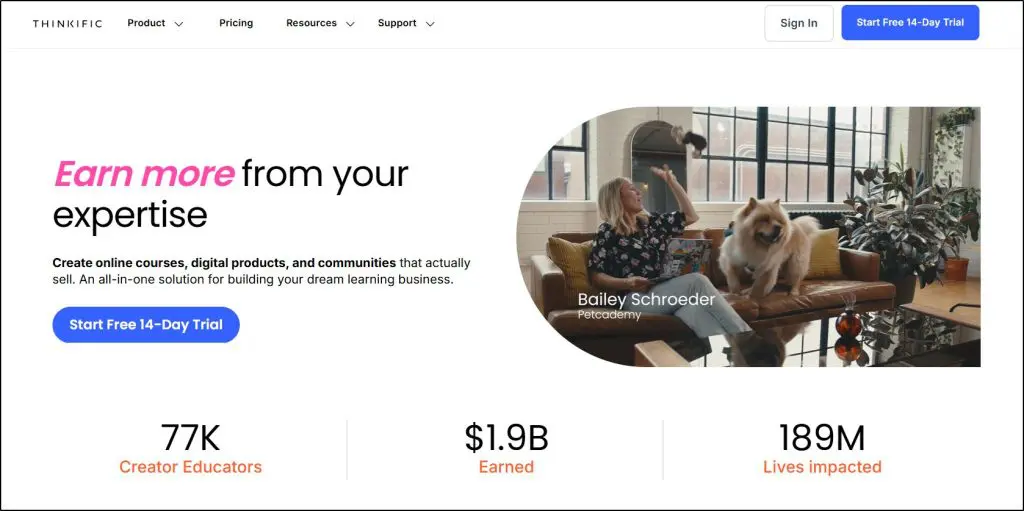
Thinkific has always been a favorite among course creators—and for good reason. It offers everything you need to create, sell, and manage online courses, memberships, and digital downloads without getting overwhelmed.
Over the last couple of years, it’s evolved into a serious Kajabi competitor with the addition of built-in email marketing, AI-powered tools, and a native payment system called TCommerce.
Unlike Kajabi, which focuses heavily on all-in-one business automation, Thinkific stays centered on education-first creators. That means it’s ideal for coaches, trainers, and educators who want a clean, structured learning experience for their students without paying for marketing features they may never use.
You can build full courses with videos, quizzes, assignments, and certificates using an easy drag-and-drop interface. There’s no need to code or rely on external tools.

You can also run live sessions, sell coaching, or build paid communities—Thinkific lets you do it all from one dashboard. It’s also SCORM compliant now, so it works great for corporate training or compliance-based programs.
Where it still lags behind Kajabi is high-level marketing automation. Yes, Thinkific now has built-in email tools, upsells, and abandoned cart recovery. But if you’re running complex funnels or need behavior-based automations, you’ll still want to pair it with something like ConvertKit or ActiveCampaign.

Still, for anyone focused on high-quality content, a smooth student experience, and long-term growth, Thinkific offers unmatched value—especially if you don’t want to pay Kajabi’s high monthly fees.
Read our Thinkific Review for a more in-depth analysis.

2. Podia

If you’re a solo creator looking for simplicity, Podia might be your best bet. It gives you everything you need to run your course business, including a website, products, and emails—without juggling five different tools.
Over the last few years, Podia has quietly evolved into a serious contender to Kajabi.
What started as a simple digital product platform now includes built-in email marketing, automation, memberships, webinars, coaching, and even community features. It’s grown fast, without losing its beginner-friendly vibe.
Podia lets you sell online courses, digital downloads, coaching sessions, webinars, memberships, or any other digital product from one place.
Its website builder comes with clean, modern templates, and your site includes landing pages, a blog, email forms, and SEO settings—all included, even on the base plan. You also get access to live chat, coupons, waitlists, upsells, and course certificates.
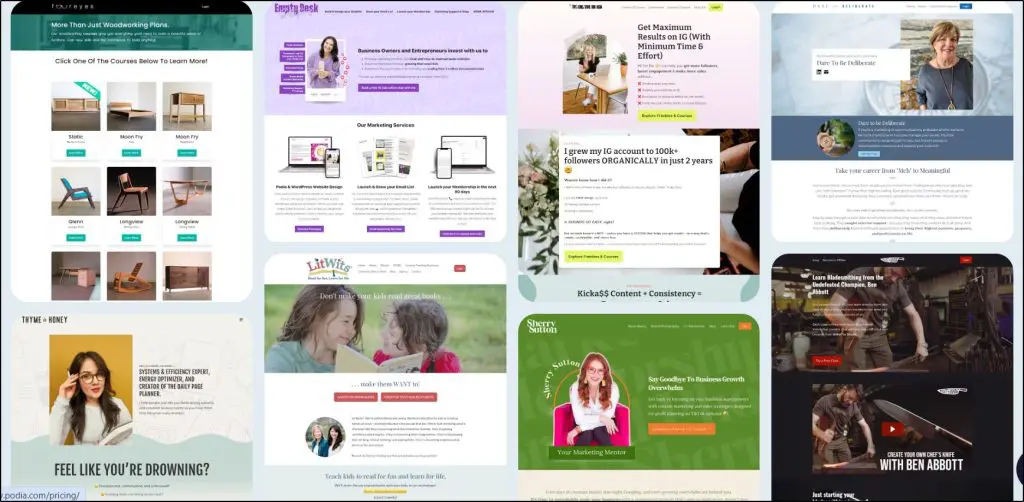
Podia’s email platform is fully integrated, so you don’t need ConvertKit or Mailchimp. You can set up newsletters, automations, segmentation, and even lead magnets—all right from your dashboard.
Everything just flows nicely, especially if you’re someone who wants fewer distractions and more focus on content and marketing.
Now, Podia doesn’t offer the kind of advanced automation or funnel-building tools that Kajabi or Zenler give you. But it nails the basics and makes course selling feel easy, even fun.
Read our Podia Review for a more in-depth analysis.

3. Teachable

Teachable has long been a favorite for course creators, and it’s still one of the best platforms for beginners who want to get a course or digital product up and running without a steep learning curve.
What makes Teachable stand out today is how much it has grown beyond just online courses. You can now sell coaching sessions, digital downloads, memberships, and even run your own community—all from one account. It’s a legit all-in-one creator platform now, especially for solo businesses and educators.
The course builder is clean and easy to use, and you can structure your content using modules, drip lessons, quizzes, and certificates. You also get sales tools like upsells, coupons, and abandoned cart recovery baked in. And if you’re on the Pro plan or higher, you can run an affiliate program and remove Teachable branding completely.
Where Teachable really shines is in its simplicity. You don’t need to know code. You don’t need a designer. And with built-in tax handling (including VAT and GST) and payment gateways you can focus on growth instead of setup.
Every Teachable school is a separate entity with its own website and multiple courses. A course is the actual content package with different modules and lessons composed of videos, PDFs, downloadable files, and quizzes.

However, Teachable is quite a limited product when it comes to marketing features.
Don’t expect advanced automation, deep funnel building, or a native page builder as flexible as Kajabi’s. Also, while Teachable offers a free plan, the Basic plan still has 5% transaction fees, and you only unlock things like certificates, affiliate features, and custom branding on higher plans.
In short, Teachable is perfect if you want to sell straightforward digital products or courses, especially if you’re just getting started or want to keep things lean.
But if you need full-blown marketing automation or live video features built in, platforms like Kajabi or Zenler will give you more firepower.
Read our Teachable Review for a more in-depth analysis.

4. Zenler
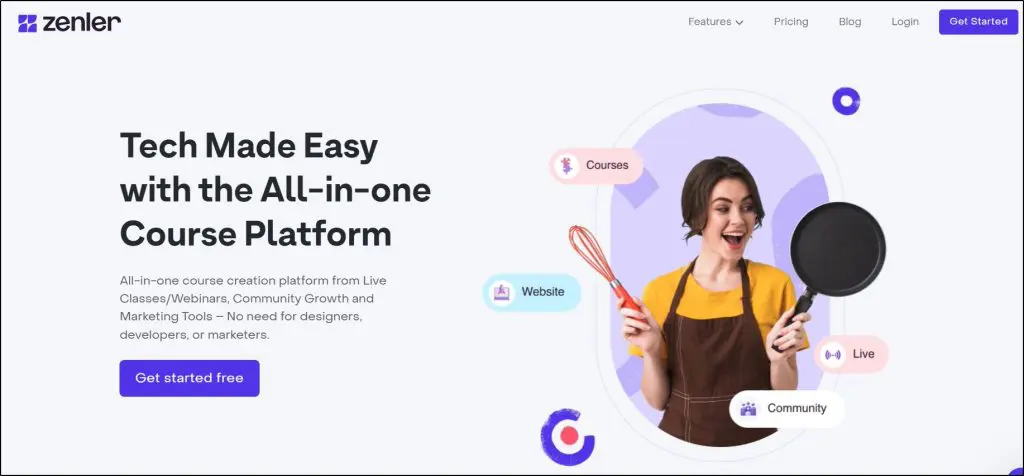
Zenler is my go-to recommendation when clients want an all-in-one platform like Kajabi but can’t justify the price tag.
It gives you everything you need to build and grow your online course business—course creation, live classes, email marketing, landing pages, sales funnels, memberships, and even a built-in community.
The course builder supports all kinds of content including videos, audio, PDFs, quizzes, assignments, and even full-blown live webinars using Zoom. You can drip content, issue certificates, and track student progress in detail.

But what really sets Zenler apart is how it wraps sales and marketing into the core experience. You can build full funnels, set up automation workflows, and run your entire email marketing without needing extra tools.
It’s still technically in beta, so the interface isn’t as polished as Kajabi’s, and you only get one theme for your site. But in terms of value for money, it’s hard to beat.
If you’re looking to run your whole business from one dashboard without the usual tech stack headache, Zenler is worth a serious look.
Read our Zenler Review for a more in-depth analysis.

5. Kartra

Kartra is one of the strongest Kajabi alternatives but with a twist. While Kajabi is built for creators who want a balance between course creation and marketing, Kartra leans heavily toward marketing, automation, and funnels.
You can absolutely sell courses and memberships with Kartra. It includes a drag-and-drop Membership builder where you can organize your course into categories, drip content, and control access.
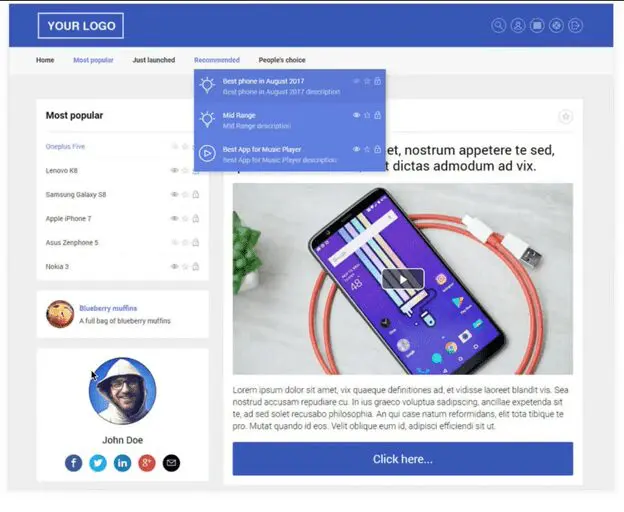
But it’s not an education-focused platform. You won’t find advanced assessment tools, detailed student analytics, or certification features like Kajabi offers.
What Kartra does offer is a powerful sales and marketing engine. It includes email and SMS marketing, funnel builders, checkout pages, calendars, affiliate tools, and even Kartra AI—which helps you create branded emails, sales pages, and SMS content in seconds. You also get 100+ prebuilt campaigns that are plug-and-play, making it ideal if you’re launching digital products or running complex marketing workflows.
One standout is the Funnel Simulator, something Kajabi doesn’t have. It lets you map your funnel, test it, and spot issues before you go live. You can also track real-time funnel analytics and build webinar sequences inside Kartra.
In short, if your priority is advanced marketing automation, audience segmentation, and conversion tracking, Kartra gives you more flexibility than Kajabi at a lower price point (especially if you’re not focused on teaching tools).
But if your main goal is to build structured online courses with a polished learning experience, Kajabi is still the better fit.
Read our Kartra Review for a more in-depth analysis.

6. LearnWorlds

LearnWorlds is one of the strongest Kajabi alternatives if your focus is on creating rich, engaging learning experiences. It’s built with course creators, coaches, and trainers in mind, especially those who want more control over how students interact with their content.
From interactive video features and SCORM support to built-in assessments, certificates, and white-labeled mobile apps, LearnWorlds gives you powerful tools that many platforms (including Kajabi) simply don’t offer.
Its onboarding is beginner-friendly, the course builder is intuitive, and the website templates are clean and conversion-ready.
It also handles your entire business model with tools for selling bundles, memberships, and subscriptions. You can set up affiliate programs, run upsells and cross-sells, build marketing funnels, and automate basic email campaigns—all without needing extra tools.
However, LearnWorlds still has its trade-offs.
While it’s excellent for delivering courses, its marketing automation isn’t as advanced or polished as Kajabi’s. You won’t find built-in newsletters, full-scale email sequences with complex logic, or the kind of CRM-style contact management Kajabi offers.
And while you can create beautiful sites on LearnWorlds, Kajabi’s sales pipelines and all-in-one marketing experience can feel more streamlined for people focused on growth.
So if your priority is running a learning-first academy with interactive content, LearnWorlds is a top-tier choice. But if you’re building a full-fledged coaching or info-product business that relies heavily on automation, segmentation, and email-driven sales, Kajabi may still be the better fit.
Read our LearnWorlds Review for a more in-depth analysis.

7. Circle
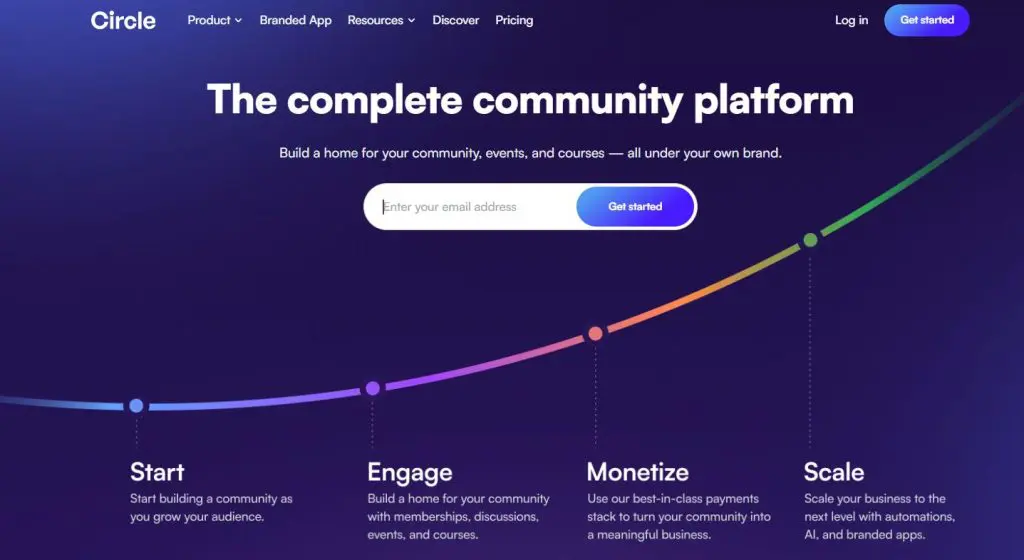
Circle stands out as one of the most polished and thoughtfully designed community platforms out there. If you’ve ever used Kajabi’s community feature and felt it was more of an afterthought than a true engagement tool, Circle will feel like a big upgrade.
It offers beautifully structured discussions, private spaces, group chats, live rooms, and even live streams with co-hosts — all designed to foster deeper, more authentic interaction between members. You can create cohort-based experiences, run office hours, host AMAs, and build entire learning communities where students help each other grow.

But Circle isn’t just a community platform anymore.
It now lets you build immersive, community-powered courses, complete with drip content, exclusive masterclasses, and even gamified rewards. You can charge for access with one-time payments, subscriptions, or memberships, and gate access to different parts of your community based on pricing tiers. All of this happens inside one login, one experience — no clunky third-party tools needed.
And now, with the launch of Marketing Hub, Circle is becoming a serious all-in-one platform. You can send email broadcasts, set up marketing automations, and manage all your contacts through a simple CRM. Trigger emails based on course activity, event signups, discussion participation, and more.
Circle’s new AI-powered workflows also let you automate onboarding, nudge inactive members, and personalize engagement at scale, features Kajabi users often have to hack together with external tools.
Still, Kajabi remains ahead when it comes to advanced funnel building, evergreen webinars, and its fully integrated checkout + upsell experience. If you run a high-ticket coaching business or rely on automated sales sequences, Kajabi might still be the better fit.
But if community is the heart of your business and you want your content, coaching, conversations, and communication all in one elegant space, Circle is a powerful, creator-first alternative to Kajabi that’s only getting better.
Read our Circle Review for a more in-depth analysis.
8. ClickFunnels 2.0
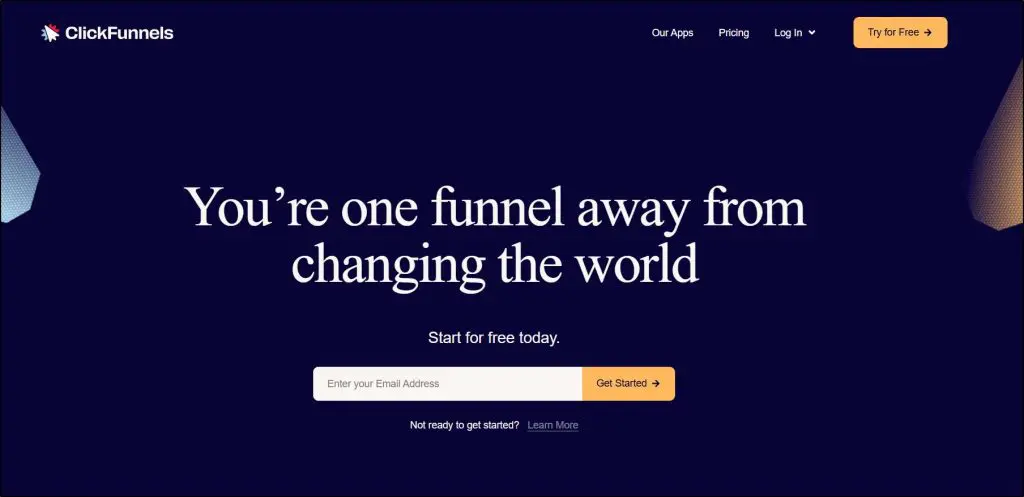
ClickFunnels has long been the go-to platform for sales funnels, upsells, lead generation, and product launches. But with the release of ClickFunnels 2.0, it’s trying to step into Kajabi territory, promising not just sales tools, but full course hosting, communities, memberships, email marketing, automation, and even a CRM.
If your business is funnel-first, meaning your primary goal is to convert traffic into buyers fast, ClickFunnels gives you an edge.
It’s built around that “one funnel away” philosophy, and everything else is wrapped around it. Your landing pages, checkout flows, email campaigns, courses, and communities are all just steps in the funnel.
ClickFunnels’ course builder is clean and fast to set up. You get templates, drip schedules, progress tracking, and even automated certificates. The experience is focused more on monetizing your knowledge than managing structured learning outcomes. There’s no native video hosting, no quizzes or assessments, and no mobile app for students — things Kajabi offers out of the box.
The community app is basic but functional — good for hosting private groups, running exclusive discussions, and connecting members inside your ecosystem.
You can create public or gated spaces, share content, and even run events. But again, it’s not as polished as what Kajabi offers in terms of live sessions, coaching tools, or gamification.
Where ClickFunnels catches up fast is email and marketing automation. The new Marketing Hub includes broadcast emails, advanced segmentation, CRM-style contact management, and multi-step workflows. You can automate everything from welcome sequences to upsell reminders — all connected to your sales funnels.
It’s not as deep as Kajabi’s behavior-based automation or platform-wide tagging, but for selling, it gets the job done.
The Appointments app is a smart addition too, perfect for coaching businesses. You can create booking forms, charge for consultations, and automate confirmations right inside your funnel without needing Calendly or Acuity.
So can ClickFunnels replace Kajabi?
If you’re selling premium courses, coaching, or memberships, and your priority is conversion over curriculum, ClickFunnels might be a better fit than Kajabi.
It’s not as refined when it comes to student experience, but it makes up for it with aggressive selling tools, powerful automation, and a clear funnel-focused approach.
But if your course delivery, branding consistency, coaching setup, or mobile access are mission-critical, Kajabi still holds the edge.
Read our ClickFunnels Review for a more in-depth analysis.
9. High Level
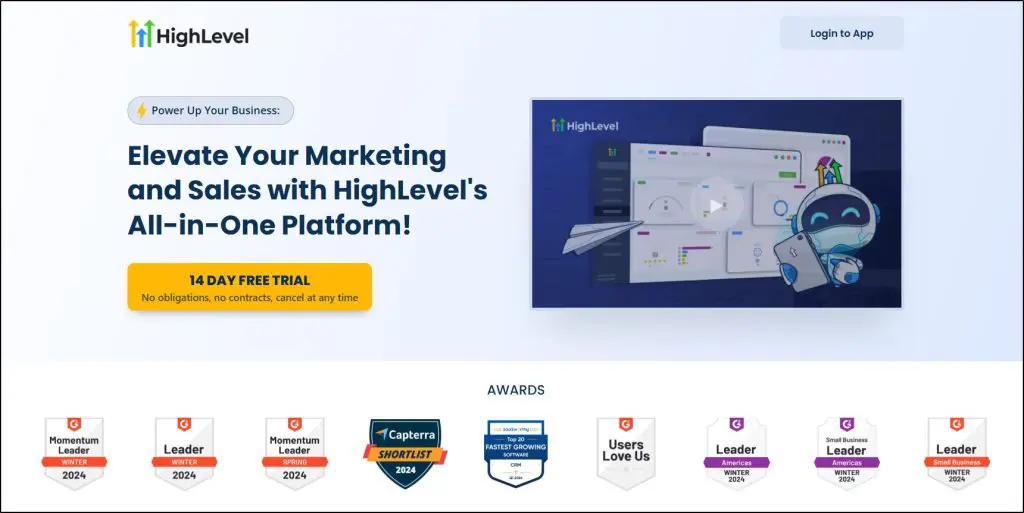
HighLevel isn’t trying to be a Kajabi clone. It’s not built for structured course experiences or rich LMS features. You won’t find quizzes, progress tracking, certificates, or a polished student dashboard here. There’s no mobile app or built-in community either.
But here’s where it flips the script.
If you’re selling high-ticket coaching, consulting, or membership offers, GoHighLevel can absolutely replace Kajabi because it solves a different (and often more urgent) problem: getting and converting clients at scale.
You get funnels, lead capture, AI email and SMS automation, full CRM, appointment scheduling, upsell flows, and multi-channel engagement—all under one roof.
It’s designed to help you attract leads, book sales calls, follow up automatically, close deals, and retain clients, without duct-taping tools together.
HighLevel can be a great alternative to Kajabi if:
- You’re not focused on creating an in-depth course experience.
- Your core business is coaching, done-for-you services, or high-ticket programs.
- You care more about automating sales and scaling offers than managing lessons and certificates.
If your business is about educating at scale with structured content, Kajabi still wins. But if your focus is selling high-ticket services or coaching with systems that convert, GoHighLevel might be the smarter engine to build on.
Read our HighLevel Review for a more in-depth analysis.
Verdict – Which Online Course Platform Is the Best Kajabi Alternative?
I’ve walked you through the top Kajabi alternatives available in 2026.
But which one is right for you?
The truth is there’s no one-size-fits-all Kajabi replacement. It’s a unique platform that combines powerful course creation, marketing, and automation features in one place.
That said, here’s how I recommend choosing:
- Thinkific is the best overall Kajabi alternative if you want powerful course features along with built-in email and automation tools.
- Podia is perfect if you’re just starting out and want an affordable, beginner-friendly platform.
- ClickFunnels 2.0 is the way to go if sales funnels and high-ticket coaching are your top priorities.
- Circle is ideal for community-focused businesses that want to combine events, courses, memberships, and discussions.
- LearnWorlds is best for education-first businesses that need advanced learning tools, assessments, and learner analytics.
If you’re not sure what to pick — or need help figuring out your platform strategy — feel free to ask in the comments. I’ll personally respond and point you in the right direction.
Frequently Asked Questions (FAQs)
- Can I migrate my Kajabi content to another platform easily?
Most alternatives offer basic import tools, but you’ll likely need to manually migrate content, especially for complex automations or membership structures. - Which Kajabi alternative has the best mobile app experience for students?
LearnWorlds and Thinkific (especially with Thinkific Plus) offer branded mobile apps. Kajabi also includes a native app, which some alternatives lack. - Are there Kajabi alternatives that support SCORM or xAPI?
Yes, Thinkific and LearnWorlds both support SCORM files, making them suitable for corporate training or compliance-based learning. - Which Kajabi alternatives offer affiliate marketing features?
Thinkific (Start plan+), Teachable (Pro plan+), Podia (Shaker plan), Kartra, and LearnWorlds (Pro Trainer+) all offer built-in affiliate tools. - Do any alternatives offer better SEO features than Kajabi?
Podia and LearnWorlds offer solid SEO controls, but none truly outshine Kajabi’s blogging and SEO setup out of the box. Using WordPress separately is often still better. - Can I integrate Kajabi alternatives with tools like Zapier, ConvertKit, or ActiveCampaign?
Yes, most platforms on the list support native integrations or Zapier, especially Thinkific, Teachable, and HighLevel. - Which platform is best for selling digital downloads and not courses?
Podia is best suited for selling digital products like PDFs, templates, and downloads alongside courses. - Are there Kajabi alternatives specifically for cohort-based courses or live bootcamps?
Circle and Zenler are great for cohort-style programs. Zenler supports live classes, while Circle supports events and group spaces. - Which platform gives me the most design freedom and site customization?
LearnWorlds and ClickFunnels 2.0 offer more flexibility with design templates and branding compared to Kajabi’s limited themes. - Is there a Kajabi alternative with built-in AI tools?
Thinkific and Kartra now include AI features like landing page generation and campaign setup, but they’re still evolving compared to dedicated AI marketing tools.
See also:
- Kajabi Review – Powerful All-In-One Solution
- New Zenler Review: A Course Business Powerhouse
- Kartra Review 2020: A Top All-in-One Platform Choice
- LearnWorlds Review: Everything You Need to Know
- Teachable Review
- Thinkific Review
- Build your online business with Podia
Table of Contents
Related Posts
Wondercraft Review (2026) | Is It The Best AI Video & Audio Generator?
What Is StreamYard? | Pricing And Live Streaming Features Reviewed (2026)
10 Best Thinkific Examples For Edupreneurs (2026)