
TL;DR: ScreenFlow Review | Is It Still Worth Using For Content Creators? (2026)
ScreenFlow is still the best screen recorder and editor for Mac users who make course lessons, software tutorials, and long-form YouTube videos. The app records your screen, camera, mic, and iPhone at the same time, and the editor adds callouts, annotations, captions, and clean exports. On short-form social video, though, it falls behind, with no automatic captions, no AI editing, and no direct posting to TikTok or Instagram.
Pricing: ScreenFlow $199 one-time, ScreenFlow Super Pak $275 with the first year of stock media, ScreenFlow Super Pak + $325 with Premium Support
Free trial: Unlimited free trial, with a watermark on exports
Standout features:
– Screen, camera, mic, and iPhone recording at the same time
– A multi-track timeline with callouts, zoom, and annotations
– Styles and templates that speed up a tutorial series
– A one-time license with no monthly fee
Use ScreenFlow when: You work on a Mac and record lessons, demos, or YouTube tutorials.
Skip ScreenFlow when: You use Windows (pick Camtasia), or you need fast short-form clips with auto captions (pick Descript).
Try ScreenFlow for free
Whether you sell online courses, coaching programs, or digital products, you’ll need screen recordings, annotated screenshots, and other visual content to teach well.
AI can now write a lesson script in seconds. What sets your content apart is your face, your voice, and your experience on screen. Good recording software makes that part look professional.
Most Mac users who make screen recordings have heard of ScreenFlow, since it has been around since 2008. The question is whether it still fits the way creators publish. Course lessons and YouTube tutorials still run long, while much of the attention has moved to vertical clips on TikTok, Instagram Reels, and YouTube Shorts.
In this ScreenFlow review, I cover its core features, recent updates, pricing, pros and cons, and how it holds up for both long-form lessons and short-form social video. I also compare it with the main alternatives, so you can decide whether it suits your workflow.

Quick Verdict: Who Should Use ScreenFlow?
ScreenFlow remains the best screen recorder for Mac users who teach on video. ScreenFlow gives you everything you need to create sharp screen recordings for courses and digital products, at a one-time price, even though the interface looks dated. Here’s where I draw the line.
| ScreenFlow is for | ScreenFlow is not for |
|---|---|
| Mac users who record course lessons, software demos, and tutorials | Windows users, since ScreenFlow runs only on macOS |
| YouTube creators who publish long-form, horizontal videos | Short-form creators who need auto captions and quick vertical edits |
| Trainers who want screen, camera, and iPhone recordings in one timeline | Teams that want async video messages with instant share links |
| Creators who prefer a one-time license over a subscription | Anyone who wants AI tools such as text-based editing or filler-word removal |
ScreenFlow Product Snapshot (2026)
Here’s the short version of what ScreenFlow offers, based on the software as of October 2026.
| ScreenFlow | |
|---|---|
| What it is | A screen recorder and video editor built only for Mac |
| Made by | Telestream |
| Current version | ScreenFlow 10.5, with fixes for macOS Tahoe released through early 2026 |
| Competes with | Camtasia, Descript, ScreenPal, Loom, and OBS Studio |
| Best for | Course creators, software trainers, and YouTube tutorial makers on Mac |
| Price | $199 one-time license, or $275 with the first year of stock media |
| Free trial | Unlimited, with a watermark on exported videos |
| Core features | Multi-source recording, multi-track editing, callouts, annotations, captions, templates, stock media |
| Key limitations | Mac only, no AI editing, no automatic captions, no direct TikTok or Instagram posting |
What Is ScreenFlow?
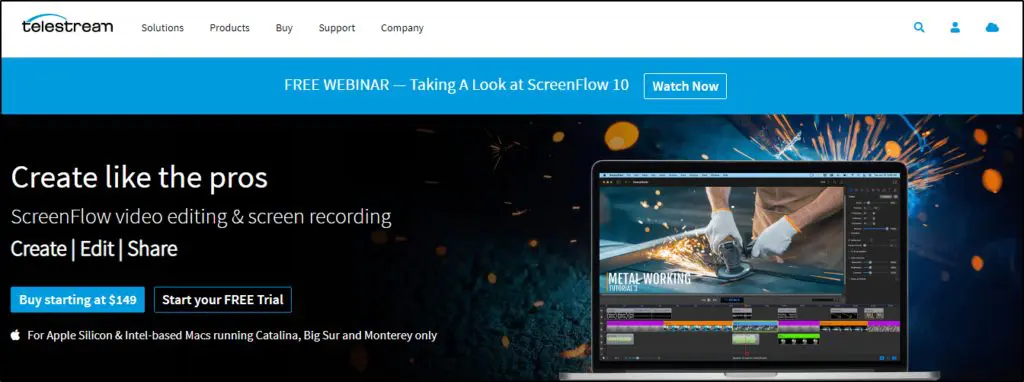
ScreenFlow is a screen recorder, video editor, and screen capture tool for Mac, made by Telestream. The software helps Mac users create professional screen recordings and edited videos without moving into a full editing suite like Final Cut Pro.
ScreenFlow suits online course creators and digital product sellers who want to make clear, engaging lessons. Screen, camera, and mic recording happen at the same time, which works well for lessons, presentations, webinars, and workshops. Recordings look sharp on Apple’s Retina displays, and the editor adds zoom, annotations, and filters to point viewers at what matters.
ScreenFlow 10 has been the current version since 2021. Telestream hasn’t released a new major version since then, but updates keep coming. Version 10.5 in August 2025 added region recording, app inclusion and exclusion, looped and timed recordings, and system audio recording without an extra audio driver.
Main Features in ScreenFlow
Here are the features that matter most for creators who teach on video.
- Multi-source recording: Capture your screen, camera, mic, and iPhone at once, each on its own track.
- Multi-track editing: Cut, rearrange, and layer clips on a timeline that stays simple to learn.
- Callouts and annotations: Zoom in, dim the background, and draw on screen so learners follow every click.
- Background removal and filters: Blur or replace your background without a green screen.
- Captions: Add, edit, import, and burn in subtitles to make lessons accessible.
- Styles and templates: Reuse intros, outros, and layouts to speed up a series of tutorials.
- Stock Media Library: Drop in images, music, and video clips from more than 500,000 items.
- GIF and APNG export: Turn short clips into looping images for docs, emails, and sales pages.
- Direct publishing: Upload to YouTube, Vimeo, Wistia, Box, and Imgur from inside the app.
ScreenFlow covers most of what a course creator needs for recording, editing, and screen capture. The sections below look at how each feature works and where it falls short.
ScreenFlow Pricing and Free Trial
ScreenFlow sells one-time licenses instead of subscriptions, which sets it apart from Camtasia and Descript. A single payment covers that major version, and Telestream offers three packages.
| Package | One-time price | What you get |
|---|---|---|
| ScreenFlow | $199 | One-time license |
| ScreenFlow Super Pak | $275 | License plus first year of Stock Media Library |
| ScreenFlow Super Pak + | $325 | Adds Premium Support, with priority email replies and 25% off future upgrades |
ScreenFlow packages compared:
| Feature | ScreenFlow | ScreenFlow Super Pak | ScreenFlow Super Pak + |
|---|---|---|---|
| ScreenFlow license | ✓ | ✓ | ✓ |
| Stock Media Library | ✗ | First year included | First year included |
| Premium Support | ✗ | ✗ | ✓ |
| Self-help support | ✓ | ✓ | ✓ |
The free trial has no time limit and includes every feature, but exported videos carry a watermark until you buy a license. Use the trial to record one real lesson, edit it, and export it before you pay.
Two costs sit outside the license price. The Stock Media Library renews at $99 a year after the first year, and Telestream doesn’t refund it. Premium Support costs $59 a year after the first year. Major version upgrades also cost extra, although Telestream hasn’t released one since ScreenFlow 10.
For most creators, I recommend the plain ScreenFlow license. Course lessons and tutorials rarely need stock footage, and free libraries cover the occasional background track. Choose ScreenFlow Super Pak if you make marketing videos or YouTube content that needs b-roll and music every week. Teams can also ask Telestream about volume pricing.
ScreenFlow Features | What Can You Do With This Software?
ScreenFlow includes a wide range of recording and editing tools for course creators, digital product sellers, teachers, trainers, and corporate teams. Below, I start with a summary table and then take a position on each feature.
ScreenFlow Features at a Glance
| Feature | Description | Limitations |
|---|---|---|
| Screen recording | Records full screen, a region, or chosen apps, plus camera, mic, and iPhone | Mac only, no cloud recording |
| Video editing | Multi-track timeline with nesting, markers, trimming, and transitions | No text-based or AI editing |
| Callouts and annotations | Zoom, highlight, draw, and add text to guide viewers | Few ready-made arrows and shapes |
| Video enhancements | Filters, LUTs, and background removal without a green screen | Background removal can’t be fine-tuned |
| Closed captions | Manual captions, SRT import and export, burn-in captions | No automatic transcription |
| Stock Media Library | More than 500,000 images, audio, and video clips | Costs $99 a year after year one |
| Screenshots and GIFs | Exports frames as images and clips as GIFs or APNGs | No standalone screenshot tool |
| Templates and styles | Reusable layouts, titles, and effects for tutorial series | Title templates offer limited customization |
| Publishing and export | MP4, ProRes, GIF, and direct upload to YouTube and Vimeo | No direct posting to TikTok or Instagram |
Feature #1: High-Quality Screen Recording
ScreenFlow captures every detail of your Mac screen in sharp, high-resolution video. Because Telestream builds it only for Mac, it handles Retina displays better than most cross-platform recorders.
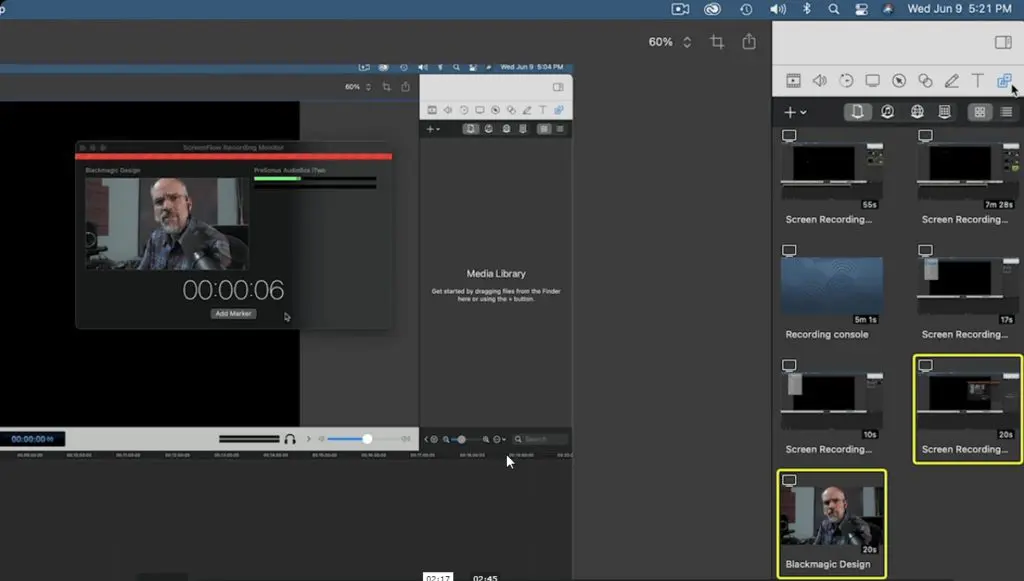
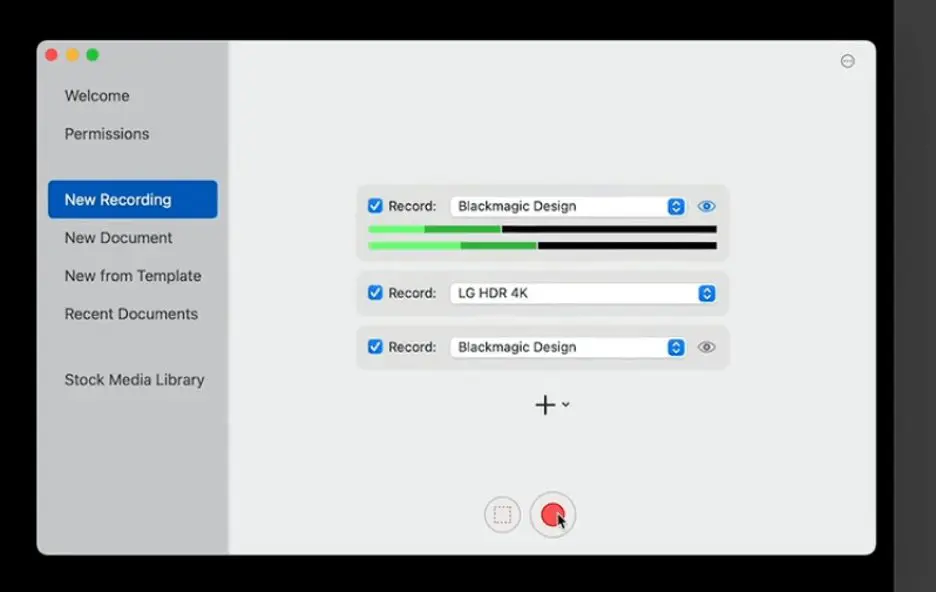
Multi-source recording is its most impressive feature. ScreenFlow records your main screen, a second monitor, a connected iPhone or iPad, your webcam, and several audio sources at the same time. In the screenshot below, I selected five sources for one recording.
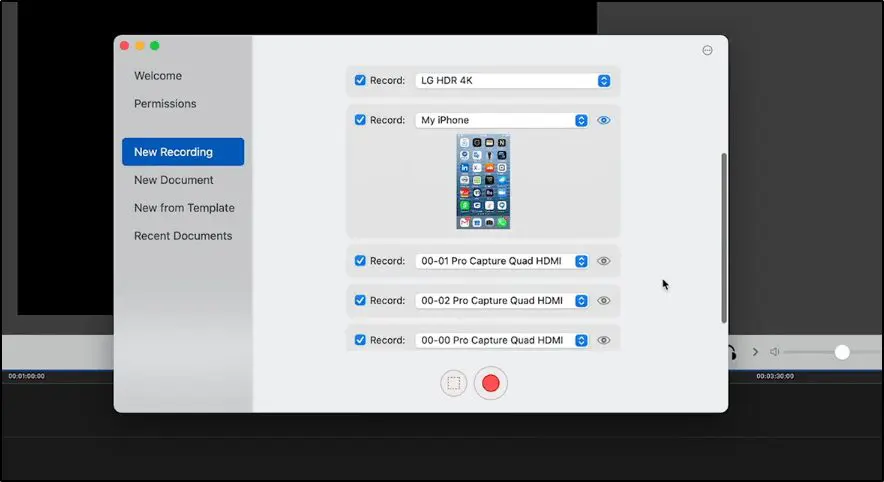
For online course creators, this changes how you record lessons. The camera captures your face, the screen recording captures the demo, and the mic captures your voice, all on separate tracks. Learners trust a teacher they can see, and a lesson with your face in the corner feels worth more than a silent screencast.
Handling those tracks takes little effort. ScreenFlow places each source on its own track in the timeline, so you can switch between your face, your screen, or both whenever you want.
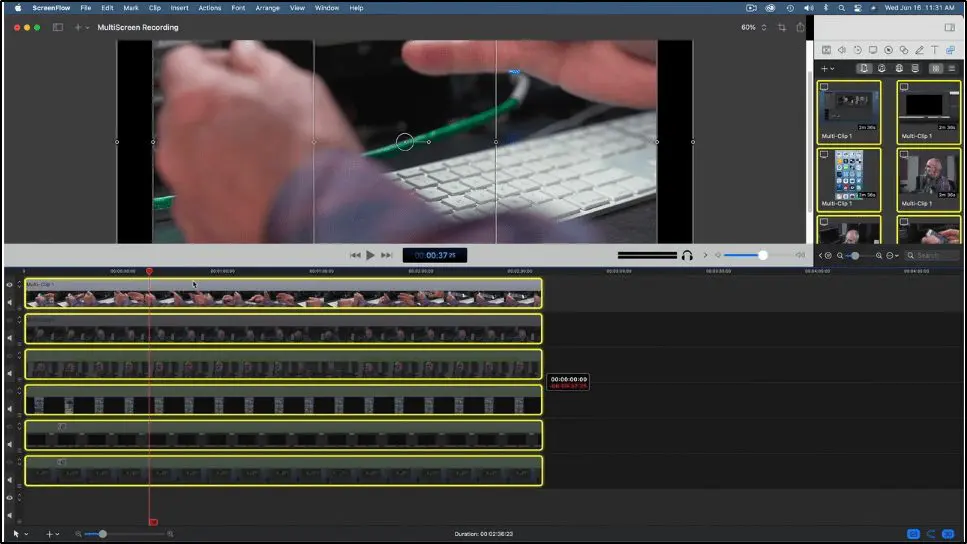
The recording window stays clean and shows only the options you need. Markers help on long lessons. Add one at any moment during a recording, then jump back to it while editing.
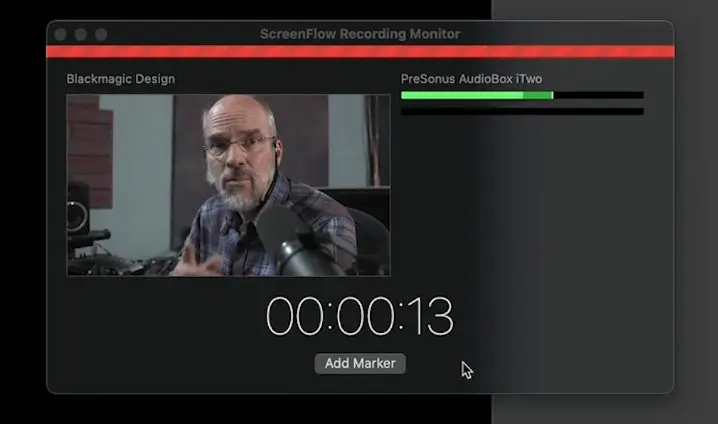
Version 10.5 made recording more flexible. Now ScreenFlow can record a region of the screen, include or exclude specific apps, set looped or timed recordings, and capture system audio without installing a separate driver. Excluding apps keeps a private Slack window or email inbox out of your lesson, a common problem for creators who record on their everyday Mac.
In short, ScreenFlow gives you everything you need to record clean, high-definition lessons and demos.
Feature #2: Video Editing Tools
ScreenFlow’s editing tools rank among the best for screen recordings. The timeline holds multiple tracks for your screen, camera, audio, and added media, and you can drag tracks to change their order.
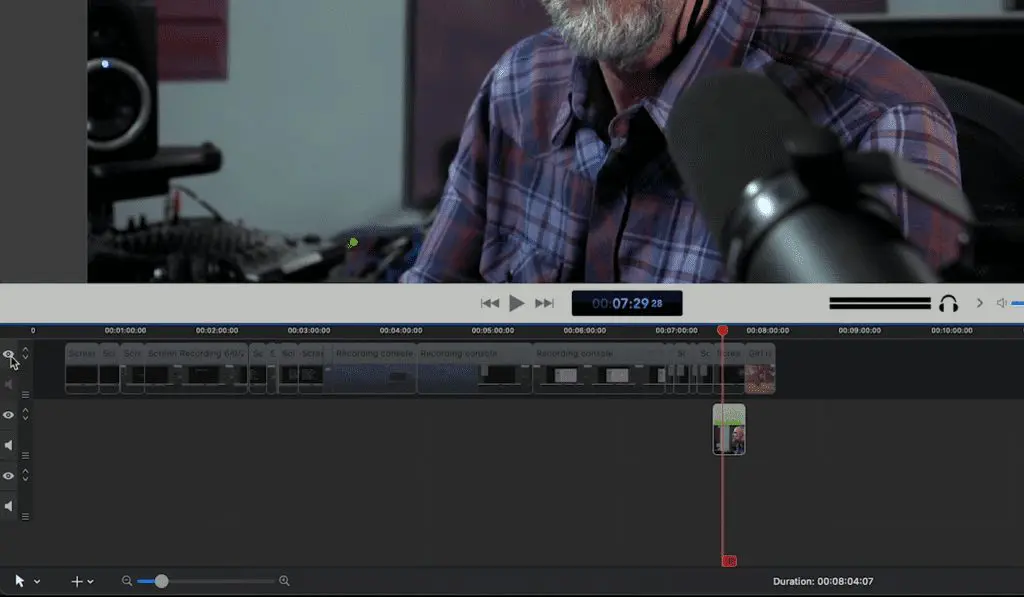
Viewing your video frame by frame helps you make precise cuts. The editor lets you crop and trim clips, add filters, insert media, and nest clips to group them while still editing each one.
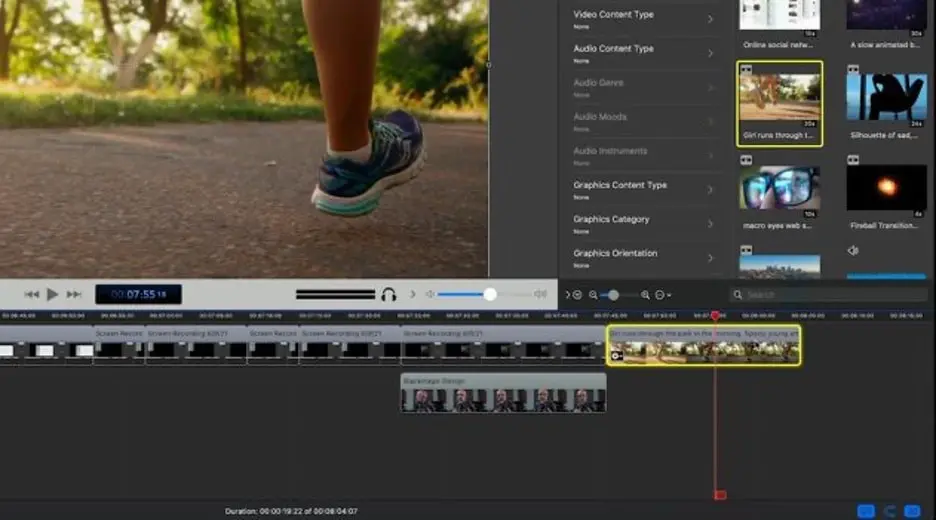
Callouts do the most for teaching. Use them to zoom in on a button, dim everything except one window, or highlight a menu with a spotlight effect. Annotations, transitions, and text overlays help viewers follow each step, which keeps them watching longer.
ScreenFlow also includes a library of animated titles you can add anywhere in a video.

Each title can match your brand colors and fonts, and swap the animation later from the settings panel. Customization stays limited compared with dedicated motion design tools, but it covers lesson intros and lower thirds well.
Overall, the editor gives you full control over how your lessons look, without the learning curve of Final Cut Pro or Premiere Pro.
Feature #3: Video Enhancements
Beyond basic editing, ScreenFlow offers a filter library with color adjustments, stylizing effects, and blur or sharpen options. Custom LUT files also import for a unique look.
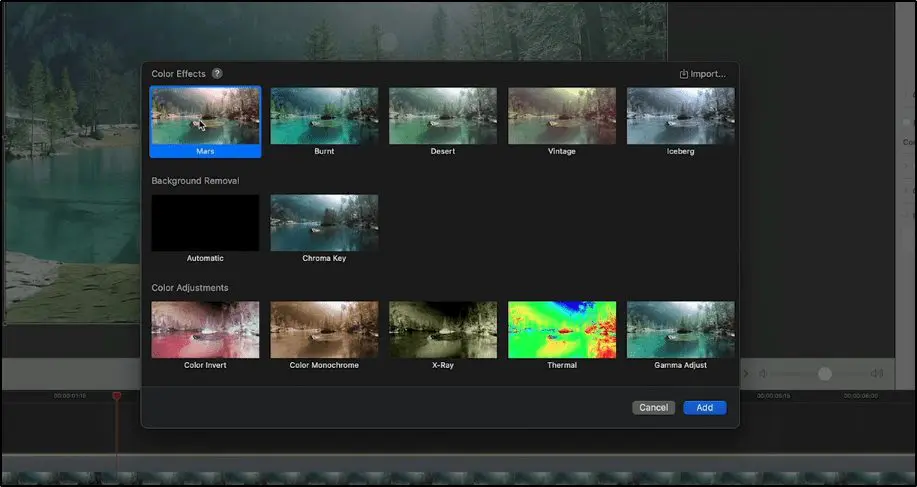
Background removal works without a green screen. Blur your background or replace it with an image, which makes the speaker stand out in a busy home office.
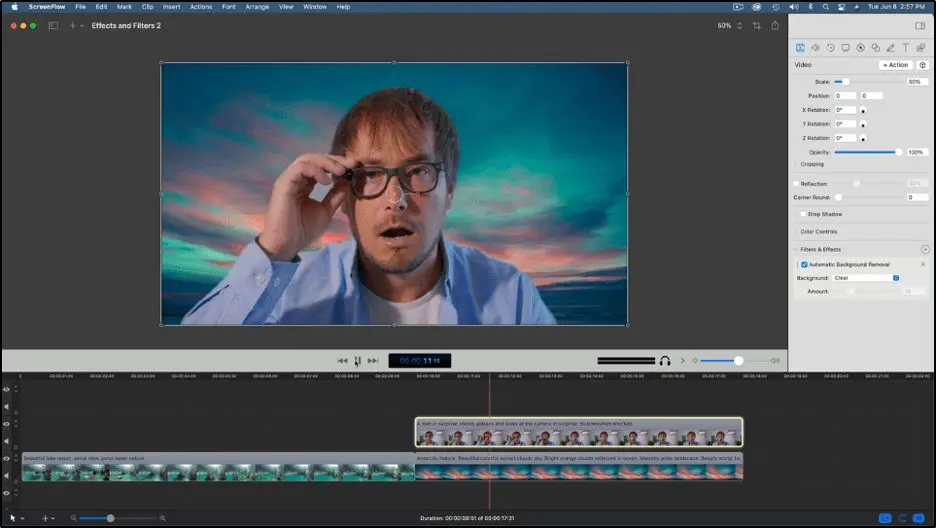
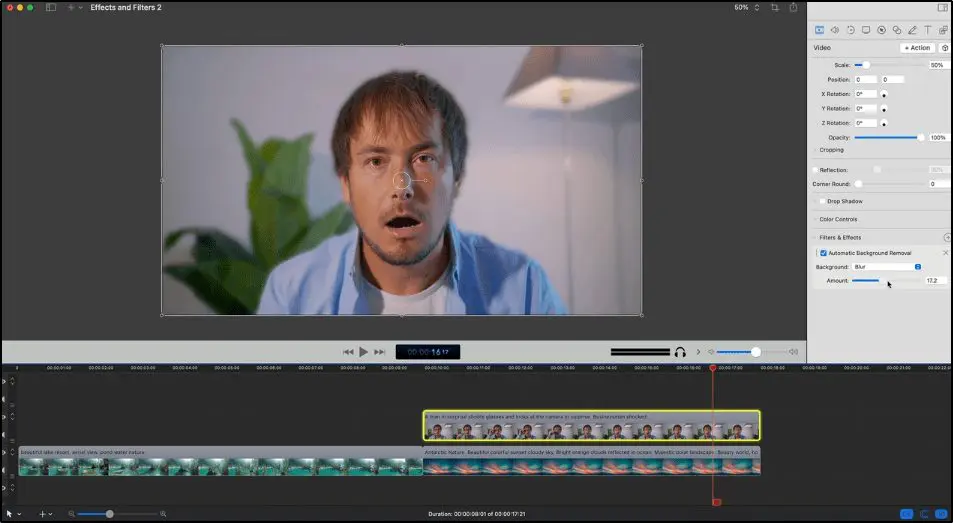
These tools help most when you record in a less-than-perfect room. Results vary, though, and you can’t fine-tune the edges of the cutout. For the cleanest result, my guide on how to use a green screen covers the setup.
Feature #4: Closed Captions
ScreenFlow includes a caption editor for creating, editing, and burning in ADA-compliant subtitles. Type captions, paste text from another file, or import an SRT file.

Captions support dozens of languages, and you can export them as an SRT file for use on your course platform or YouTube.
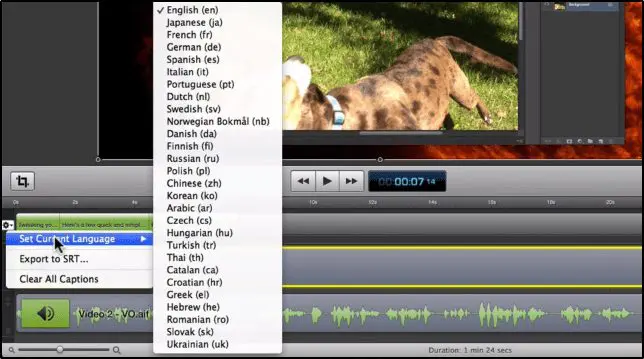
Here’s the catch. ScreenFlow doesn’t transcribe speech automatically. In 2026, Descript, Camtasia, YouTube, and most phone apps generate captions in seconds, so typing or importing them by hand feels slow. Most ScreenFlow users now generate an SRT file with a transcription tool and import it. Captions also stay off by default, so add the captions track from the View menu first.
Feature #5: Stock Media Library
The built-in Stock Media Library holds more than 500,000 images, audio clips, and videos, including motion backgrounds, lower thirds, and royalty-free music. Drag items straight into your timeline.
Stock media helps when you make marketing videos, course trailers, or YouTube content that needs b-roll. For most screen-based lessons, though, you’ll rarely need it. Given the $99 yearly renewal, I’d skip it unless you’ll use it every week.
Feature #6: Screenshots, GIFs, and Animated PNGs
ScreenFlow works as a screen capture tool too, although it takes an extra step. Record your screen, find the frame you want in the timeline, add annotations, text, or shapes, and export it as a PNG image.
Any clip also exports as an animated GIF or APNG. Short looping clips work well in course workbooks, help docs, onboarding emails, and sales pages, where a five-second demo explains more than a paragraph. For quick everyday screenshots, though, a dedicated screenshot app is faster.
Feature #7: iOS Recording and Multi-App Audio
ScreenFlow records a connected iPhone or iPad over USB, which makes app demos and mobile tutorials easy. My guide on how to screen record an iPhone or iPad covers other ways to do this.
Multi-app audio keeps each source on its own track. Audio from your iPhone, an external mic, and a Mac app won’t mix together, so you can adjust or mute each one later. Audio isolation works per app, so two windows from the same browser stay on one track.
Feature #8: Templates and Styles for Tutorial Series
Templates save a full layout, such as an intro, an outro, and your camera position, so every new lesson starts with the same structure. Styles save the look of a clip or callout and apply it to others with one click.
For a course with 30 lessons, this keeps every video consistent and cuts editing time on each one. I consider this one of ScreenFlow’s most underrated features for course creators.
Feature #9: Publishing and Export
ScreenFlow exports to MP4, ProRes, GIF, APNG, and other formats, with presets for common uses. Direct uploads go to YouTube, Vimeo, Wistia, Box, and Imgur.
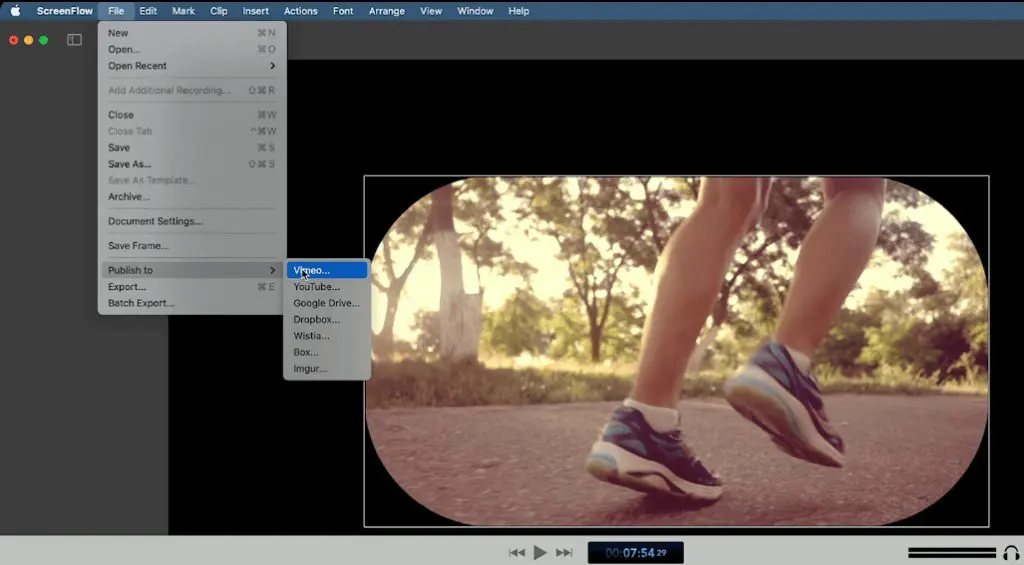
The presets cover long-form video well. Direct posting to TikTok, Instagram, or YouTube Shorts isn’t available, so short-form clips need an export and a manual upload from your phone or browser.
ScreenFlow for TikTok, Instagram Reels, and YouTube Shorts
Short vertical video now drives discovery for many coaches and course creators. A 45-second tip on TikTok or Reels often brings in more new followers than a 20-minute YouTube tutorial. So the fair question is how well ScreenFlow handles that format.
ScreenFlow can make vertical video. Set a custom canvas size such as 1080 by 1920, or start from an Instagram document preset, then arrange your screen recording and camera inside it. My guide to YouTube video dimensions lists the sizes each platform expects.
Speed is the problem. Short-form editing depends on tools ScreenFlow doesn’t have. Here’s how it compares on the tasks that matter most for social video.
| Short-form task | ScreenFlow | Better option |
|---|---|---|
| Vertical 9:16 canvas | Yes, with a custom size or preset | Any modern editor |
| Automatic captions | No, manual or SRT import only | Descript, CapCut, Captions |
| Cutting long videos into clips | Manual editing only | OpusClip, Descript |
| Removing filler words and pauses | Manual cuts only | Descript |
| Auto-reframing horizontal to vertical | No | OpusClip, Descript |
| Trending audio and templates | No | CapCut, TikTok and Instagram editors |
| Posting directly to TikTok or Reels | No | CapCut, scheduling tools |
| Editing on your phone | No, desktop only | CapCut, Captions |
My position is that ScreenFlow belongs at the start of a social workflow, not the end. Record your lesson or demo in ScreenFlow, where screen and camera quality matter most, and publish the full version on YouTube or your course platform. Then send the export to a clipping tool like OpusClip or an editor like Descript to cut short clips, add captions, and reframe them for TikTok, Reels, and Shorts.
Creators who post several short videos a day should skip ScreenFlow for that work. A phone-first editor will save hours each week. My guides on TikTok for coaches and going viral on TikTok cover the content side.
How to Screen Record on Mac with ScreenFlow
Here’s how to record and edit your first lesson in ScreenFlow.
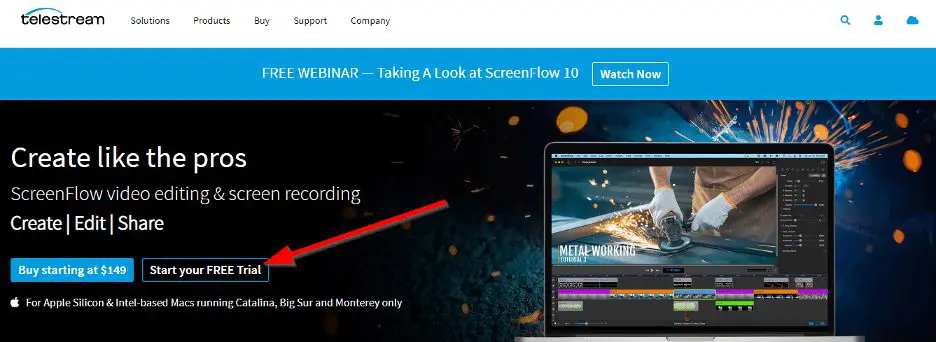
Step 1. Start your free ScreenFlow trial by downloading it from the Telestream website, then install and open it.
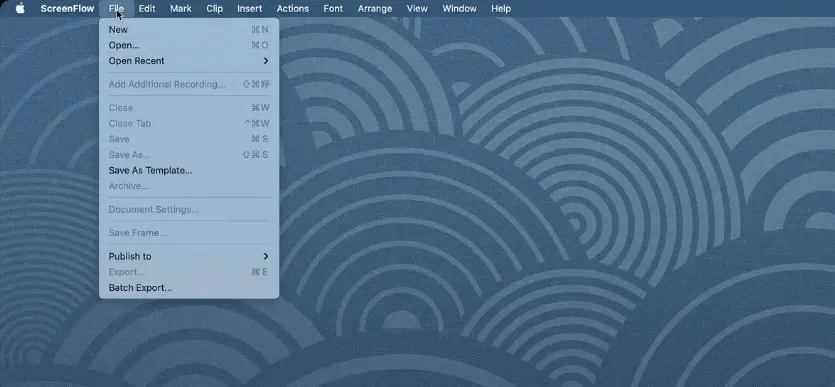
Step 2. Click File, then New, from the top menu.
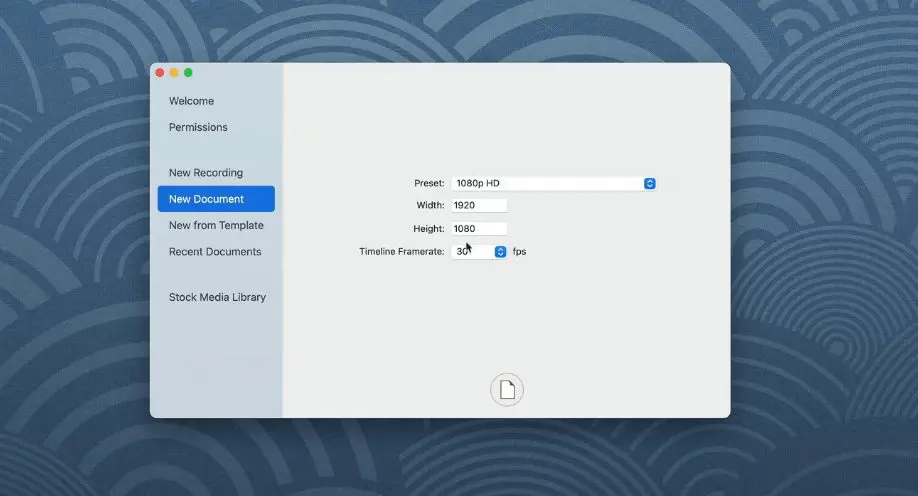
Step 3. Click New Document, choose your canvas size, and save the project with File, then Save As. Pick a vertical size here if you plan to post the video on TikTok or Reels.
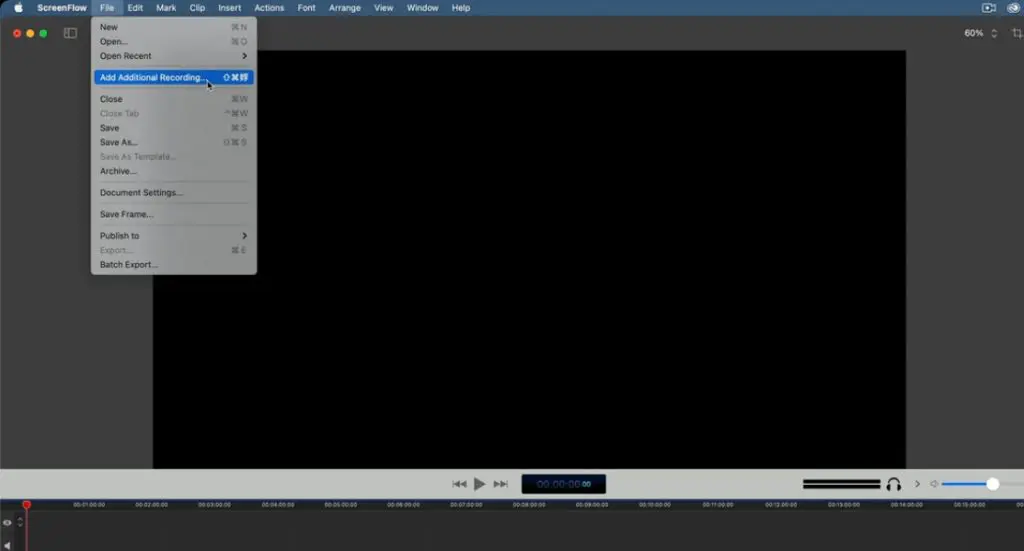
Step 4. To start recording, go to File, then Add Additional Recording.
Step 5. Choose your screen, camera, and audio sources, then click the record button.
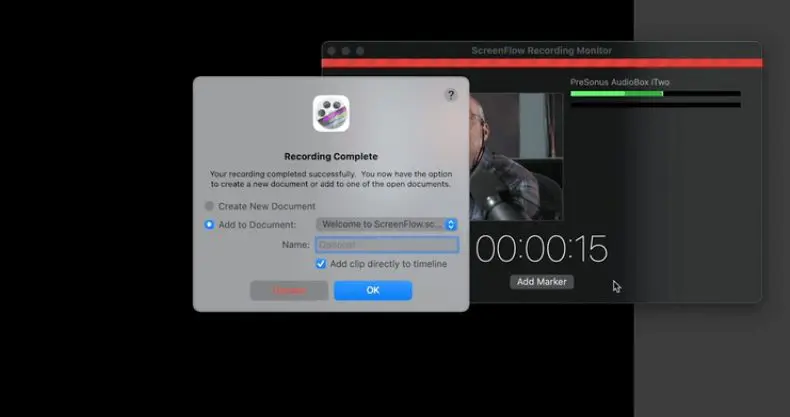
Step 6. Click Add Marker during the recording to flag any moment you want to find later.
Step 7. Press Command+Shift+2 to stop recording, then choose Add To Document and tick Add Clip Directly To Timeline.
Step 8. Find your recording in the media library and drag it to the timeline, if it isn’t there already.
Step 9. Edit the clip with callouts, annotations, filters, captions, and media from the stock library, then save the project.
Step 10. Export the video as an MP4 from File, then Export, or publish it directly to YouTube, Vimeo, or Wistia from File, then Publish To.
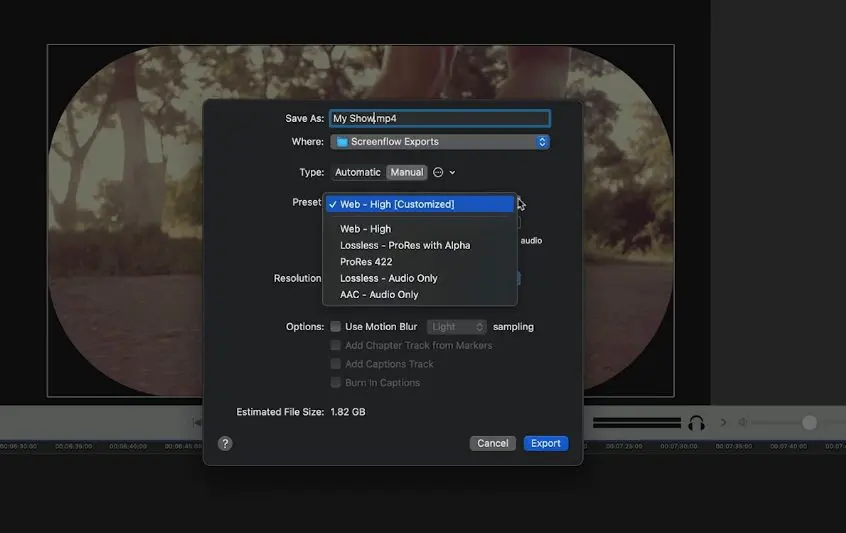
Those are the basics. The features above let you do much more with each lesson, and my guide on recording a PowerPoint presentation covers another common course format.
ScreenFlow Alternatives
Here’s how the main alternatives compare with ScreenFlow in daily use.
| Tool | Where it’s better | Where ScreenFlow is better |
|---|---|---|
| Camtasia | Works on Windows and Mac, with quizzes, interactive features, and more ready-made assets | One-time license instead of a yearly subscription |
| Descript | Text-based editing, automatic captions, filler-word removal, and clips for social video | Smoother screen recording and finer timeline control for tutorials |
| ScreenPal | Cheap, browser-based, and easy for quick teaching videos | Far deeper editing and multi-source recording |
| Loom | Instant share links and comments for async team videos | Editing, captions, and polished course lessons |
| OBS Studio | Free, cross-platform, and built for live streaming | A built-in editor and a much easier setup |
| Tella | Polished browser recordings with automatic layouts and fast sharing | Offline editing, iPhone recording, and a one-time price |
| CapCut | Fast short-form editing, auto captions, templates, and mobile apps | Screen recording quality and multi-track control on Mac |
Camtasia is the closest match feature for feature, and my ScreenFlow vs Camtasia comparison goes deeper. My list of the best screen recording software covers the wider market, and my Camtasia alternatives guide works for ScreenFlow shoppers too.
ScreenFlow Pros and Cons
These are the pros and cons that show up once you record and edit lessons in ScreenFlow every week.
| Pros | Cons |
|---|---|
| Records screen, camera, mic, and iPhone at once, each on its own track | Runs only on Mac |
| Callouts and zoom make software lessons easy to follow | No automatic captions or transcription |
| Templates and styles keep a long course series consistent | No AI editing, filler-word removal, or clip generation |
| One-time license with no monthly fee | Major upgrades and the Stock Media Library cost extra |
| Lightweight and stable during long recordings | The interface looks dated, with most tools in menus |
| App exclusion keeps private windows out of recordings | No direct posting to TikTok, Instagram, or Shorts |
| Exports GIFs and APNGs for docs and sales pages | No quizzes, clickable buttons, or other interactive features |
ScreenFlow Use Cases
ScreenFlow fits some creators much better than others, and here’s where it earns its price.
Online Course Lessons
Course creators get the most from ScreenFlow. Screen and camera recording, callouts, templates, and captions cover everything a lesson needs. My guide on how to create an online course covers the steps before recording, and my list of the best online course platforms covers where to host the finished videos.
Software and App Tutorials
SaaS companies, app developers, and trainers who teach software benefit from region recording, app exclusion, iPhone capture, and zoom callouts. A highlight on each click makes a five-step setup guide much easier to follow.
Long-Form YouTube Tutorials
YouTube creators who publish horizontal tutorials, reviews, and walkthroughs get clean recordings and direct uploads. My guides on how to start a YouTube channel and YouTube SEO cover growth.
Corporate Training and Demos
Training teams on Mac can record product demos, onboarding videos, and internal how-tos, then export them as MP4 for an LMS. Volume pricing helps when several team members need licenses.
Where It Fits Poorly
Short-form creators posting daily on TikTok and Reels, Windows users, and teams sending quick async updates will find better tools elsewhere. Descript, CapCut, and Loom each handle those jobs faster.
ScreenFlow Verdict: Is It Still the Best Screen Recorder for Mac?
Overall I recommend ScreenFlow for Mac users who create online course lessons, software tutorials, and long-form YouTube videos. Despite its dated look, it records cleanly, edits fast, and keeps a long series consistent, all for a one-time price that beats most subscriptions within a year or two.
Pick another tool if you work on Windows, if short-form social video is your main channel, or if you want AI to handle captions and rough cuts. In those cases, Camtasia or Descript will serve you better. Start the free trial, record one real lesson, and export it before you decide.
Before you invest in video tools, check that your course numbers work with my course revenue calculator and my other free creator tools.
See also:
- Camtasia Review: Create Video Tutorials and Courses
- ScreenFlow vs Camtasia: Which Is the Best Screen Recorder and Video Editor?
- Descript Review: Text-Based Video and Podcast Editing
- Best Screen Recording Software
Frequently Asked Questions (FAQs)
Here are answers to the questions creators ask me most often about ScreenFlow.
Is there a free version of ScreenFlow?
ScreenFlow has no free version, but its free trial has no time limit and includes every feature. Videos you export during the trial carry a ScreenFlow watermark. Buy a license to remove the watermark from new exports. The trial works well for testing a full lesson before you pay.
Is ScreenFlow for Mac only?
Yes. ScreenFlow runs only on macOS, on both Apple Silicon and Intel Macs, and has no Windows version. Windows users should look at Camtasia, which offers similar screen recording and editing on both platforms, or Descript, which runs on Windows and Mac and adds AI editing tools.
Is ScreenFlow a one-time purchase?
Yes. ScreenFlow sells one-time licenses instead of subscriptions, and the base license covers the current major version. The Stock Media Library and Premium Support cost extra each year after the first year, and major version upgrades cost extra, although Telestream hasn’t released one since ScreenFlow 10 in 2021.
Is ScreenFlow good for TikTok and Instagram Reels?
ScreenFlow can make vertical videos with a custom canvas or Instagram preset, but it lacks automatic captions, AI clipping, and direct posting. ScreenFlow works best for recording the original lesson or demo. Then use Descript, OpusClip, or CapCut to cut clips, add captions, and reframe them for short-form platforms.
Which is better, ScreenFlow or Camtasia?
ScreenFlow is better for Mac users who want a one-time license and a fast, stable recorder. Camtasia is better for Windows users and for course creators who want quizzes, interactive features, and a larger asset library, though it now uses yearly subscriptions. The two offer similar recording and editing tools.
Does ScreenFlow add captions automatically?
No, ScreenFlow doesn’t transcribe speech automatically. Type captions, paste text, or import an SRT file, then edit and burn them into the video. Many creators generate an SRT file with a transcription tool or YouTube, import it into ScreenFlow, and fix any errors before exporting.
Can ScreenFlow handle 4K?
Yes. ScreenFlow records and edits 4K and Retina-resolution video, with 4K UHD and 1440p document presets. ScreenFlow also supports 60 fps editing and ProRes export. Large 4K projects need plenty of storage, so the archiving tool helps by removing unused clips and trimming unused parts of long recordings.

Jeff Cobb, Founder of Learning Revolution
Jeff Cobb is an expert in online education and the business of adult lifelong learning. Over the past 20+ years he has built a thriving career based on that expertise – as an entrepreneur, a consultant, an author, and a speaker. Learning Revolution is a place where Jeff curates tips, insights, and resources to help you build a thriving expertise-based business. Learn more about Jeff Cobb here.
Table of Contents
Related Posts
OneStream Live Review | Is It The Best Live Streaming Tool For Multiple Destinations?
WebinarJam Review | Is It the Best Webinar Software for Creators?
19+ Traffic Generation Tips For Online Course Websites