
TL;DR: Best Web Hosting Companies for Course Creators (2026)
Even if you use a course platform like Kajabi or Thinkific, you still need a website of your own. Hosting your own WordPress site gives you control, flexibility, and a stronger brand presence.
My Top Picks For The Best WordPress Web Hosting Services
Hostinger is the best value for money, with the deepest AI and MCP tools. From $2.99/mo on a 48-month term.
Liquid Web (formerly Nexcess) is best for high-traffic sites and reliable scaling. From $9/mo.
Bluehost is the most beginner-friendly option for WordPress users. From $3.99/mo on a 36-month term.
WP Engine is best for businesses focused on growth and performance. From $28/mo.
hosting.com (formerly A2 Hosting) is best for fast shared hosting you can manage from an AI assistant.
If you want to host online courses on your WordPress site, LearnDash is the best tool for it.
What changed in 2026
Hosts now compete on AI. Most include an AI website builder. Several add an AI assistant that can change your site, and a few let Claude, ChatGPT, or Cursor manage your hosting through the Model Context Protocol (MCP). Intro prices are low, but renewal prices are two to six times higher, so check both.
What to Look For When Choosing Web Hosting
Speed and uptime. Look for fast response times and 99.9%+ reliability.
Security. Look for SSL, backups, malware scanning, and DDoS protection.
Scalability. Look for easy plan upgrades as your audience grows.
Ease of use. Look for a clear dashboard, one-click WordPress, and migration support.
Email and domains. Check whether a free domain and email come with the plan.
AI and MCP. Check which AI tools are included and what an AI assistant is allowed to change.
If you want to pick one as a beginner, start with Hostinger.
Use the code LEARNREV when checking out to get an exclusive 7% off on 12, 24, and 48 month Hostinger plans.
The best WordPress web hosting services provide you with a secure and high-performance foundation for your website. They directly affect your site’s performance, user experience, and search engine rankings, all of which play an important role in growing your brand and business.
Finding the right web hosting company isn’t easy with so many options out there.
Some services are cheaper and designed for beginners. Some are optimized for high speed but cost a lot more. Others are fully managed by dedicated hosting professionals.
The hosting industry has also changed a lot since I last updated this guide. A2 Hosting is now hosting.com. Nexcess has been folded into Liquid Web. Hostinger, Bluehost, and DreamHost have rebuilt their plans. And almost every host now sells AI features, from website builders to AI agents that manage your site for you.
In this article, I’ll share the best web hosting services, describe their strengths and weaknesses, and explain what the new AI and MCP features mean for you. I checked the prices against each host’s live pricing page.
Best Web Hosting Services Comparison Table
Before I cover the best web hosting companies in detail, here’s an overview of my top choices.
This comparison table shows what each hosting company offers. Starting prices are introductory, so check the renewal price in each section below.
| Hosting Service | Starting Price | Strengths | Weaknesses |
|---|---|---|---|
| Hostinger (best for beginners on a budget) | $2.99/mo on a 48-month term | AI builder, fast setup, great value | No phone support, weekly backups on the entry plan |
| Bluehost (top choice for beginners) | $3.99/mo on a 36-month term | Beginner-friendly, 10 sites on the entry plan, phone support from Business | Weekly backups, email is a trial |
| Cloudways (best pay-as-you-go cloud hosting) | $14/mo, billed monthly | No long contract, unlimited sites, your choice of cloud provider | No email or domain included, more technical |
| hosting.com (formerly A2 Hosting) | From $1.99/mo | LiteSpeed and NVMe, daily backups, free migration | Prices and plan names vary across its pages |
| WP Engine (best managed hosting) | $28/mo | Fully managed, expert support, strong performance | Expensive, pricing is hard to compare |
| Kinsta | $30/mo on annual billing | Premium speed, expert support, Google Cloud | Costly, limited storage |
| DreamHost | $1.99/mo on a 4-year term | 25 sites, daily backups, low renewal | Email is paid after 3 months, long term for the best price |
| SiteGround | $3.99/mo on a 12-month term | Google Cloud, free CDN, daily backups, email included | Steep renewal prices |
| ScalaHosting | $2.95/mo on a 36-month term | Secure, VPS power, strong support | One-site limit on the entry plan, long term for the best price |
| IONOS | $1/mo on a 1-year term | Cheap first year, short commitment, daily backups | One site per WordPress plan, paid migration |
| Liquid Web (formerly Nexcess) | $9/mo | Managed WordPress, staging, visual update checks | No domain or email included |
What are the Best Web Hosting Companies For WordPress (2026)?
I’ve handpicked the best web hosting services for online course creators, coaches, and beginner marketers in this article.
I’ve also included several scalable managed hosting services that offer superior performance at a higher price point.
I removed HostGator from this update. Its plans now mirror Bluehost’s with higher renewal prices and older storage, and its plan pages don’t list an AI website builder. I added Cloudways in its place because it suits creators who want cloud hosting without a long contract.
Here are all of these options in detail.
1. Hostinger

- Best for: Beginners and course creators who want an all-in-one website solution with AI tools and low prices
- Starting price: $2.99/month on a 48-month term
- Renewal price: Renews at $10.99/month
- Guarantee: 30-day money-back guarantee
- AI and MCP: AI website builder, Hostinger Agent, MCP server, managed hosting for AI agents
Hostinger has been around since 2004 and has reinvented itself in recent years as a go-to web hosting service for beginners, creators, and small businesses.
It offers several hosting types including shared hosting, VPS, cloud hosting, and agency hosting. Its managed WordPress hosting stands out as one of the best value-for-money options on the market today.
Hostinger’s plans are optimized for speed, security, and ease of use, with free website migration, a free domain for the first year, and a CDN. The entry plan runs on SSD storage with weekly backups. The higher plans use NVMe storage with daily backups.
Hostinger has gone further on AI than any other host on this list. Its AI website builder for WordPress generates a full site from a few prompts.

It gives you a full layout with written content, page sections, navigation, and visuals. It includes these tools.
- AI copywriting for homepage text, product descriptions, course pages, and more
- AI image and logo generation
- SEO tools that help structure your pages
- Design versions you can save and restore
You don’t need any coding or design experience. You describe your business or course idea, and the AI builds a starter site you can then adjust in the editor.
Hostinger has also merged its Kodee assistant into the Hostinger Agent. You chat with it to troubleshoot hosting, manage DNS records, start a migration, or build a site.
For MCP, Hostinger offers two things. Its API MCP server lets AI tools such as Claude and Cursor manage your websites, domains, DNS, and VPS. A separate WordPress MCP connection gives an AI assistant access to the posts, pages, media, plugins, and settings of a single site. Hostinger’s help page lists that WordPress connection for its Business and Cloud plans.
If you want to run your own AI agents or automations, Hostinger sells managed hosting for tools like OpenClaw and n8n, and its VPS plans have a one-click Ollama template. It also offers Horizons, an AI app and site builder you use by chatting.
Hostinger’s user dashboard is still one of the most intuitive in the industry. Even if you’ve never hosted a site before, you’ll be able to manage domains, files, backups, databases, email, and security from one place.
Watch two things. The lowest prices need a 48-month commitment, and renewal prices are several times higher. Hostinger has also reduced its limits over the past two years. The Premium plan now covers 3 websites and 20 GB of storage.
Overall, if you’re launching a website or online course and want capable hosting at beginner-friendly prices, Hostinger remains one of my top picks.
Use the code LEARNREV when checking out at Hostinger and you will get 7% off all hosting plans for 12, 24, and 48 months.
Hostinger Plans and Pricing
- Premium: $2.99/month on a 48-month term. Renews at $10.99/month. 3 websites, 20 GB SSD storage, weekly backups
- Unlimited: $3.99/month on a 48-month term. Renews at $16.99/month. Unlimited websites, 50 GB NVMe storage, daily backups
- Cloud Startup: $7.99/month on a 48-month term. Renews at $25.99/month. Unlimited websites, 100 GB NVMe storage, daily and on-demand backups
Hostinger Features By Plan
| Feature | Premium | Unlimited | Cloud Startup |
|---|---|---|---|
| Websites | 3 | Unlimited | Unlimited |
| Storage | 20 GB SSD | 50 GB NVMe | 100 GB NVMe |
| Backups | Weekly | Daily | Daily and on-demand |
| Free domain for 1 year | ✓ | ✓ | ✓ |
| Mailboxes (free for 1 year) | 2 per website | Unlimited | Unlimited |
| AI Builder credits | 5 | 15 | 15 |
| CDN | ✓ | ✓ | ✓ |
Hostinger Pros and Cons
| Pros | Cons |
|---|---|
| Lowest multi-year cost on this list | No phone support |
| The most complete AI and MCP tooling of any host here | Weekly backups and SSD storage on the Premium plan |
| Free migration and a free domain for the first year | The best price needs a 48-month term, and renewals cost far more |
| Clear, beginner-friendly dashboard | Email is free for the first year only |
Read our detailed Hostinger review to learn more.

2. Bluehost
- Best for: Beginners who want to launch a WordPress site quickly with phone support available
- Starting price: $3.99/month on a 36-month term
- Renewal price: Renews at $9.99/month
- Guarantee: 30-day money-back guarantee
- AI and MCP: WordPress AI Builder, MCP server for VPS and domains, agent hosting on VPS
Bluehost is one of the most recognizable names in web hosting and still a solid choice for beginners who want to launch a WordPress site quickly.
It offers a clean, beginner-friendly dashboard, pre-installed WordPress, and bundled tools like a free domain for the first year, a free CDN, and a staging site.
Bluehost has rebuilt its plans. The three standard plans are now Starter, Business, and eCommerce Essentials. All of them use NVMe storage and are sized by a suggested number of monthly visits. Even the Starter plan hosts 10 websites.
Its plans come with built-in AI tools to help you design and launch your website with minimal effort. The WordPress AI Builder, which used to be called WonderSuite, asks you a few questions and then generates site designs to choose from.

Bluehost also sells a separate prompt-based AI Website Builder and an AI Store product built on WooCommerce.
In September 2026, Bluehost launched an MCP server. It’s aimed at developers. You can use it from an AI assistant to buy a self-managed VPS, set up access, and register domains. It only shows account information for shared and WordPress hosting, so it won’t manage your WordPress site, and Bluehost limits it to US customers.
Bluehost’s VPS range includes Agent Hosting, with one-click installs for AI tools such as OpenClaw, n8n, and Ollama.
Bluehost has its issues, especially for creators planning to grow.
We run several websites on Bluehost and can vouch for its uptime.
Its shared hosting performance can slow down during traffic spikes, especially if you’re running multiple plugins, video-heavy landing pages, or checkout flows.
Here’s a snapshot of Bluehost’s server response times from when I last tracked them.

The speeds weren’t impressive. You can improve them with Bluehost’s CDN, and object caching is included from the Business plan.
Support has been hit or miss in my experience, and phone support starts on the Business plan. Backups are weekly, and professional email is only a free trial.
For new creators or course builders on a budget, Bluehost is still one of the easiest ways to get started. Its renewal prices are also milder than most budget hosts.
If you’re expecting high traffic, running time-sensitive launches, or offering a membership experience, you may want to move to a more performance-focused host like SiteGround, Liquid Web, or Kinsta down the line.
Bluehost Plans and Pricing
- Starter: $3.99/month on a 36-month term. Renews at $9.99/month. 10 websites, 10 GB NVMe storage, about 40,000 visits a month
- Business: $6.99/month on a 36-month term. Renews at $13.99/month. 50 websites, 50 GB NVMe storage, about 200,000 visits a month
- eCommerce Essentials: $14.99/month on a 36-month term. Renews at $21.99/month. 100 websites, 100 GB NVMe storage, about 400,000 visits a month
Bluehost Features By Plan
| Feature | Starter | Business | eCommerce Essentials |
|---|---|---|---|
| Websites | 10 | 50 | 100 |
| NVMe storage | 10 GB | 50 GB | 100 GB |
| Suggested monthly visits | 40,000 | 200,000 | 400,000 |
| AI site creation tools | ✓ | ✓ | ✓ |
| Staging site | ✓ | ✓ | ✓ |
| Object caching | ✗ | ✓ | ✓ |
| Phone support | ✗ | ✓ | ✓ |
| Uptime SLA | 99.99% | 99.99% | 99.99% |
Bluehost Pros and Cons
| Pros | Cons |
|---|---|
| AI builder makes it easy to launch a site fast | Slower performance during high-traffic periods on shared plans |
| 10 websites on the entry plan | Weekly backups only |
| Renewal prices rise less than at most budget hosts | Phone support needs the Business plan |
| Staging site and NVMe storage on every standard plan | Email is a free trial, and the MCP server doesn’t manage WordPress hosting |

3. Cloudways
- Best for: Creators who want fast cloud hosting, unlimited sites, and no long-term contract
- Starting price: $14/month for the Micro server on DigitalOcean, billed monthly
- Renewal price: Same price. Cloudways has no introductory discount
- Free trial: 3-day free trial, no credit card required
- AI and MCP: AI Copilot, MCP server for managing servers and sites
Cloudways is new to this list. It replaces HostGator, and it fills a gap the other budget hosts leave open.
Cloudways is a managed cloud hosting platform owned by DigitalOcean. You choose a cloud provider and a server size, and Cloudways sets up and manages the server for you.
The pricing works differently from every budget host here. You pay monthly for the server you use, with no multi-year term and no renewal jump. Each server can host unlimited websites and has no visit cap.
That makes Cloudways a good second step for a course creator who has outgrown shared hosting but doesn’t want to pay managed WordPress prices per site.
You get staging and cloning, free migration, a built-in firewall, and a vulnerability scanner. Servers with 4 GB of RAM or more include Object Cache Pro.
Cloudways also offers Cloudways Autonomous, a fully managed, autoscaling plan for high-traffic WordPress, e-commerce, and LMS sites.
On the AI side, Cloudways has an AI Copilot and an official MCP server. Through the MCP server, an AI assistant can provision servers, run backups and restores, clear caches, and manage DNS. Cloudways warns that destructive actions through it are permanent, so be careful with what you allow.
Cloudways expects more from you than Hostinger or Bluehost. It doesn’t include a domain or email, and offsite backup storage costs a little extra. You’ll also see server terms that shared hosts hide.
If you’re comfortable with that, Cloudways gives you a lot of performance for the money.
Cloudways Plans and Pricing
- Micro: $14/month. 1 GB RAM, 1 vCPU, 25 GB NVMe storage
- Small: $28/month. 2 GB RAM, 1 vCPU, 50 GB NVMe storage
- Medium: $54/month. 4 GB RAM, 2 vCPU, 80 GB NVMe storage
- Large: $99/month. 8 GB RAM, 4 vCPU, 160 GB NVMe storage
Cloudways Features By Plan
| Feature | Micro | Small | Medium | Large |
|---|---|---|---|---|
| RAM | 1 GB | 2 GB | 4 GB | 8 GB |
| vCPU | 1 | 1 | 2 | 4 |
| NVMe storage | 25 GB | 50 GB | 80 GB | 160 GB |
| Bandwidth | 1 TB | 2 TB | 4 TB | 5 TB |
| Websites and visits | Unlimited | Unlimited | Unlimited | Unlimited |
| Staging and cloning | ✓ | ✓ | ✓ | ✓ |
| Free migration | ✓ | ✓ | ✓ | ✓ |
| Object Cache Pro | ✗ | ✗ | ✓ | ✓ |
Cloudways Pros and Cons
| Pros | Cons |
|---|---|
| Monthly billing with no long contract and no renewal jump | No domain or email hosting included |
| Unlimited websites and visits on every server | More technical than beginner shared hosting |
| Staging, cloning, and free migration included | Offsite backups and some features cost extra |
| Official MCP server for AI assistants | The free trial lasts only 3 days |
4. hosting.com (Formerly A2 Hosting)
- Best for: Small to mid-sized websites that want fast shared hosting and AI-assisted management
- Starting price: From $1.99/month for the Starter plan
- Renewal price: Not shown on the plan page. Confirm at checkout
- Guarantee: 30-day money-back guarantee
- AI and MCP: AI Website Builder for WordPress, MCP server on shared plans, Orbi support assistant
A2 Hosting rebranded as hosting.com in 2025. If you knew A2 as the speed-focused shared host, that part hasn’t changed.
Every shared plan runs on LiteSpeed web servers, NVMe storage, and AMD EPYC processors. The Pro plan adds Redis object caching and staging sites.
You also get a lot of thoughtful features packed in. Every plan includes daily backups with 30 days of history, free managed migration, a free domain for the first year, email, malware detection, and a free SSL certificate.
The old A2 plan names are gone. The shared plans are now Starter, Pro, and Max, and they’re sized by websites, storage, and page views.
The biggest change is AI. hosting.com includes an AI Website Builder for WordPress on every shared plan. It also lists an OpenAPI and an MCP server on all shared plans.
With the MCP server, you sign in from Claude or ChatGPT and manage your account by chatting. It can create sites, manage WordPress, change PHP versions, set up SSL, and handle domains, email, and billing. hosting.com’s own documentation warns that a connected assistant can spend money and delete things, so review each action before you approve it.
hosting.com’s managed WordPress plans are now built in partnership with Rocket.net.
One caution. hosting.com’s pages disagree with each other on plan names and prices, and the plan page didn’t show renewal prices when I checked. Confirm the full price in the cart before you buy.
hosting.com Plans and Pricing
- Starter: $1.99/month. 5 websites, 15 GB NVMe storage, daily backups
- Pro: Price not shown on the plan page. 10 websites, 50 GB NVMe storage, staging sites
- Max: $7.79/month. 50 websites, 100 GB NVMe storage, priority support
hosting.com Features By Plan
| Feature | Starter | Pro | Max |
|---|---|---|---|
| Websites | 5 | 10 | 50 |
| NVMe storage | 15 GB | 50 GB | 100 GB |
| Daily backups | ✓ | ✓ | ✓ |
| AI Website Builder for WordPress | ✓ | ✓ | ✓ |
| OpenAPI and MCP server | ✓ | ✓ | ✓ |
| Staging sites | ✗ | ✓ | ✓ |
| Priority support | ✗ | ✗ | ✓ |
hosting.com Pros and Cons
| Pros | Cons |
|---|---|
| LiteSpeed, NVMe storage, and daily backups on every plan | Renewal prices aren’t shown up front |
| Free managed migration | Staging sites need the Pro plan |
| MCP server on shared plans | |
| AI Website Builder for WordPress included |
Read our detailed A2 Hosting review to learn more about the service before the rebrand.
5. WP Engine

- Best for: Established course, coaching, and membership businesses that want fully managed WordPress hosting
- Starting price: $28/month for the Essential plan (First-year price for new customers)
- Renewal price: Higher after the first year. Confirm in the plan builder
- Guarantee: Not listed on the plans page
- AI and MCP: AI-powered plugin updates, Smart Search AI, a read-only MCP server for site content
If you’re building a course site, coaching brand, or membership business and want a WordPress host that takes care of everything behind the scenes, WP Engine is hard to beat.
It’s known for managed WordPress hosting, which means experts handle your updates, security, backups, and speed optimizations.
You can focus on growing your audience and delivering content while WP Engine keeps your site running smoothly.
WP Engine is built for performance. Its EverCache system, global CDN, and NVMe storage keep load times fast, even during launch days or email blasts when traffic spikes.
It also offers one-click staging environments, daily backups, and automatic plugin updates.
Support is another major win. WP Engine gives you access to 24/7 WordPress-trained support.
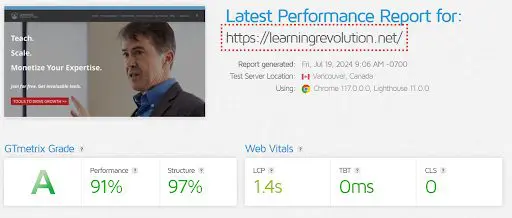
For these reasons, we use WP Engine to host Learning Revolution and consider it among the very best web hosting services.
You only need to see our site’s performance metrics to understand why we’re such big fans.
A note on the WP Engine and Automattic dispute. In September 2024, a public dispute began between WP Engine and Automattic, the company led by WordPress co-founder Matt Mullenweg. WordPress.org blocked WP Engine’s access to its plugin and theme update servers, and WP Engine sued in October 2024. In December 2024, a US court granted a preliminary injunction that restored WP Engine’s access.
The case is still in court, with a jury trial reported for October 2027. Our site has run normally on WP Engine throughout. I’d still keep this in mind as a long-term risk, because the outcome isn’t settled.
WP Engine has simplified its plans into Essential, Core, and Enterprise. You size a plan by sites and visits in a plan builder, so prices are harder to compare than they used to be. It also raised prices for existing customers in 2026.
Its AI features focus on site operations and search. AI-powered plugin updates test updates and roll back problems. Smart Search AI adds semantic search to your site. WP Engine has also released an MCP server that lets AI assistants retrieve your published content. It doesn’t manage your hosting account.
This isn’t the cheapest option. If you’re launching your first course site on a tight budget, start with a lower-cost host.
If performance, security, and uptime matter more than saving money, WP Engine is a premium choice worth considering.
WP Engine Plans and Pricing
- Essential: $28/month (First-year price for new customers). From 1 site and 25,000 visits a month, shared resources
- Core: Custom pricing. Isolated resources, managed migration, 99.99% uptime guarantee
- Enterprise: Custom pricing. 50+ sites, managed WAF and advanced DDoS protection
WP Engine Features By Plan
| Feature | Essential | Core | Enterprise |
|---|---|---|---|
| Sites | 1 to 30 | 30 to 50 | 50+ |
| Monthly visits | 25,000 to 400,000 | 400,000 to 800,000 | 800,000+ |
| Resources | Shared | Isolated | Isolated |
| Migration | Automated plugin | Managed | Managed |
| AI-powered plugin updates | Add-on | 1 license included | Custom |
| Uptime guarantee | Not listed | 99.99% | 99.99% |
WP Engine Pros and Cons
| Pros | Cons |
|---|---|
| Fully managed WordPress hosting with expert support | Premium pricing may be too steep for beginners |
| Strong performance under traffic spikes | The plan builder makes prices hard to compare |
| Staging environments and daily backups | The legal dispute with Automattic is unresolved |
| AI-powered plugin updates reduce the risk of broken updates | No AI website builder or hosting-management MCP |
Read the complete WP Engine review here.

6. Kinsta
- Best for: High-traffic course and membership sites that can’t afford downtime
- Starting price: $30/month on annual billing ($35 monthly) for the Launch plan
- Renewal price: Same price. Kinsta has no introductory discount, and the first month is free
- Guarantee: 30-day money-back guarantee
- AI and MCP: No native AI features. An API you can connect to your own tools
If you’re running a high-traffic course or membership site and can’t afford downtime, Kinsta is the kind of hosting that gives you peace of mind.
This is premium managed WordPress hosting built purely for performance, security, and support. Everything is optimized for speed on Google Cloud, with a global CDN, edge caching, and built-in performance monitoring.
Kinsta’s support is one of the best in the industry. You get 24/7 live chat with real engineers, and when something breaks, they explain what caused it in plain English.
It’s overkill if you’re just starting. For course creators running WooCommerce, BuddyBoss, or heavy membership plugins with spikes in traffic, Kinsta’s infrastructure keeps things fast and stable.
You also get security built in, with automatic daily backups, Cloudflare-based DDoS protection, and free malware removal.
Kinsta has renamed its plans and raised their limits. The entry plan is now Launch, which covers one site and far more visits than the old Starter plan. Kinsta also sells bandwidth-based plans at the same prices, because AI bot traffic can inflate visit counts.
Kinsta is the exception on AI. It hasn’t shipped an AI website builder, an AI assistant, or an official MCP server for WordPress hosting. It offers a well-documented API and a tutorial for building your own MCP server. Its sister brand Sevalla, which hosts apps and databases, does have one.
It also doesn’t offer email hosting or marketing tools. It focuses strictly on hosting.
Kinsta Plans and Pricing
- Launch: $30/month on annual billing or $35/month paid monthly. 1 site, 75,000 visits a month, 15 GB storage
- Launch Plus: $50/month on annual billing or $59/month paid monthly. 1 site, 125,000 visits a month, 25 GB storage
- Build: $58/month on annual billing or $69/month paid monthly. 2 sites, 200,000 visits a month, 30 GB storage
- Expand: $83/month on annual billing or $99/month paid monthly. 5 sites, 350,000 visits a month, 40 GB storage
Kinsta Features By Plan
| Feature | Launch | Launch Plus | Build | Expand |
|---|---|---|---|---|
| WordPress sites | 1 | 1 | 2 | 5 |
| Estimated monthly visits | 75,000 | 125,000 | 200,000 | 350,000 |
| Storage | 15 GB | 25 GB | 30 GB | 40 GB |
| CDN bandwidth | 125 GB | 250 GB | 250 GB | 500 GB |
| Backup retention | 14 days | 14 days | 14 days | 14 days |
| Free migrations | Unlimited | Unlimited | Unlimited | Unlimited |
Kinsta Pros and Cons
| Pros | Cons |
|---|---|
| Google Cloud infrastructure with a global CDN and edge caching | Too expensive for early-stage creators |
| Human-only expert support, 24/7 | Limited storage on the lower plans |
| Clear pricing with no renewal jump | No bundled email, marketing, or AI features |
| Unlimited free migrations | Extra sites and storage cost more |

7. DreamHost

- Best for: Beginners who want many sites, daily backups, and a low renewal price
- Starting price: $1.99/month on a 4-year term
- Renewal price: Renews at $7.99/month
- Guarantee: 30-day money-back guarantee
- AI and MCP: Liftoff and Remixer AI builders, AI tools in the panel, agent hosting on VPS
DreamHost is one of the oldest independent web hosts, and it’s still one of the big players.
When I tracked its performance in earlier versions of this guide, its uptime and speed were inconsistent.

DreamHost has rebuilt its plans since then. The old Shared Starter and Unlimited plans are gone. The new Launch, Growth, and Scale plans run on NVMe storage with built-in caching and a CDN, and they’re sized by monthly visits. I haven’t re-tested performance on the new plans, so treat the chart above as history.
The new plans are generous. Launch hosts 25 websites and includes daily automated backups and a free domain for the first year. Its renewal price is the lowest entry-level renewal on this list.
DreamHost has invested in AI builders. Liftoff generates a WordPress site in about a minute and lets you edit text and images with AI. Remixer is a newer conversational builder for websites and web apps, and DreamHost names course sites and membership portals among its use cases.
Its VPS plans can run AI agent and automation tools such as OpenClaw and n8n. DreamHost doesn’t offer an MCP server for managing your hosting.
Two things have changed for the worse. The 97-day money-back guarantee I used to praise is no longer shown, and DreamHost now lists a 30-day guarantee. Email is free for three months and paid after that.
If you’re launching a low-traffic coaching site, a personal blog, or a basic online course, DreamHost is a good place to begin. For managed WordPress hosting, look at its DreamPress plans.
DreamHost Plans and Pricing
- Launch: $1.99/month on a 4-year term. Renews at $7.99/month. 25 websites, 25 GB NVMe storage, 40,000 visits a month
- Growth: $3.49/month on a 4-year term. Renews at $8.99/month. 50 websites, 50 GB NVMe storage, 200,000 visits a month
- Scale: $7.99/month on a 4-year term. Renews at $19.99/month. 100 websites, 100 GB NVMe storage, 400,000 visits a month
DreamHost Features By Plan
| Feature | Launch | Growth | Scale |
|---|---|---|---|
| Websites | 25 | 50 | 100 |
| NVMe storage | 25 GB | 50 GB | 100 GB |
| Monthly visits | 40,000 | 200,000 | 400,000 |
| Daily automated backups | ✓ | ✓ | ✓ |
| Mailboxes (3 months free) | 20 | 40 | 60 |
| Free domain for 1 year | ✓ | ✓ | ✓ |
DreamHost Pros and Cons
| Pros | Cons |
|---|---|
| 25 websites and daily backups on the entry plan | Email is paid after the first three months |
| Low renewal prices for an entry tier | The best price needs a 4-year term |
| AI builders for WordPress sites and web apps | The 97-day guarantee is gone |
| Easy-to-use, custom-built dashboard | No phone support by default, and no hosting MCP |

8. SiteGround

- Best for: Non-technical creators who want polished WordPress hosting with strong support
- Starting price: $3.99/month on a 12-month term
- Renewal price: Renews at $17.99/month
- Guarantee: 30-day money-back guarantee
- AI and MCP: AI Agent for WordPress, AI Studio, Coderick AI app builder
SiteGround remains one of the top hosting choices for creators launching their first WordPress site or running a small online business. It offers fast servers and reliable performance.
What makes SiteGround stand out is how it blends simplicity with smart performance features.
Every plan runs on Google Cloud infrastructure and includes multi-level caching and a free CDN.

You don’t need to set any of this up yourself. Everything’s ready out of the box. SiteGround includes a free CDN, SSL, email hosting, and daily backups on every plan.
Its Speed Optimizer and Security Optimizer plugins come pre-installed to help boost site speed and harden your site against attacks without touching a line of code.
For creators selling digital products or courses, the GrowBig plan is the sweet spot. It gives you more storage, on-demand backups, and the ability to host multiple sites.
SiteGround has made a strong AI push. Its AI Agent for WordPress is a chat agent that makes real changes on your site. It can write posts, manage WooCommerce, update plugins and themes, and edit SEO metadata. Risky actions sit behind a Power Mode that is off by default. Every hosting plan includes a monthly allowance for it through SiteGround’s AI Studio.
SiteGround also sells Coderick AI, a separate app and site builder you use by chatting. It doesn’t offer an MCP server for hosting management.
It’s not perfect.
If your site starts getting a lot of traffic or you’re hosting large video files or membership content, SiteGround’s shared hosting limits can feel tight.
Its renewal pricing is the steepest on this list. The price after the first term is several times the intro price, which beginners often miss.
Still, if you’re looking for a reliable host that keeps things simple while giving your site real performance gains, SiteGround is hard to beat at the entry level.
SiteGround Plans and Pricing
- StartUp: $3.99/month on a 12-month term. Renews at $17.99/month. 1 website, 10 GB storage, about 10,000 visits a month
- GrowBig: $6.69/month on a 12-month term. Renews at $29.99/month. Unlimited websites, 50 GB storage, about 100,000 visits a month
- GoGeek: $10.69/month on a 12-month term. Renews at $44.99/month. Unlimited websites, 100 GB storage, about 400,000 visits a month
SiteGround Features By Plan
| Feature | StartUp | GrowBig | GoGeek |
|---|---|---|---|
| Websites | 1 | Unlimited | Unlimited |
| Storage | 10 GB | 50 GB | 100 GB |
| Monthly visits | About 10,000 | About 100,000 | About 400,000 |
| Daily backups | ✓ | ✓ | ✓ |
| On-demand backups | ✗ | ✓ | ✓ |
| Free email, SSL, and CDN | ✓ | ✓ | ✓ |
| AI Agent for WordPress | ✓ | ✓ | ✓ |
SiteGround Pros and Cons
| Pros | Cons |
|---|---|
| Daily backups, email, SSL, and CDN on every plan | Renewal pricing jumps sharply after the first term |
| Custom Site Tools dashboard is cleaner and easier than cPanel | One website on the StartUp plan |
| AI Agent for WordPress can manage content and updates for you | Storage and resource limits may not work for large content sites |
| 24/7 support by chat, phone, and tickets | No MCP server for hosting management |

9. ScalaHosting

- Best for: Creators ready to move from shared hosting to an affordable managed VPS
- Starting price: $2.95/month on a 36-month term
- Renewal price: Renews at $11.95/month
- Guarantee: Anytime money-back guarantee
- AI and MCP: AI WordPress site builder, one-click n8n hosting
ScalaHosting has carved a solid niche in the VPS and cloud hosting space, offering a balance of advanced performance and ease of use.
It’s a go-to option for developers, agencies, and growing businesses that want something more reliable than shared hosting without jumping all the way to enterprise pricing.
Its in-house SPanel control panel makes site management surprisingly simple for a VPS setup.
SPanel includes essentials like a one-click app installer, malware protection, email hosting, backups, and staging.
The WordPress plans run on NVMe storage and AMD EPYC processors. The Entry Cloud plan gives you your own CPU cores and RAM, which is more server power than standard shared hosting.
ScalaHosting also wins points for its live support, which is available 24/7 by chat and tickets.
For AI, every WordPress plan includes an AI site builder. ScalaHosting also sells one-click hosting for n8n, the automation tool many creators use to build AI workflows. It doesn’t offer an MCP server for hosting management.
The lowest prices need a 36-month commitment, and the Mini plan covers a single website with no free domain.
If you want your site to load fast, stay secure, and scale with your business, ScalaHosting is worth considering.
ScalaHosting Plans and Pricing
- Mini: $2.95/month on a 36-month term. Renews at $11.95/month. 1 website, 10 GB NVMe storage
- Start: $5.95/month on a 36-month term. Renews at $14.95/month. Unlimited websites, 50 GB NVMe storage
- Advanced: $9.95/month on a 36-month term. Renews at $19.95/month. Unlimited websites, 100 GB NVMe storage
- Entry Cloud: $14.95/month on a 36-month term. Renews at $39.95/month. Unlimited websites, 2 CPU cores, 2 GB RAM
ScalaHosting Features By Plan
| Feature | Mini | Start | Advanced | Entry Cloud |
|---|---|---|---|---|
| Websites | 1 | Unlimited | Unlimited | Unlimited |
| NVMe storage | 10 GB | 50 GB | 100 GB | Configurable |
| Resources | Shared | Shared | Shared | 2 cores, 2 GB RAM |
| Free domain | ✗ | ✓ | ✓ | ✓ |
| Offsite backups | ✓ | ✓ | ✓ | ✓ |
| AI WordPress site builder | ✓ | ✓ | ✓ | ✓ |
| Free migration | ✓ | ✓ | ✓ | ✓ |
ScalaHosting Pros and Cons
| Pros | Cons |
|---|---|
| Secure shared and managed cloud hosting | The best price needs a 36-month term |
| An affordable path from shared hosting to a managed VPS | Only one website on the lowest plan |
| 24/7 customer support | No free domain on the Mini plan |
| Anytime money-back guarantee | No phone support mentioned |

10. IONOS
- Best for: A single small website on a low first-year budget and a short commitment
- Starting price: $1/month for the Grow plan on a 1-year term
- Renewal price: Renews at $12/month
- Guarantee: 30-day money-back guarantee
- AI and MCP: AI Website Builder, AI Assistant, MCP integration for WordPress
If you’re launching a small website or WordPress blog and don’t want to spend a fortune, IONOS still offers one of the most beginner-friendly hosting plans around.
Its biggest edge is the short commitment. The intro prices need only a one-year term, where most budget hosts ask for three or four years.
IONOS has fully embraced AI tools to help new users get up and running. You can generate a complete WordPress site layout, content, and images by answering a few questions.
The Grow and Boost plans add an AI Assistant inside WordPress that writes text and creates images, pages, and blog posts. IONOS also mentions an MCP integration that connects your WordPress site to external AI applications.
Every plan comes with SSD storage, a free domain, SSL, email, and automatic backups. You’ll also find developer tools like SSH and WP-CLI.
Speed was a concern when I last tracked it, with slower response times than most other shared hosts on this list.
Two limits matter for course creators. Each WordPress plan hosts one website, and IONOS charges for migrations.
For a new site with little traffic, it’s a decent starting point, especially if you want built-in AI tools and a short contract.
IONOS Plans and Pricing
- Start: $5/month on a 1-year term. Renews at $8/month. 1 website, 25 GB SSD storage, 1 email address
- Grow: $1/month on a 1-year term. Renews at $12/month. 1 website, 50 GB SSD storage, 5 email addresses
- Boost: $12/month on a 1-year term. Renews at $17/month. 1 website, 75 GB SSD storage, 10 email addresses
IONOS Features By Plan
| Feature | Start | Grow | Boost |
|---|---|---|---|
| Websites | 1 | 1 | 1 |
| SSD storage | 25 GB | 50 GB | 75 GB |
| Email addresses | 1 | 5 | 10 |
| AI Website Builder | ✓ | ✓ | ✓ |
| AI Assistant with AI text and images | ✗ | ✓ | ✓ |
| Jetpack Vault backups (12 months) | ✗ | ✓ | ✓ |
| Automatic malware removal | ✗ | ✗ | ✓ |
IONOS Pros and Cons
| Pros | Cons |
|---|---|
| The cheapest first year on this list, with a one-year term | One website per WordPress plan |
| AI Assistant helps you write and edit content inside WordPress | Migration is a paid service |
| Daily backups, a free domain, and email included | Slower response times in my earlier tracking |
| A personal consultant you can reach by phone | The dashboard isn’t as clean as SiteGround’s or Bluehost’s |

11. Liquid Web (Formerly Nexcess)
- Best for: Growing course businesses that need managed WordPress hosting with staging and hands-on support
- Starting price: $9/month for the Essentials plan
- Renewal price: Not shown as an intro offer. Annual billing saves 10%
- Guarantee: 30-day money-back guarantee
- AI and MCP: None in the hosting product. Kadence AI is available as a plugin
Nexcess was one of my top picks for high-traffic sites. Its parent company, Liquid Web, has now absorbed the Nexcess brand, and the product is sold as Liquid Web managed hosting for WordPress.
It’s still fully managed WordPress hosting, and it suits an online course business that is scaling fast or already getting consistent traffic.
It’s built for creators who can’t afford downtime, plugin conflicts, or slow page loads during launches or live enrollments.
Every plan includes daily backups, staging sites, automatic WordPress updates, and visual comparison, which checks your pages after an update so a broken layout doesn’t go unnoticed. Object Cache Pro, a web application firewall, and DDoS protection are included too.
The pricing has changed for the better. You pick a plan level, then choose how many sites and how many monthly visits you need. A single site with moderate traffic now costs far less than the old Nexcess entry plan.
The Pro and Elite plans add longer backup history, security patching, and a migration handled by a person.
Liquid Web’s hosting product doesn’t include AI tools or an MCP server. Its Kadence plugin offers an AI site builder.
For solo course creators just starting out, a budget host is enough.
If you’re running multiple courses, hosting a membership area, or have a big enrollment push coming up, Liquid Web makes a lot more sense. It’s especially useful if you use WooCommerce for selling.
Liquid Web Plans and Pricing
- Essentials: $9/month. 1 site, 50,000 visits a month, 15 GB storage, 7-day backups
- Pro: $19/month. 1 site, 50,000 visits a month, 14-day backups, migration by a human
- Elite: $29/month. 1 site, 50,000 visits a month, 30-day backups, migration by a human
Liquid Web Features By Plan
| Feature | Essentials | Pro | Elite |
|---|---|---|---|
| Daily backup retention | 7 days | 14 days | 30 days |
| Migration | Self-serve tool | By a human | By a human |
| Staging sites | ✓ | ✓ | ✓ |
| Visual comparison for updates | ✓ | ✓ | ✓ |
| Virtual patching (Patchstack) | ✗ | ✓ | ✓ |
| Object Cache Pro, WAF, and DDoS protection | ✓ | ✓ | ✓ |
Liquid Web Pros and Cons
| Pros | Cons |
|---|---|
| Visual comparison helps prevent broken layouts after updates | The price rises as you add sites and visits |
| Staging sites let you test new designs, courses, or checkout flows | No domain or email included |
| Object Cache Pro, firewall, and DDoS protection on every plan | No AI tools or MCP server in the hosting product |
| Lower entry price than the old Nexcess plans | Not the simplest dashboard for first-time users |
Read our detailed Nexcess review to learn more about the platform before the change.
AI, MCP, and Agent Hosting: What Has Changed in Web Hosting
AI is the biggest change in hosting since I started writing this guide. Hosts now use the word for four different things, so it helps to separate them.
- AI website builders. You describe your business, and the host generates a WordPress site with pages, text, and images. Hostinger, Bluehost, hosting.com, DreamHost, ScalaHosting, and IONOS include one.
- AI assistants and agents. A chat assistant in your dashboard or in WordPress answers questions and makes changes for you. Hostinger Agent and SiteGround’s AI Agent for WordPress are the most capable examples here.
- MCP servers. The Model Context Protocol is an open standard that lets AI assistants such as Claude, ChatGPT, and Cursor connect to other software. A host with an MCP server lets your own assistant manage hosting tasks by chat.
- Hosting for AI tools. Several hosts sell VPS plans with one-click installs for AI agents and automation tools such as n8n, OpenClaw, and Ollama. This is for running your own AI workflows, and it’s separate from hosting your website.
WordPress has added its own building blocks too. WordPress 6.9 introduced the Abilities API, which describes what a site can do in a form AI tools can read. WordPress 7.0 added a built-in AI client and a Connectors screen for AI providers. A separate official MCP Adapter turns those abilities into tools an assistant can use, such as creating posts or managing media.
Here’s how the hosts on this list compare.
| Host | AI Website Builder | AI Assistant or Agent | MCP Server | Hosting for AI Tools |
|---|---|---|---|---|
| Hostinger | Yes | Hostinger Agent | Yes, for hosting, domains, and WordPress sites | Managed agent hosting, VPS templates |
| Bluehost | Yes | None on shared plans | Yes, for VPS and domains only | Agent Hosting on VPS |
| Cloudways | No | AI Copilot | Yes, for servers, backups, and DNS | None listed |
| hosting.com | Yes | Orbi support assistant | Yes, on shared plans | None listed |
| WP Engine | No | AI-powered plugin updates | Read-only, for site content | None listed |
| Kinsta | No | No | No official server | None listed |
| DreamHost | Yes | AI tools in the panel | No | VPS with agent and automation apps |
| SiteGround | Sold separately | AI Agent for WordPress | No | None listed |
| ScalaHosting | Yes | None listed | No | One-click n8n hosting |
| IONOS | Yes | AI Assistant on Grow and Boost | MCP integration for WordPress | VPS with agent and automation apps |
| Liquid Web | No | No | No | GPU hosting, sold separately |
For most course creators, the AI builder and the assistant matter most. They save hours when you set up a site, write pages, and keep plugins updated. For more ideas, see my list of the best AI tools for creators and my ChatGPT prompts for course creators.
MCP is worth having if you already work in Claude or ChatGPT every day. You can ask your assistant to create a staging site, clear a cache, or draft a post without opening your hosting dashboard.
How to Use AI Agents on Your Site Safely
An AI agent with write access can break a site as quickly as it can fix one. Follow these rules before you connect one.
- Take a backup first, and test changes on a staging site when your plan includes one.
- Give the agent its own WordPress user with limited permissions. Don’t share your main admin account.
- Keep confirmation prompts switched on, and read each action before you approve it.
- Be careful with anything that costs money or deletes data. hosting.com and Cloudways both warn that these actions can be permanent.
- Remember that an agent reading comments or form entries can be misled by instructions hidden in that content.
How To Choose The Right Web Hosting Service For Your Business
Every web hosting company has strengths and weaknesses, so no single host suits everyone. Here are the factors to consider when you choose a hosting service for your website.
Step 1: Consider Your Website Type And Business Needs
Start with your website type, business goals, and budget, because every website has different needs.
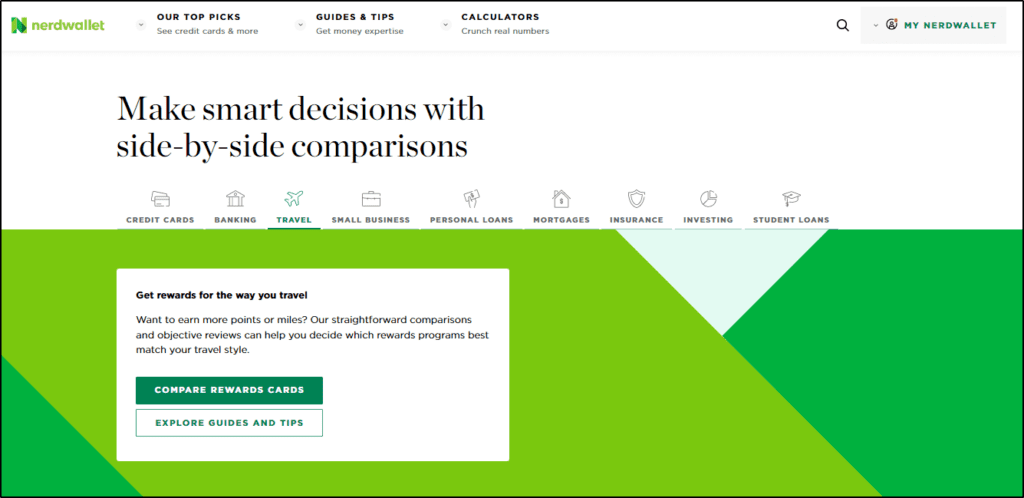
If you want to start a high-traffic site like NerdWallet that makes money with advertising and affiliate marketing, you’ll need a very fast website with no traffic caps.
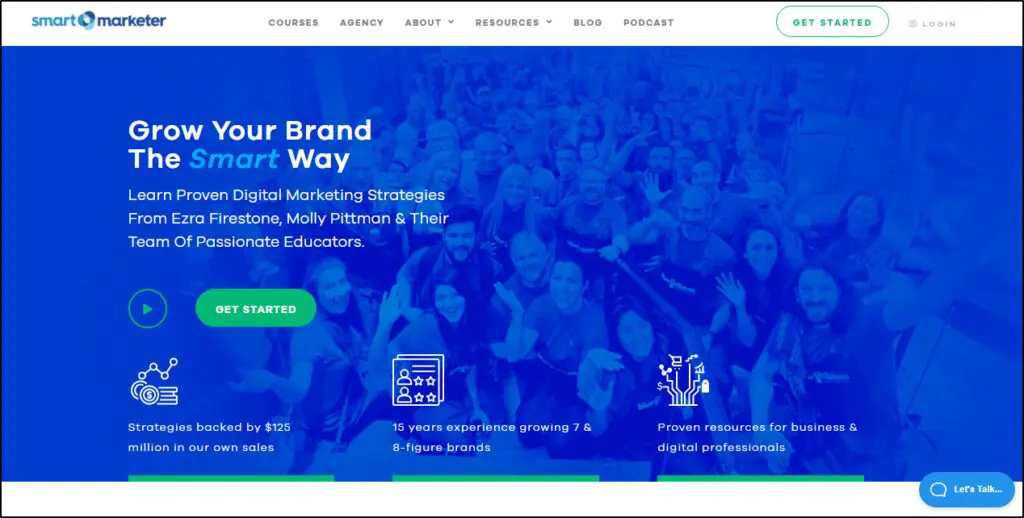
If you plan to sell courses online and memberships on your site like SmartMarketer, and you drive most of your traffic from search engines, look for a high-performance hosting service. My guide on using SEO to sell online courses explains why speed matters there.
If you want to start an online store to sell physical or digital products like Bumblebee Linens, look for a hosting company that is optimized for e-commerce and supports payment gateways.

If your target audience is based in a specific country, look for a high-quality hosting company with servers in that region.
If you only need a simple website that serves as your company’s contact point, an entry-level hosting plan will do. See my guide to setting up a home base website for the basics.
Before you move forward, be clear about your website type, estimated traffic, business model, and how you plan to make money from your site.
Then set your budget. The cheapest services cost a few dollars a month at intro prices, while high-end managed hosting can exceed $200 a month.
Step 2: Choose The Right Website Hosting Type
Next, decide which kind of web hosting you need to run your website smoothly without overspending.
You’ll mainly choose between four hosting types.
● Shared Hosting
With shared hosting, your site shares a server’s resources with other websites. The host stores many customers’ sites on the same servers and divides processing power, memory, disk space, and bandwidth between them.
Shared hosting is ideal for beginners and low-traffic websites because it’s affordable and includes the tools you need to run a website.
It has limits. Speed varies with server load, so a traffic spike on another site can slow yours down. Security is also partly shared, although this rarely causes problems with the top shared hosting companies.
A high-quality shared hosting plan is your best option if you’re a beginner with a site under roughly 30,000 visitors a month or a limited budget.
● VPS And Cloud Hosting
A virtual private server (VPS) or cloud server gives your site its own share of CPU and memory. Performance is more consistent than shared hosting, and you can add resources as you grow.
Managed versions, such as Cloudways and ScalaHosting’s cloud plans, handle the server setup for you. A VPS is also what you need if you want to run AI agents or automation tools yourself.
● Dedicated Hosting
Dedicated hosting gives you an entire physical server. You don’t share server space, processing power, or bandwidth with anyone.
This results in fast speeds, stronger security, and very consistent performance. It’s expensive and usually needs technical expertise, so it suits large businesses more than course creators.
● Managed WordPress Hosting
Most bloggers, content creators, digital product sellers, and small businesses use WordPress for their websites because it’s user-friendly and affordable. Managing a WordPress website still takes some technical skill, which is a challenge for founders focused on their core business.
A managed WordPress hosting service handles your site’s backend management. You don’t have to worry about security updates, plugin updates, backups, or caching.
Managed WordPress hosting costs more than shared hosting. It offers greater security, speed, and reliability, and the entry prices have come down. WP Engine, Kinsta, and Liquid Web are the managed hosts on this list.
If you’re just starting a new site and have limited resources, shared hosting is the best choice. If your site is growing, you want minimal downtime, and you have the budget, choose managed WordPress or cloud hosting.
Step 3: Consider The Key Web Hosting Features
Hundreds of companies offer web hosting. To find the right fit for your business, evaluate these core features.
● Storage
Every web hosting company provides storage space for your website’s files and content. How much you need depends on the size of your files. Leave room to grow, and remember that backups and staging copies use space too.
For most blogs and small business sites, 20 GB to 50 GB of storage is more than enough. Managed hosts usually offer less storage but higher performance. Host your course videos on a video platform or your course platform, because video fills hosting storage quickly.
● Bandwidth And Visits
Bandwidth is the amount of data transferred between your site and its visitors. Many shared hosts advertise unmetered bandwidth, usually with a fair use clause.
More hosts now size plans by monthly visits. Check what happens if you exceed the limit. Some hosts charge overage fees, and others ask you to upgrade. AI bots and crawlers count as traffic at some hosts, which is why Kinsta now offers bandwidth-based plans.
● Domain Registration
Your domain is the address people type to visit your website. Many hosts include a free domain for the first year, and you pay to renew it after that. Cloudways and Liquid Web don’t include one.
If you want a regional or creative domain extension, check that your host sells it before you sign up.
● Security
Website security protects your business and your students’ data. Google also treats HTTPS as a ranking signal.
Look for these core security features in a web hosting company.
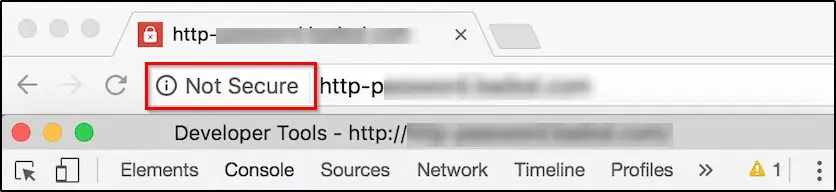
SSL certificate (HTTPS). An SSL certificate encrypts the connection between a browser and your web server. Browsers show a warning for sites without one.
Firewalls. The best web hosting companies protect their customers from malware, unauthorized access, and DDoS attacks with a web application firewall.
User access management. Your host should support two-factor authentication and separate user accounts with different permissions. This matters even more once you connect an AI agent.
Regular updates. Good hosts keep their server software current, and many now update your plugins automatically and check that nothing broke.
Data backup and restoration. Look for daily backups and one-click restore. Several budget plans only back up weekly.
Read our comprehensive list of critical website security tips for content creators.
● Email Hosting
If you want an email address at your own domain, check whether your host includes it. This has changed at several hosts.
SiteGround and IONOS include email. Hostinger includes it for the first year, DreamHost for three months, and Bluehost offers a trial. Cloudways, Kinsta, and Liquid Web don’t include email hosting. You’ll also want a separate email marketing platform for newsletters and course launches.
● AI And MCP Features
Decide how much you’ll use AI before you pay for it. An AI builder helps on day one. An assistant or agent helps every week if it can update content and plugins. MCP only matters if you already use an AI assistant for your work. The comparison table in the section above shows what each host includes.
Step 4: Evaluate Web Hosting Performance
The performance of your web hosting service directly affects your website’s search rankings, user experience, and conversion rates.
● Server Uptime And Reliability
Server uptime is the percentage of time your site is online. Most hosts on this list promise 99.9% or better, and some offer a 99.99% guarantee on higher plans.
An uptime guarantee usually means a credit on your bill if the host misses it. Independent uptime monitors and recent user reviews give you a better picture than the number on the sales page.
● Server Speed And Response Time
Server response time is how long your server takes to start sending a page after a visitor requests it. It affects both user experience and search rankings.
A response time under 300 milliseconds is excellent, and anything under one second is acceptable. Look for NVMe storage, a modern web server such as LiteSpeed or NGINX, server-level caching, and a CDN.
● Scalability
As your website grows, your host should have the resources to handle more traffic. Switching hosts takes time, so choose one that can grow with you.
Look at the pricing plans and see how upgrades work. Cloud and managed hosts let you add resources or visits without moving your site.
Step 5: Check For User Experience And Ease Of Use
Managing a hosting account can be challenging for non-technical users. The best hosting companies give you tools that make it easy.
● Control Panel
Your hosting control panel is where you register domains, create email accounts, check storage, and manage backups. Here’s Bluehost’s dashboard from an earlier version.
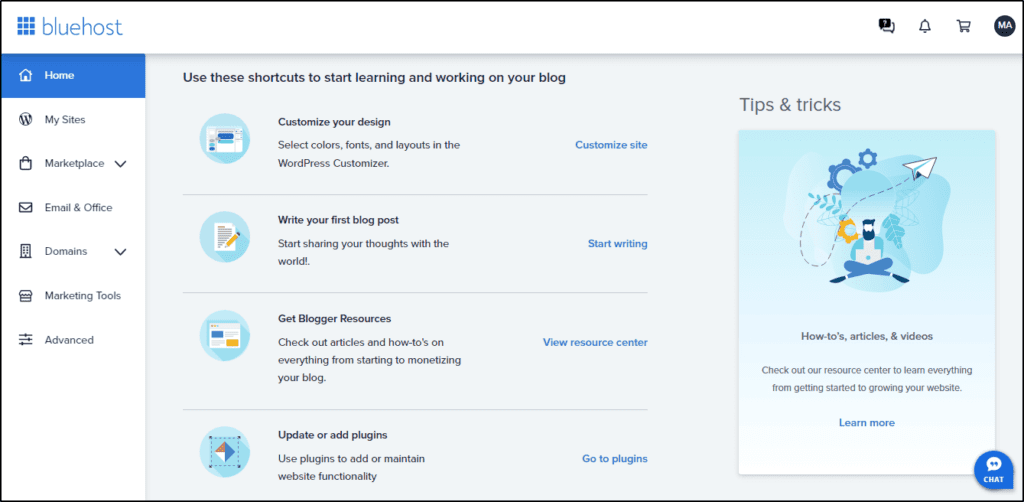
Many hosts have replaced cPanel with their own dashboards, such as Hostinger’s hPanel, SiteGround’s Site Tools, and ScalaHosting’s SPanel. Make sure the one you choose is designed for non-technical users.
● WordPress Compatibility
WordPress powers more websites than any other content management system, so you’ll likely use it for your blog, course website, or store.
Every host on this list supports WordPress and installs it for you. Check for staging sites and automatic updates, which make WordPress much easier to maintain.
● Website Builder Support
A website builder helps you design your website visually without coding or design skills. Most hosts now offer an AI builder that creates a first draft for you. Dedicated tools are covered in my 10Web review and my list of the best landing page software.
You can also install a page builder plugin such as Elementor on any WordPress host. Well-designed pages matter, so read my guide on how to create landing pages that convert.
● Customer Support
Customer support is one of the most critical parts of a web hosting service. When your website goes down or gets hacked, you need fast and effective help.
In my experience, live chat and phone support are the most convenient channels in emergencies. Many hosts now put an AI assistant first, so check how quickly you can reach a person.
● Data Migration and Site Transfers
Moving a website between hosts is technical, and a mistake can take your site offline.
This is why the best web hosting companies offer free migration, either with a plugin or with a specialist who moves your site for you. IONOS charges for it.
● Customer Reviews
Before you decide, read the public user reviews for your shortlisted web hosting companies on sites like G2, Capterra, and Trustpilot.
For example, here’s a user review about Bluehost on G2.

And here’s one about Hostinger on Capterra.

Look at recent reviews. Several hosts on this list have changed owners, brands, or plans in the last two years, so older reviews may describe a different product.
Which WordPress Web Hosting Company Is Best For You?
I’ve shared the best WordPress web hosting services you can use to host, manage, and grow your online course website. The best choice depends on your business needs.
Here are my recommendations for different scenarios.
- Hostinger is the best value for money in shared hosting, with the most AI and MCP tools
- Liquid Web is best for high-traffic sites
- Bluehost is the most beginner-friendly
- WP Engine is best for businesses focused on growth
- hosting.com is best for fast shared hosting
- Cloudways is best if you want cloud hosting without a long contract
Once your site is live, you’ll need to bring people to it. My guide on how to market your online course is a good next step. If you’d like to add memberships, compare these membership site platforms.
To plan your pricing and revenue before you launch, try our free creator tools.
How We Evaluate and Test Online Course Platforms & Related Software
Reviews of platforms and software on the Learning Revolution site are overseen by the site’s founder, Jeff Cobb, an e-learning industry expert with more than 20 years of experience working with online course platforms. All evaluations are conducted by a team of analysts who have extensive experience using, testing, and writing about these types of platforms. We dedicate numerous hours to researching each platform, ensuring each aligns with the needs of online course sellers, and vetting specific areas like core features, usability, pricing, and customer satisfaction. Our reviews are unbiased, and while we will participate in affiliate programs, if available, we do not accept payment for placement in our articles or links to external websites.
Frequently Asked Questions (FAQs)
Do I really need paid hosting, or can I just use free hosting?
Free hosting usually adds ads, limits storage, and lacks reliable support and performance. For a brand, course site, or business, paid hosting is the better choice.
What’s the difference between a domain registrar and a hosting provider?
You buy your domain name, such as mywebsite.com, through a registrar. A hosting provider stores your website’s files on a server. Many hosting companies also sell domains, but they are separate services.
Is it worth paying extra for managed WordPress hosting?
Yes, if you don’t want to handle security patches, plugin updates, and backups yourself. Managed WordPress hosting works like a technical team for your site. Entry prices now start at $9 a month with Liquid Web.
Can I use a fully hosted online course platform instead of hosting?
Yes. Platforms like Thinkific, Kajabi, and Teachable handle hosting, security, and updates for you. They’re easier to manage if your main goal is selling courses. You trade off some flexibility and ownership compared to a self-hosted WordPress site.
What kind of course creator should use web hosting?
You need a website whether you host courses on it or not. If you run courses on WordPress, you need hosting. Even if you don’t, your own website helps you build your brand, and a WordPress site gives you more control and room to grow than the basic site a course platform provides.
How do I know when it’s time to upgrade my hosting plan?
Common signs include slow load times, frequent downtime, errors when traffic spikes, and hitting storage or visit limits. At that point, move to a higher plan, cloud hosting, or managed WordPress hosting.
Which hosting service is best if my audience is global?
Look for providers with a global CDN and multiple server locations, such as SiteGround, Kinsta, or WP Engine. This keeps your site fast for visitors worldwide.
Can I switch my web host later if I’m unhappy?
Yes. Most providers offer free migration tools or services. It’s still easier to pick a host with strong support upfront, because moving a site takes time.
Do I need to buy email hosting separately?
It depends on the host. SiteGround and IONOS include email. Hostinger includes it for the first year and DreamHost for three months. Cloudways, Kinsta, and Liquid Web don’t include email hosting.
Will web hosting affect my SEO rankings?
Yes. Google considers page speed and HTTPS, and a site that is often down loses visitors and rankings. A fast, secure, reliable host gives your SEO a stronger base.
What security features should I look for in a web host?
At a minimum, look for free SSL, a firewall, malware scanning, DDoS protection, and daily backups. If you run an online store or course site, staging sites and automatic updates also matter.
Can I host multiple websites on one hosting plan?
Usually, yes. Hostinger’s entry plan allows 3 websites, Bluehost’s allows 10, and DreamHost’s allows 25. IONOS WordPress plans and the entry plans from SiteGround and ScalaHosting allow one. Check the plan details before you sign up.
What is an MCP server in web hosting?
MCP stands for Model Context Protocol. It’s an open standard that lets AI assistants such as Claude and ChatGPT connect to other software. A hosting MCP server lets your assistant manage tasks like creating sites, running backups, or changing DNS by chat. Hostinger, Cloudways, and hosting.com offer one.
Which web hosts have the best AI features?
Hostinger has the widest set, with an AI website builder, the Hostinger Agent, and MCP servers for hosting and WordPress. SiteGround’s AI Agent for WordPress can manage content and updates on your site. Bluehost, DreamHost, hosting.com, and IONOS all include AI website builders.
Why are hosting renewal prices so much higher than the starting price?
Most budget hosts discount the first term heavily to win new customers. The plan then renews at the regular rate, which can be two to six times higher. Compare the renewal price and the length of the first term before you buy. Cloudways and Kinsta charge the same price from the start.

Jeff Cobb, Founder of Learning Revolution
Jeff Cobb is an expert in online education and the business of adult lifelong learning. Over the past 20+ years he has built a thriving career based on that expertise – as an entrepreneur, a consultant, an author, and a speaker. Learning Revolution is a place where Jeff curates tips, insights, and resources to help you build a thriving expertise-based business. Learn more about Jeff Cobb here.