

TL;DR: BuddyBoss Review (2026): A Community Platform For WordPress That Also Sells Courses
BuddyBoss is self-hosted WordPress software that adds a private social network to your site, with groups, forums, messaging, memberships, and simple courses. You own the site and the data, and you run the hosting yourself. For full course tools, you pair it with an LMS such as LearnDash or LifterLMS.
• What it is. A community platform first, with memberships and basic courses built in.
• What it isn’t. A hosted service, a full LMS, or a marketing tool. It has no email marketing, funnels, webinars, or AI.
• Pricing. Start renews at Plan discontinued/year, Launch at $399/year, and Scale at $699/year, with 50% off the first year. Hosting and the branded app cost extra.
• Best plan for courses. Launch, because it removes the Plan discontinued fee and adds the theme and LMS integrations.
• Choose it if community sits at the center of your course or membership business and you can support a WordPress site.
• Skip it if you want a platform someone else hosts and maintains.
Get BuddyBoss With A 14-Day Money-Back Guarantee
BuddyBoss is a WordPress community plugin that has been around for a long time. It’s also one of the more misunderstood products in this space.
Some people expect it to be a full online course platform like LearnDash or Thinkific, and others compare it with a hosted service like Circle.
In this review, I’ll explain what BuddyBoss does today, what it costs once you add hosting and an LMS, how it handles courses, where it falls short, and which kinds of learning businesses it suits.

Read: The Best WordPress LMS Plugins For Selling Courses and Memberships
What Is BuddyBoss?

BuddyBoss is a community platform for WordPress. It adds a private social network to your own website, with member profiles, groups, discussion forums, messaging, and activity feeds. It also lets you sell memberships and simple courses, so you can charge for access to the community and teach inside it.
BuddyBoss isn’t a cloud platform. It’s software you install on a WordPress site you host yourself. The core is the BuddyBoss Platform plugin, which runs all the community, membership, and course features.
The BuddyBoss Theme sits on top of it and controls how everything looks. Because it all lives on your site, you own your member list, your content, and your data. You’re also responsible for hosting, updates, and backups.
Community is the center of BuddyBoss, and courses are an add-on to it. BuddyBoss Courses covers lessons, and higher plans add assignments and a gradebook. That works for straightforward course content inside a community.
If you need what LearnDash or LifterLMS offer, such as advanced quizzes, certificates, drip schedules, and detailed progress reporting, you install one of them alongside BuddyBoss. BuddyBoss connects with LearnDash, LifterLMS, Tutor LMS, and MemberPress Courses for exactly that reason.
It helps to know what BuddyBoss leaves out. It has no email marketing, sales funnels, or webinar tool. Live sessions run through its Zoom integration. It lists no AI features. And because it isn’t hosted, someone has to run the WordPress site, whether that’s you, your team, or a developer.
So I think of BuddyBoss as a community platform that can also sell memberships and simple courses. For a serious course business, it works best paired with a full LMS.
Main Features In BuddyBoss
- Member profiles and connections: Members build profiles with custom fields, follow each other, and make connections, so your community feels like a network of real people and not an anonymous forum.
- Social groups: Create public, private, or hidden groups for each course, cohort, or member tier, so every group of learners has its own space to talk about what they’re working on.
- Discussion forums: Run threaded forums site-wide or inside groups, giving members a searchable place for questions and answers that doesn’t scroll out of sight.
- Activity feeds: Members post updates, react, comment, @mention each other, run polls, and share photos, videos, and documents, which keeps the community active between lessons.
- Private and real-time messaging: Members message each other directly, with real-time chat on higher plans, so conversations happen inside your community and not on outside apps.
- Notifications, email digests, and push alerts: On-screen notifications, digest emails, and web push notifications bring members back to conversations they missed.
- Moderation tools: Members can report content or block other members, and you can set rules that hide flagged posts or suspend repeat offenders, which protects the tone of a paid community.
- Memberships and access controls: Sell paid access with BuddyBoss Memberships, or connect MemberPress, Paid Memberships Pro, or WooCommerce, and decide exactly which groups and content each member can see.
- Courses and LMS integrations: Publish lessons with BuddyBoss Courses, or pair BuddyBoss with LearnDash, LifterLMS, Tutor LMS, or MemberPress Courses for full course tools wrapped in discussion and activity.
- Gamification: Award points, badges, and ranks and run leaderboards on the top plan, giving members visible progress and a reason to keep contributing.
- Zoom and events: Schedule Zoom meetings inside groups and keep past recordings as a resource library, so live sessions connect to the rest of the community.
- Branded mobile app: Publish your own iOS and Android app with no BuddyBoss branding, with push notifications and offline lessons, sold as a separate subscription.
- Migration tools: Move members and content in from BuddyPress, PeepSo, FluentCommunity, bbPress, and other WordPress community tools without starting over.
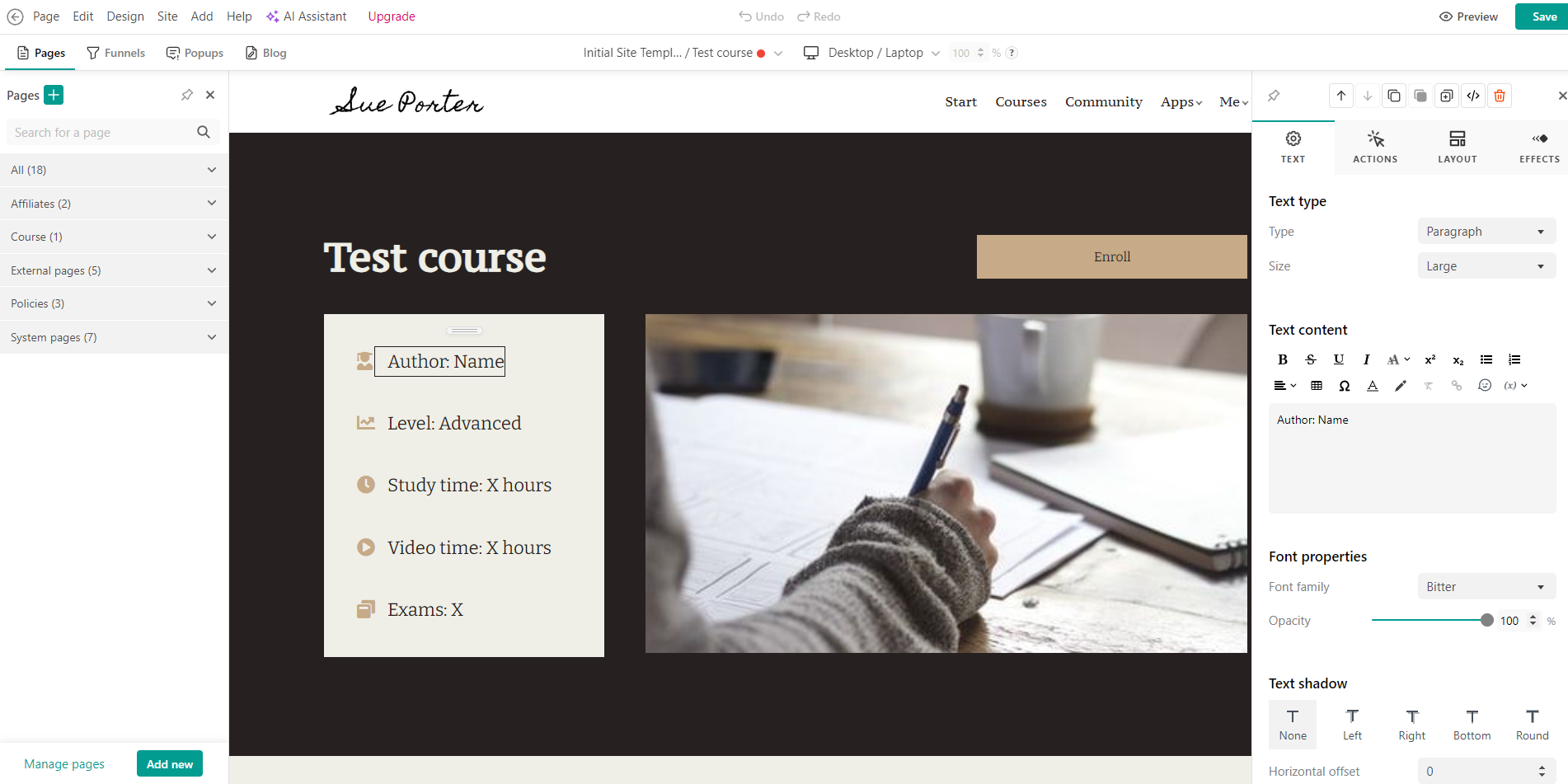
BuddyBoss Platform Vs BuddyBoss Theme
The BuddyBoss Platform is the plugin that holds every feature. The BuddyBoss Theme is the design built for it, with layouts for groups, profiles, and courses, and it comes with the Launch and Scale plans.
You can run the Platform without the theme. Its built-in ReadyLaunch templates give community pages a finished look with your existing theme, and the Start plan relies on them. Most course creators use both together, and once you finish setup, the split stops mattering.

Who BuddyBoss Is For
BuddyBoss suits learning businesses where community access is the actual product. Cohort-based courses, paid communities, masterminds, and professional networks all fit that description.
In those offers, the community carries real value, and owning it protects that value from a platform changing its pricing or rules.
It also suits organizations that already run WordPress. An association with a developer on contract, or a course creator who already manages a WordPress site, takes on little new work by adding BuddyBoss.
BuddyBoss is a poor fit for a first course with no WordPress experience behind it. A coach with a handful of one-to-one clients doesn’t need it either. In both cases, a hosted platform gets you running faster with less to maintain, and my list of online coaching platforms covers the coaching side.
If you’re unsure, write down which of your offers depend on members interacting with each other. If the list is long, BuddyBoss deserves a close look. If it’s short or empty, a lighter tool will serve you better.
BuddyBoss Pricing (2026)
BuddyBoss sells a yearly license for one site. Each plan shows half off the first year and renews at full price, so I plan around the renewal price.
| Plan | Renewal price | First year | What it adds |
|---|---|---|---|
| Start | Plan discontinued/year | Plan discontinued | Community features, BuddyBoss Memberships and Courses with a Plan discontinued fee, ReadyLaunch |
| Launch | $399/year | First year $199 (intro price) | 0% fees, BuddyBoss Theme, LearnDash, LifterLMS, Tutor LMS, and MemberPress Courses, assignments and gradebook, Zoom, real-time messaging, push notifications |
| Scale | $699/year | First year $349 (intro price) | Points, badges, ranks, leaderboards, multilingual support, media offloading with a CDN, member blogs |
Extra sites cost $99 each a year. Every purchase comes with a 14-day money-back guarantee, and BuddyBoss offers no free trial.
The Plan discontinued fee on Start applies to sales through BuddyBoss Memberships and Courses. At $10,000 a year in sales, that fee comes to $290, more than the price gap between Start and Launch. For anyone selling courses, Launch is the plan to start on.
BuddyBoss App Pricing
The branded app has its own subscription. Solo covers one store, iOS or Android, and renews at $999/year. Launch covers both stores, adds in-app purchases and offline lessons, and renews at $1,999/year. On Done For You App, BuddyBoss builds and maintains the app for you at $3,999/year.
The app publishes under your own Apple developer account, which costs $99 a year, and your Google Play account, which costs $25 one time. BuddyBoss says most apps take four to six weeks to go live.
What A Course Community Costs In Year One
| Item | Why you need it | Cost |
|---|---|---|
| Launch | Community, theme, LMS connections | First year $199 (intro price), then $399/year |
| LearnDash 1 site | Advanced quizzes and course tools (optional) | $350/year |
| Managed WordPress hosting | Server capacity for logged-in members | Varies by host and traffic |
| Launch app | Your branded iOS and Android app (optional) | First year $999, then $1,999/year |
| Apple and Google developer accounts | Needed to publish the app | $99/year plus $25 one time |
Without the app, the software costs a few hundred dollars a year plus hosting. With the app and an LMS, the total lands near a mid-tier hosted platform, and you still own the site.
How BuddyBoss Handles Courses
BuddyBoss gives you two ways to teach, and the right one depends on how much your courses ask of learners.
BuddyBoss Courses comes with every plan and covers lessons, with assignments and a gradebook on Launch and up. It suits courses that are mostly video and text, where discussion in the community does much of the teaching. You keep everything in one plugin with one set of settings.
An LMS plugin takes over when you need graded quizzes, certificates, drip schedules, prerequisites, or detailed progress reports. LearnDash and LifterLMS are the two most common choices, and BuddyBoss also connects with Tutor LMS and MemberPress Courses. The LMS runs the course, and BuddyBoss adds a discussion group to each course and styles the pages to match the community.

If you sell certifications, compliance training, or any course where assessment matters, plan on an LMS from the start. My LearnDash vs LifterLMS comparison and LifterLMS review can help you choose one.
How BuddyBoss Handles Memberships
BuddyBoss Memberships sells paid access through Stripe, and Launch adds access controls that tie memberships to groups and content. For a simple paid community, that covers the essentials.
BuddyBoss’s pricing page doesn’t say how its memberships handle coupons, free trials, or failed payments. If your revenue depends on those, connect an established membership plugin such as MemberPress, Paid Memberships Pro, or WooCommerce Memberships. BuddyBoss takes no cut of sales through any of them.

My MemberPress review and roundup of membership site platforms cover those options in detail.
Where BuddyBoss Falls Short
Each of these limits is manageable on its own. Together, they explain why some readers are better off on a hosted platform.
Hosting decides performance. Every logged-in member uses server resources, so a busy community needs a managed host with dedicated capacity. BuddyBoss’s own pricing FAQ warns against budget shared hosting. My guide on how to create a WordPress website covers the hosting basics.
Costs add up across the stack. The license is modest, and then the host, the LMS, the app, and the developer accounts arrive. Price the full setup before you buy.
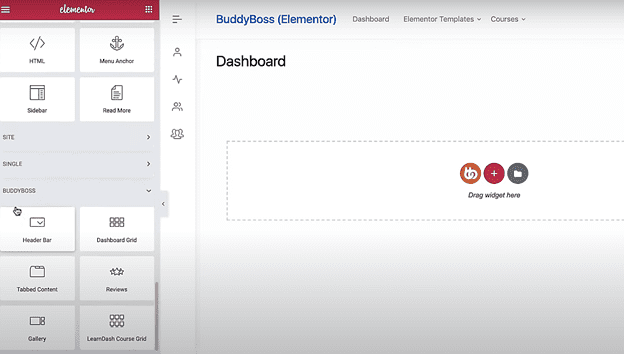
Customization beyond the basics needs a developer. The theme works with Elementor, Beaver Builder, and other page builders, so colors, fonts, and page layouts are easy to change. Reworking the community screens themselves takes someone who knows WordPress templates.
Marketing happens elsewhere. BuddyBoss has no email marketing, funnels, or sales pages of its own, so you’ll add tools from my list of email marketing platforms.
Live teaching depends on Zoom. BuddyBoss connects to Zoom on Launch and up and can embed YouTube or Vimeo streams, with no webinar tool of its own.
It has no AI features. Hosted platforms such as Circle now include AI tools. On a BuddyBoss site, AI comes from your LMS, such as LearnDash Pro’s outline and quiz builders, or from other plugins.
Support covers BuddyBoss only. Ticket support runs during US Eastern business hours, and conflicts with your host or other plugins are yours to solve.
How To Set Up BuddyBoss For A Course Community
The order you set BuddyBoss up in matters more than any single setting. Here’s the sequence I’d follow.
1. Choose hosting first. Pick a managed WordPress host with dedicated resources, and create a staging site so you can test updates before members see them.
2. Install the Platform and the theme on Launch. Use the demo import tool for a working starting point, then add your colors, fonts, and logo.
3. Decide where courses live. Use BuddyBoss Courses when your lessons follow a simple sequence with no grading, and add LearnDash or LifterLMS when they need assessment. My guide on how to create an online course covers the course design side.
4. Give each course or cohort its own group. A matching group with its own feed and forum keeps discussion tied to what learners are working on.
5. Connect access rules before you sell. Link memberships or course purchases to groups, so buyers land in the right spaces automatically. My guide to selling courses online covers pricing and checkout.
6. Turn on email digests and push notifications. Most members won’t visit daily, and a weekly digest brings them back to conversations they missed.
7. Seed each group before launch. Post a welcome thread, an introductions thread, and a first discussion prompt, so early members find activity waiting for them.
BuddyBoss Alternatives
If you’d rather not run WordPress, a hosted platform gets you live faster. If you want to stay on WordPress with less overhead, lighter community plugins exist too.
| Platform | Type | Starting price | Choose it over BuddyBoss if |
|---|---|---|---|
| Mighty Networks | Hosted | $79/month on annual billing | You want community, courses, events, and apps with no WordPress upkeep |
| Circle | Hosted | $89/month on annual billing | You want a polished community with AI tools and live streams built in |
| Skool | Hosted | $82/month on annual billing | You want a simple community and classroom in one place |
| PeepSo or FluentCommunity | WordPress plugins | See each vendor’s pricing page | You want a lighter community plugin on WordPress |

I cover the hosted options in my Mighty Networks review and Skool review, and my roundup of online community platforms compares them side by side.
My Verdict On BuddyBoss
I rate BuddyBoss 8 out of 10. It’s the most complete way to run a learner community on a WordPress site you own, and its built-in memberships, courses, and branded app cover more than they used to. It loses points for the total cost once you add hosting, an LMS, and the app, for the WordPress upkeep, and for the lack of AI and marketing tools.
If community sits at the center of what you sell and you can support a WordPress site, BuddyBoss is the platform I’d look at first. Pair it with LearnDash or LifterLMS if assessment matters to your courses. My guide on how to build a learning community can help you plan the community itself.
BuddyBoss FAQs
Is BuddyBoss free?
No. BuddyBoss sells yearly licenses starting with the Start plan, which renews at $199 a year after a half-price first year. Every purchase includes a 14-day money-back guarantee, so you can test it on a staging site before you commit.
What happened to BuddyBoss Platform Pro and Platform Plus?
BuddyBoss renamed them in 2026. Platform Pro is now the Launch plan, and Platform Plus is now Scale. Existing customers keep the same features and renewal prices under the new names, so you don’t need to do anything.
Does the BuddyBoss app need the BuddyBoss Theme?
No. The app connects to your WordPress database and uses its own native layout, so your site theme has no effect on how the app looks. You need the BuddyBoss Platform plugin and an app subscription.
Do I need my own developer accounts for the BuddyBoss app?
Yes. BuddyBoss publishes the app under your own Apple developer account, which costs $99 a year, and your Google Play account, which costs $25 one time. That arrangement means the store listings and app belong to you.
Can I run BuddyBoss on more than one website?
One license covers one production site. Extra sites cost $99 each per year, and agencies running five or more community sites can ask BuddyBoss about bulk licensing.
Can I move from Circle or Skool to BuddyBoss?
Yes, with more effort than a WordPress-to-WordPress move. BuddyBoss’s built-in migration tools cover WordPress community plugins and forum software. Moving from a hosted platform such as Circle, Skool, or Mighty Networks needs a custom project, which BuddyBoss’s agency team quotes separately.
Does BuddyBoss charge transaction fees on LearnDash or MemberPress sales?
No. BuddyBoss takes no cut of sales made through LearnDash, MemberPress, LifterLMS, Tutor LMS, WooCommerce, or any other plugin. The only fee applies to BuddyBoss Memberships and Courses sales on the Start plan.
Can I change or cancel my BuddyBoss plan later?
Yes. You can switch plans or cancel at any time from your BuddyBoss account. When you upgrade, you pay only the difference for the rest of your billing period, and renewals happen automatically at the plan’s full price unless you cancel.

Jeff Cobb, Founder of Learning Revolution
Jeff Cobb is an expert in online education and the business of adult lifelong learning. Over the past 20+ years he has built a thriving career based on that expertise – as an entrepreneur, a consultant, an author, and a speaker. Learning Revolution is a place where Jeff curates tips, insights, and resources to help you build a thriving expertise-based business. Learn more about Jeff Cobb here.
See also
- How to Build a Learning Community
- How to Create a Membership Site
- The Best Online Course Platforms
- LifterLMS Review
Table of Contents
Related Posts
IONOS Review | Is It Right for Your Course or Coaching Website?
MasterStudy LMS Review (2026) | Is It The Right WordPress LMS For You?
Thrive Apprentice Review (2026) | Is This WordPress LMS Worth It?