
TL;DR: How to Validate an Online Course Idea
Validating a course idea means collecting evidence that specific people will pay for a specific result before you build the course. AI makes the research part of validation much faster, but only real buyers can validate demand.
– Write a one-sentence outcome promise before you research anything
– Use AI to scan search results, marketplaces, reviews, and forums in hours instead of weeks
– Check every source AI cites, and never treat an AI “customer” as evidence
– Talk to 5 to 10 real prospects about what they have already tried and paid for
– Set a sales target before you test, then run a pre-sale or a paid live pilot
– Starting with no audience, sell a few paid one-to-one sessions or borrow someone else’s audience first
– Build the full course only after people pay
Most failed courses fail before the first lesson is recorded. A creator spends three months filming 40 videos, opens the cart, and sells four copies. The content was fine. Nobody checked whether enough people wanted that particular result badly enough to pay for it.
In all my years of helping experts validate course ideas, the core idea hasn’t changed. Evidence has to come before the build. What has changed is how fast you can gather that evidence. AI tools now do in an afternoon the research that used to take weeks of reading forums, reviews, and search results.
AI has also created a new trap. Many creators now “validate” an idea by asking ChatGPT whether it’s good, or by asking it to role-play their ideal customer. Neither tells you whether anyone will pay. In this guide, I’ll show you a four-stage process that uses AI where it helps, keeps real people where they matter, and ends with a clear decision on whether to build.
Course Validation at a Glance
Here is every stage and method I’ve discussed in this guide. Use it as a checklist, and click any step to jump to the full instructions.
| Stage | Step | What to do |
|---|---|---|
| Prepare | Outcome promise and 3M check | Write one sentence stating who the course helps and what result they get, then have AI quiz you on your expertise and long-term interest |
| 1. Searching | Method 1: Read the Google results | Search 5 to 7 problem phrases and note ads, paid courses, People Also Ask questions, and how much the AI Overview already answers |
| 1. Searching | Method 2: Check search volume and trends | Look up monthly searches in Google Keyword Planner and confirm in Google Trends that interest is steady or rising |
| 1. Searching | Method 3: Run an AI research scan | Ask Claude, ChatGPT, or Perplexity to list competing courses, prices, and gaps, then open every source it cites |
| 1. Searching | Method 4: Mine marketplace reviews | Paste 20 to 30 two- and three-star reviews of top books and courses into AI and rank the complaints a course could fix |
| 2. Listening | Method 5: Mine Reddit and forums | Set free F5Bot alerts, collect 15 to 20 threads, and have AI pull out frustrations, past purchases, and exact phrases |
| 2. Listening | Method 6: Read creators’ comments | Scan comments on top videos and posts for “can you make a video on” requests and unanswered follow-up questions |
| 2. Listening | Method 7: Study your own data | Pull your top pages from Google Analytics 4 and your search queries from Search Console, then reread email replies |
| 3. Asking | Method 8: Run 5 to 10 interviews | Message forum posters and contacts, ask about past attempts and purchases, record with permission, and have AI find patterns |
| 3. Asking | Method 9: Send a short survey | Send 5 or 6 open-ended questions about challenges and past attempts, then have AI group the answers into themes |
| 3. Asking | Method 10: Share value in communities | Listen in a niche forum for a week, then post a useful resource and ask how others handle the problem |
| 4. Testing | Method 11: Offer a lead magnet or waitlist | Publish a free resource with a sign-up page and add two or three application questions to measure real intent |
| 4. Testing | Method 12: Pre-sell the course | Build a seven-part sales page with a founding price and a full refund promise, then send it to your interviewees and waitlist |
| 4. Testing | Method 13: Run a paid pilot or workshop | Teach the core content live at about half the planned price, then collect feedback, testimonials, and recordings |
| 4. Testing | No audience yet | Sell 3 to 5 paid one-to-one sessions, run a $100 to $200 ad test, or teach a guest workshop for another community |
| Decide | Build, revise, or drop | Compare results with the sales target you wrote down before testing, then build, change one variable and retest, or drop the idea |
What Does It Mean to Validate an Online Course Idea?
Validating an online course idea means collecting evidence that a specific group of people will pay for a specific result before you create the course. The same process works for any edupreneur testing a digital product, such as a template pack, a membership, or a workshop.
Evidence comes in three strengths. I treat the first two as screening and only the third as validation.
| Evidence level | What it looks like | What it proves |
|---|---|---|
| Interest | Search volume, forum threads, popular videos, competitor courses | People care about the topic |
| Intent | Email signups, waitlist applications, discovery calls | People want your take on the topic |
| Commitment | Pre-sales, paid pilot seats, paid workshop tickets | People will pay you for the result |
Interest and intent help you shape the offer. Only commitment tells you to build. A topic with millions of searches can still fail as a course if the free answers are good enough.
What AI Changes About Course Validation, and What It Doesn’t
AI is excellent at finding, sorting, and summarizing what people have already said. A good AI assistant can read 300 Amazon reviews, cluster the complaints, and hand you the five gaps in ten minutes. The same tool can draft an interview script, transcribe the call, and pull out the exact phrases your prospects used.
AI fails when you ask it to act as the customer. In a 2026 study by the research firm Strat7, synthetic respondents named prices about 16% higher than real people, and purely synthetic data broke the logical order of prices 68% of the time. Researchers Chenxi Hu and Zhifeng Gao tested LLM respondents against more than 18,000 real consumer choices and concluded that AI responses “are not yet a direct substitute for human preference data.”
So my rule is simple. Use AI to research the market and to prepare your tests, and use real people to run the tests. Creators seem to agree with the caution. In Kit’s 2026 survey of 550 creators, 89.2% said they always review or edit AI output before using it. My guide to generative AI use cases for course creators covers where else AI helps.
| Validation task | Without AI | With AI | Still needs a human |
|---|---|---|---|
| Competitor and gap research | Days of reading pages and reviews | An hour of AI research plus source checks | Checking every source and claim |
| Forum and comment mining | Weeks of scrolling | Paste threads, get clustered pain points | Choosing which pains you can solve |
| Interview prep and analysis | Writing scripts, taking notes | AI drafts questions, transcribes, finds patterns | Running the conversation and earning trust |
| Landing page and lead magnet | A week of writing and design | A draft in an afternoon | Making the promise specific and true |
| Pre-sale or pilot | Same as before | AI drafts the page and emails | The buyers, who are the actual test |
Before You Start, Write Your Outcome Promise and Run the 3M Check
Validation goes faster when you know exactly what you’re testing. Write one sentence that states the result, not the topic.
Outcome promise formula
By the end of this course, [specific learner] will be able to [specific result] in [timeframe], so they can [deeper goal].
“Learn personal finance” is a topic. “Freelance designers will build a quarterly tax plan in one afternoon, so they stop dreading April” is a promise you can test. If you can’t fill in every bracket, research won’t help yet.
Then run your idea through my 3M Model. Market asks whether real demand exists, which the rest of this guide tests. Means asks whether you have the expertise and the capacity to deliver. Motivation asks whether you’ll still care about this topic after the 50th student question. AI can help with the last one. Ask it to interview you.
Prompt to test your motivation
I’m considering building a course on [topic] for [audience]. Ask me 10 hard questions, one at a time, to test whether I have the expertise and the long-term interest to teach this for the next two years. Push back on vague answers.
If the answers feel forced, drop the idea now. A weak market can be researched and a skill gap can be filled, but a motivation problem rarely fixes itself.
The 4-Stage Process to Validate a Course Idea
I group validation methods into four stages that build on each other. Searching and listening tell you what the market already wants. Asking tells you how your prospects think about the problem. Testing tells you whether they’ll pay.
The stages map closely to the Market Insight Matrix that Celisa Steele and I use with learning businesses, which combines tracking, listening, and asking across idea generation, verification, and testing. We walk through it in episode 312 of the Leading Learning Podcast. The goal comes down to one point I made there.
That’s really what you’re looking for here is evidence.
Jeff Cobb, episode 312 of the Leading Learning Podcast
| Stage | Time needed | What AI does | Output |
|---|---|---|---|
| 1. Searching | 2 to 3 hours | Researches competitors, summarizes reviews | A list of competitors, prices, and gaps |
| 2. Listening | 1 to 2 weeks in the background | Clusters forum posts and comments | Top pain points in your prospects’ words |
| 3. Asking | 1 to 2 weeks | Drafts scripts, transcribes, finds patterns | Confirmed problems and buying history |
| 4. Testing | 2 to 3 weeks | Drafts pages and emails | Sales, or a clear reason to change course |
Few ideas need all 13 methods below. If time is short, do Method 3 (the AI research scan), Method 5 (forum mining), Method 8 (discovery interviews), and either Method 12 or Method 13 (a pre-sale or a paid pilot). Those four cover every stage. I wouldn’t build a course on less evidence than that.
Stage 1: Searching
Searching shows you what people already look for and what they already buy. Start with a list of five to seven phrases your prospects would type when they have the problem, such as “quarterly taxes freelancer” or “how to price design work.” People rarely search for “a course.” They search for an answer.
Method 1: Read the Google Results Page Like a Market Report
Search each phrase in a private browser window and note what appears.
- Ads: Advertisers paying for the phrase is a good sign, since someone makes money from this audience
- Courses and paid programs: Add “course,” “workshop,” or “template” to your phrase and see whether paid offers rank
- People Also Ask and autocomplete: These show the follow-up questions people type, which often become your modules
- The AI Overview: If Google’s AI answer fully solves the problem in one paragraph, people won’t pay to learn the information. They may still pay for help applying it, such as feedback, templates, or accountability
Competition is usually good news. If you find no ads, no courses, and no books on a topic, ask why before you assume you’ve found a gap. Most course ideas, even good ones, can’t create their own demand.
Method 2: Check Search Volume and Trends
Use the free Google Keyword Planner or the Keywords Everywhere browser extension, with paid plans from $7 a month billed annually, to see monthly searches for your phrases. Look for a cluster of related phrases with steady volume rather than one big number. Then check Google Trends to confirm interest is steady or growing over the past five years.
My guide to using SEO to sell online courses explains how the same keyword research later drives traffic to your sales page.
Method 3: Run an AI Research Scan
Of all 13 methods, this one saves the most time. Use the research or web search mode in Claude, ChatGPT, or Perplexity to map the competition in one pass.
Prompt for an AI research scan
Search the web for paid online courses, books, and programs that help [learner] achieve [result]. For each one, list the price, the format, the main promise, and the most common complaints in public reviews. Then list three needs that none of them meet well. Link every source.
Then open every link. AI research tools still misread pages and occasionally invent sources, so treat the output as a lead list and verify each competitor, price, and complaint yourself before you rely on it.
Method 4: Mine Marketplace Reviews
Marketplaces show you what people already pay for. Search Amazon for books on your topic, Udemy for courses, and YouTube for tutorials. Lower Amazon Best Sellers Rank numbers mean more sales, so compare ranks across the top results rather than looking for a magic cutoff.
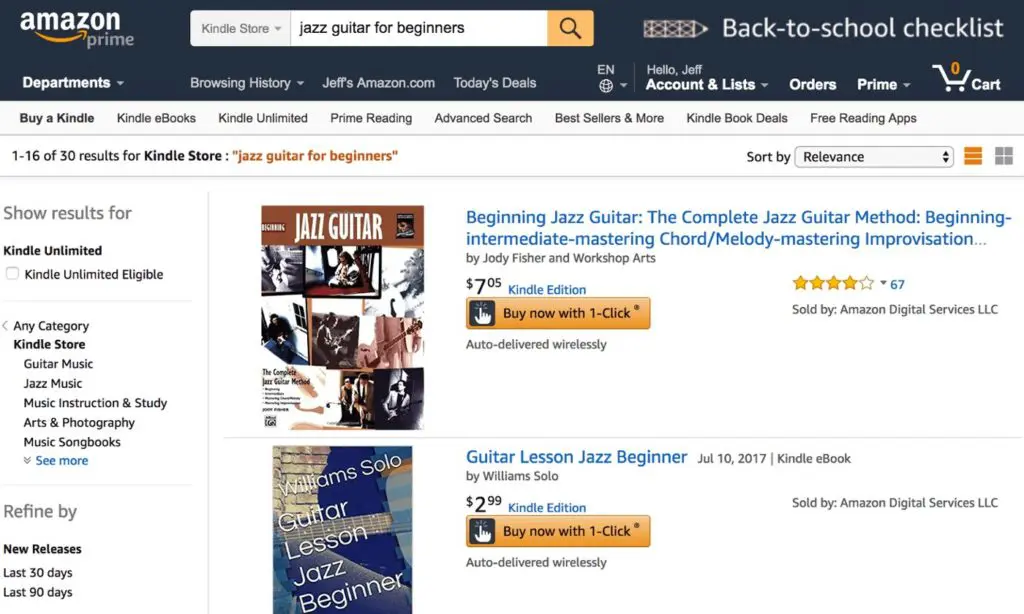
The two- and three-star reviews are where the real insight lives. Buyers who paid and felt let down describe exactly what’s missing. Copy 20 to 30 of those reviews into Claude or ChatGPT and ask it to find the patterns.
Prompt to analyze reviews
Here are reviews of the top books and courses on [topic]. Group the complaints into themes, rank them by how often they appear, and quote two reviews for each theme. Then tell me which complaints a course could fix and a book could not.
If buyers keep saying a book explains what to do but never shows how, you’ve found the angle for a hands-on course. I’m not a fan of Udemy as your main sales channel, since prices there drift toward the bottom, but its ratings and reviews are free market research.
Stage 2: Listening
Listening means paying attention to how people describe the problem when they aren’t talking to you. Searching takes an afternoon, while listening to your market works best over a week or two in the background.
Method 5: Mine Reddit and Niche Forums With AI
Search Reddit and niche forums for phrases like “struggling with,” “how do I,” and “has anyone tried” plus your topic. Threads with dozens of replies point to pain that people can’t solve with a quick search.
Set up free keyword alerts with F5Bot, which emails you when your phrases appear on Reddit and Hacker News. GummySearch, a popular Reddit research tool, closed in late 2025, so skip older guides that recommend it. Once you’ve collected 15 to 20 threads, paste them into an AI tool.
Prompt to analyze forum threads
Here are forum threads where [audience] discuss [problem]. List the 5 most common frustrations, what people have already tried, what they paid for, and the exact phrases they use to describe the problem. Quote the original posts.
Save those exact phrases. They become your course title, your sales page headline, and your module names. My guide to audience research covers more ways to collect them.
Method 6: Read the Comments on Popular Creators’ Content
Find the most-viewed YouTube videos and social posts on your topic and read the comments. Look for requests such as “can you make a video on” and stuck points such as “I tried this but got stuck on step 3.” Unanswered follow-up questions on a popular video often describe a course nobody has built yet.
Method 7: Study Your Own Audience Data
If you already have a blog, newsletter, or social following, your own data beats everything else in this stage, since it comes from people who already trust you. In Google Analytics 4, open Reports, then Engagement, then Pages and screens to find your most-read content. In Google Search Console, check the Performance report for the questions people searched to find you.
Export both reports and ask AI which topics draw the most engaged readers, then read the replies to your emails. If you don’t have an audience yet, skip this method for now and see the no-audience options in Stage 4.
Stage 3: Asking
Asking means going directly to your prospects. The rule that matters most is to ask about past behavior. “Would you buy a course on this?” gets polite yeses. “What have you already paid for to solve this?” gets the truth.
Method 8: Run 5 to 10 Discovery Interviews
Find interviewees through your email list, your professional network, or the people who posted in the forum threads from Stage 2. Offer a 20-minute call and a small thank-you, such as a gift card. A short, specific message works best.
Interview request message
Hi [name], I saw your post about [problem] in [community]. I’m researching how [audience] handle this and would value 20 minutes of your experience. I’m not selling anything on the call. Would [two time options] work for you?
Many people won’t reply, so send several times as many requests as the calls you need. Once you’re on the call, ask questions like these.
- What is the biggest challenge you face with [topic] right now?
- What have you already tried to fix it, and how did that go?
- What books, courses, tools, or coaches have you paid for to solve it?
- If this were solved, what would be different for you?
Record the calls on Zoom with permission, then transcribe them with Zoom’s built-in transcript or Descript. Paste the transcripts into AI and ask for repeated problems, past purchases, and exact phrases. For a different angle, invite three to five prospects to one group call, since people often build on each other’s answers.
AI can now run interviews too. In a pre-registered 2026 study from Columbia Business School and Wharton researchers, AI-moderated interviews matched human interviews in depth and covered more themes for the same budget. Participants did sound more emotionally engaged with a human, though. I’d use AI moderation to reach more people and run the first few interviews yourself to hear the problem firsthand.
Method 9: Send a Short Behavior-Based Survey
A survey works best when you already have an email list or community to send it to. Keep it to five or six questions, mostly open-ended, and focus on challenges and past attempts. End by asking whether the respondent would join a short follow-up call, which feeds Method 8.
Open-ended answers used to be hard to analyze at scale. Now you can export the responses and ask AI to group them into themes in minutes, so you no longer need to force people into multiple-choice boxes to make the data manageable.
Method 10: Share Value in Niche Communities
Professional communities and associations often have forums where your buyers ask for help. Because I work with associations, the forums run by the American Society of Association Executives are a natural place for me to ask questions. Search your keywords plus “association” or “society” to find the equivalent in your field.
Listen for a week first and learn the tone. When you post, share something useful, such as a template or a quick breakdown, and ask how others have handled the problem. A thinly disguised sales pitch will cost you the community’s trust and teach you nothing.
Stage 4: Testing
Testing is the only stage that validates demand. AI can draft the sales page and the emails in an afternoon, but the proof comes from real people giving you their email, their time, or their money.
Decide your success target before you launch any test, and write it down. Without a target set in advance, almost any result starts to look encouraging.
Method 11: Offer a Lead Magnet or Waitlist With an Application
A lead magnet is a free resource, such as a checklist or a short video lesson, that people trade their email for. If people won’t give an email address for a free resource on your topic, they’re unlikely to pay for a course on it.
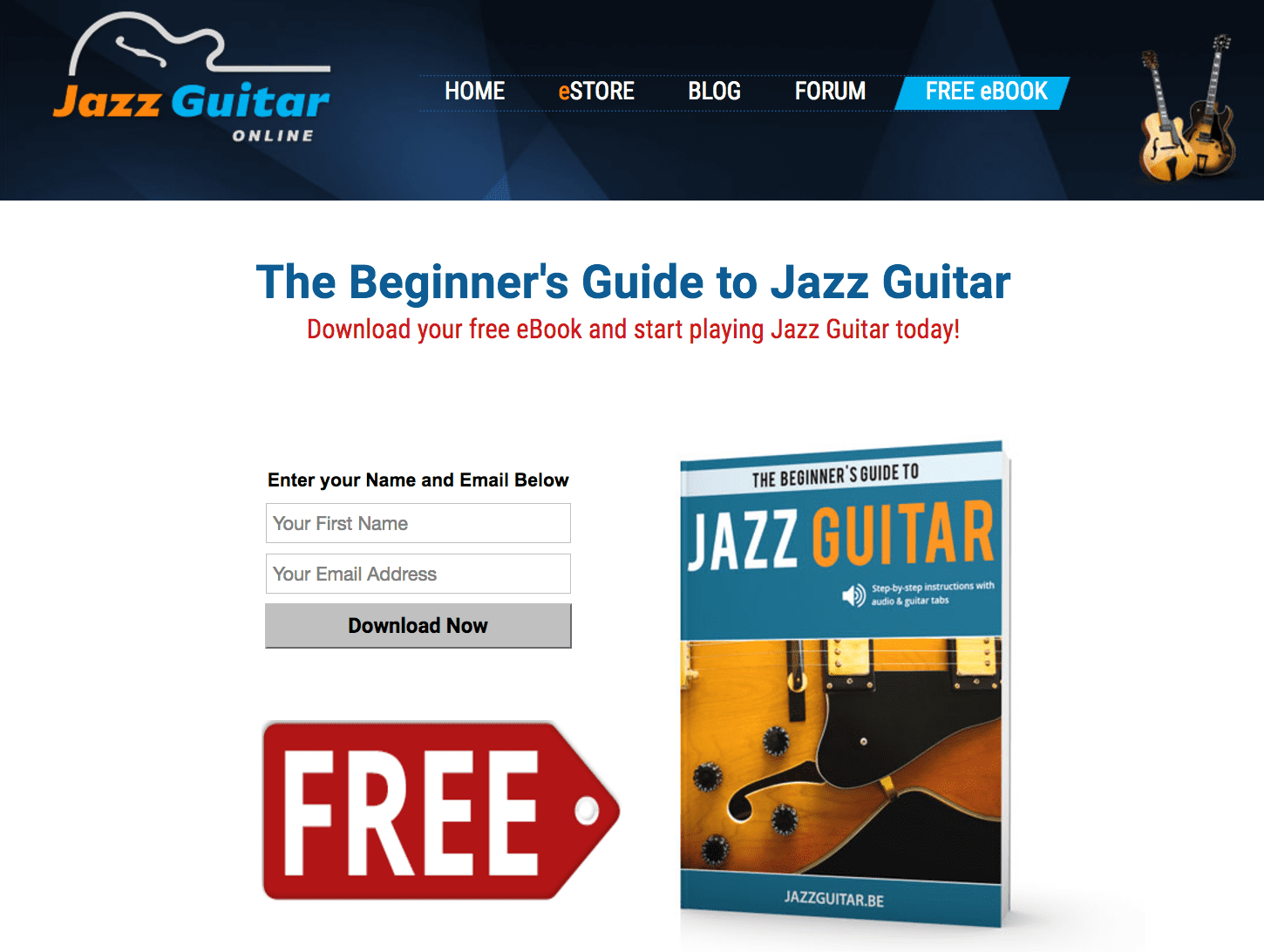
AI can draft the resource and its sign-up page in an afternoon, using any of the landing page tools I’ve reviewed. Kit has a free plan for collecting the emails. Make the test stronger by adding two or three application questions to your waitlist, such as “What’s your biggest roadblock?” Someone who spends three minutes answering is showing real intent.
Method 12: Pre-Sell the Course
A pre-sale means selling the course before you build it. Bonuses such as live Q&A calls give early buyers a reason to act now. Your pre-sale page needs seven elements. AI can draft all of them from your interview notes.
- Headline: Your outcome promise, written in the words prospects used in interviews
- Who it’s for: The specific learner, plus one line on who it isn’t for
- What’s included: Modules, live sessions, templates, and the format
- Schedule: The start date and how often new content arrives
- Founding price: The discount, how long it lasts, and the planned full price
- Refund terms: A full refund if the course doesn’t run, stated plainly
- Why you: One short paragraph on your experience with this problem
Host the pre-sale page on Thinkific from $82 a month billed annually, on Teachable, or on a simple storefront such as Stan. Send it to your list and to everyone you interviewed, following my email marketing best practices. Pre-selling works especially well when you sell to businesses, since one company can buy seats for a whole team.
Method 13: Run a Paid Live Pilot or Workshop
A live pilot is my favorite test, often run together with a pre-sale. Teach the core of your course live over a few weeks on Zoom or one of the webinar platforms such as WebinarJam, with only slides and worksheets prepared. A single 90-minute paid workshop on one specific problem works as a smaller version of the same test.
As a rule of thumb, I price a pilot at about half of the planned full price. Be open that it’s a pilot, and ask for feedback and testimonials in return. Always charge something. Free pilots fill up with people who would never have bought.
A pilot gives you more than a sales number. Learners show you where they get confused, which questions keep coming up, and which parts they value most. The recordings and refined exercises then become the base of your full course, which is why I recommend pilots before building a cohort course or a self-paced one.
If You Don’t Have an Audience Yet
Methods 12 and 13 need people to send the offer to. If you’re starting from zero, use one of these three routes to reach your first buyers.
- Sell paid one-to-one sessions first. Offer three to five paid sessions that solve the course’s core problem for people you met in interviews or forums. Payment for your help on that exact problem is commitment-level evidence. The sessions also show you the steps your course must teach.
- Run a small ad test. Put $100 to $200 behind your waitlist page with Meta or Reddit ads aimed at your audience. Track the cost per signup and how many people answer your application questions, then email those signups your pre-sale.
- Borrow an audience. Offer a free guest workshop to someone else’s community, swap mentions with a newsletter in your niche, or appear as a guest on a podcast your buyers listen to. Invite attendees to your pilot at the end.
Each route takes a week or two and builds the small list you need. In my experience, even a few dozen engaged prospects are enough to run a meaningful pre-sale. My guide to building an audience shows how to keep that list growing.
How to Decide Whether to Build, Revise, or Drop the Idea
No universal number proves a course will work, so set your own threshold based on what the course needs to earn. For example, if the course will take you 60 hours to build and you want it to earn at least $6,000 in its first year, a $300 course needs 20 sales. Ten pre-sales at a founding price would be a reasonable first signal. My online course pricing calculator helps you run these numbers, and my guide on how to price online courses helps you choose the price itself.
Be wary of conversion benchmarks quoted without a source. I haven’t found a reliable public figure for how many waitlist signups turn into buyers in course businesses, so your own target is the yardstick that matters.
| Result | What it means | What to do next |
|---|---|---|
| Sales meet or beat your target | People will pay for this result | Build the course, starting from the pilot recordings |
| Some sales, but below target | Interest is real, but the offer or audience is off | Revisit your interview notes, change one thing, and test again |
| Strong signups but almost no sales | People want free help on this topic | Sharpen the promise toward a result people can’t get for free |
| Little response at any stage | The market isn’t there, or you’re not reaching it | Drop the idea or test a different audience |
When a pre-sale misses, refund buyers quickly and email non-buyers to ask what held them back. Those answers often point to the next, stronger version of the idea. My guide to why online courses fail covers the most common reasons in more depth.
A Worked Example From Start to Finish
Here is how the full process might play out for one idea. The idea and numbers are hypothetical, chosen to show how each stage feeds the next.
| Step | What the creator does | What they find |
|---|---|---|
| Outcome promise | Starts from the freelance designer tax-plan promise shown earlier in this guide | A promise specific enough to test |
| Searching | Checks Google, runs an AI research scan, and mines reviews of the top freelancer tax books | Ads and books exist, and reviews complain about generic advice with no worksheets |
| Listening | Collects 20 Reddit threads and has AI cluster them | The top question is how much to set aside from each invoice |
| Asking | Interviews 7 designers | Most have paid late penalties, and several call April “tax panic month” |
| Testing | Runs a guest workshop for a designers’ community, then opens a pre-sale at a $150 founding price against a target of 10 sales | 12 people buy |
| Decision | Compares 12 sales with the target | Builds the course from the pilot sessions |
Notice that the course changed along the way. Interviews turned a general tax course into one built around a per-invoice set-aside system, which is the piece the books were missing.
A 30-Day Course Validation Plan
Here is how the four stages fit into one month for a solo creator working part time.
| Week | Tasks |
|---|---|
| Week 1 | Write your outcome promise, run the 3M check, complete Methods 1 to 4, and set up forum alerts |
| Week 2 | Collect and analyze forum threads and comments, book 5 to 10 interviews, and launch your lead magnet or waitlist |
| Week 3 | Run interviews, analyze transcripts with AI, and draft your pre-sale page and emails |
| Week 4 | Open the pre-sale or pilot, follow up with interviewees, and compare results with your target |
Tools for Validating a Course Idea
Most of these tools have a free plan that covers validation. I’d pay only for the AI assistant you use most.
| Task | Tools | Starting price |
|---|---|---|
| AI research and analysis | Claude, ChatGPT, Perplexity | Free plans, paid from $20/mo for Claude Pro |
| Search volume and trends | Google Keyword Planner, Keywords Everywhere, Google Trends | Free, Keywords Everywhere from $7/mo |
| Forum alerts | F5Bot | Free plan |
| Interview recording and transcripts | Zoom, Descript | Free plans, Descript paid from $16/mo |
| Lead magnet design | Canva | Free plan, Pro from $15/mo |
| Email list and waitlist | Kit | Free plan, paid from $33/mo |
| Pre-sale page and checkout | Thinkific, Teachable, Stan | $82/mo for Thinkific Basic |
Paid prices are billed annually where that option exists. My Kit review and Descript review cover those two tools in depth. My list of ChatGPT prompts for course creators has more prompts you can adapt for each stage.
Course Validation Mistakes to Avoid
| Mistake | Why it misleads you | Do this instead |
|---|---|---|
| Asking AI whether your idea is good | AI tends to agree with the person asking | Ask AI to find evidence, then test with real people |
| Using AI personas as customers | Synthetic answers overstate prices and miss real trade-offs | Interview 5 to 10 real prospects |
| Trusting AI research without checking | Tools still misread pages and invent sources | Open every link before you rely on it |
| Counting likes and poll votes | Clicking costs nothing | Count signups, applications, and payments |
| Asking “Would you buy this?” | People are polite about the future | Ask what they have already tried and paid for |
| Running a free pilot | Free seats attract people who wouldn’t buy | Charge about half the planned price |
| Setting the target after the test | Any result starts to look good | Write down your threshold first |
Frequently Asked Questions About Validating a Course Idea
How do I validate an online course idea?
Write a one-sentence outcome promise, then research demand through search results, marketplace reviews, and forums. Interview 5 to 10 prospects about what they have already tried and paid for. Finally, test with a lead magnet, a pre-sale, or a paid live pilot, and build the course only after people pay.
Can AI validate my course idea?
AI can’t validate a course idea on its own, because only real buyers can show demand. AI can speed up the research by scanning competitors, summarizing reviews, and analyzing interview transcripts. Studies show synthetic AI customers overstate prices and misjudge preferences, so use AI to prepare tests and real people to run them.
How many pre-sales do I need to validate a course?
No single number works for everyone. Set a target based on what the course must earn to justify your time. For example, a $300 course meant to earn $6,000 needs 20 sales, so 10 founding pre-sales would be a reasonable first signal. Decide the target before you launch.
How long does it take to validate a course idea?
Most solo creators can validate an idea in about four weeks. AI-assisted research takes a few hours in the first week. Listening and interviews take one to two weeks. A pre-sale or pilot needs another one to two weeks to collect enough responses for a decision.
Can I validate a course idea without an audience?
Yes. Research demand through marketplace reviews, Reddit, niche forums, and comment sections, and recruit interviewees from those communities. To test, sell a few paid one-to-one sessions, run a small ad test to a waitlist page, or offer a guest workshop to someone else’s community before your pre-sale.
What questions should I ask in course validation interviews?
Ask about the person’s biggest challenge with the topic, what they have already tried, what they have paid for to solve it, and what would change if the problem were solved. Avoid asking whether they would buy your course, since people tend to give polite answers about future purchases.
Is competition a good sign for a course idea?
Usually, yes. Competing courses, books, and ads show that people already spend money on the topic. The opportunity lies in the gaps, which you can find by analyzing two- and three-star reviews of the top competitors. A topic with no competition at all often signals weak demand.
Should I charge for a pilot course?
Yes. Charging for a pilot is the only way to learn whether people will pay. A common approach is to price the pilot at about half of the planned full price, explain that it’s a pilot, and ask participants for feedback and testimonials in exchange for the lower price.
Validate First, Then Build
Go back to the creator with 40 finished videos and four sales. With a month of validation, that creator would have known what to build, who wanted it, and how to describe it, or would have dropped the idea before filming a single lesson.
Validation also gives you a head start on launch. By the time you build, you’ll have interview notes for your sales copy, a waitlist of interested prospects, testimonials from pilot learners, and a clear launch plan. My recommendation is to write your outcome promise today and run the Stage 1 research this week. When you’re ready to build, my guide to the best online course platforms will help you choose where to host it.

Jeff Cobb, Founder of Learning Revolution
Jeff Cobb is an expert in online education and the business of adult lifelong learning. Over the past 20+ years he has built a thriving career based on that expertise – as an entrepreneur, a consultant, an author, and a speaker. Learning Revolution is a place where Jeff curates tips, insights, and resources to help you build a thriving expertise-based business. Learn more about Jeff Cobb here.
Table of Contents
Related Posts
How Dorie Clark Went from 20K to 600K Instagram Followers | Lessons & Frameworks
19 Ways To Find New Content Ideas For Your Blog and Social Media Accounts
Can You Still Make Money Selling Online Courses in the AI-Age? My Honest Response